
European crane fly
Tipula paludosa
Description
How to identify
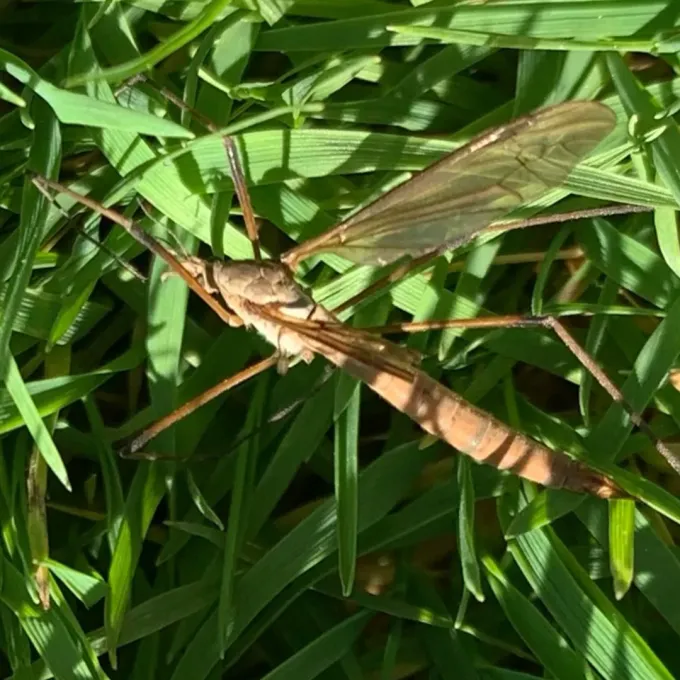
The European crane fly (Tipula paludosa) is a member of the Tipulidae family in the order Diptera. Adults resemble large mosquitoes with long, spindly, and fragile legs that easily detach from their bodies.
The adult flies have a brownish-grey appearance and transparent wings. Despite their intimidating size, they are harmless to plants, as they live only for a short time to mate and lay eggs.
The true pest stage is the larva, commonly known as a "leatherjacket" due to its tough, leathery, and greyish-brown skin. They are legless and can grow up to 40 mm in length.
They typically have a one-year life cycle. Adults emerge in late summer to lay eggs in damp soil, specifically favoring organic-rich substrates like turf or moist agricultural fields.
The larvae develop through several stages, usually overwintering in the soil. They reach their most damaging phase in the spring, feeding voraciously on roots before pupating in the soil.
What it damages
Tipula paludosa is a polyphagous pest, meaning it attacks a wide range of crops. It is particularly notorious for damaging lawns, cereals, forage grasses, and various vegetable crops.
The primary damage is caused to the root systems of young seedlings. By severing roots and stems just below the soil surface, the larvae cause plants to wilt and die rapidly.
In turf management, leatherjackets are a severe problem. They consume grass roots, resulting in dead patches of turf that can be easily pulled away from the soil, leaving bare ground.
Outbreaks are heavily linked to wet, mild conditions, especially in early spring. In heavily infested fields, crop stand density can decrease significantly, leading to massive yield losses.
While feeding primarily underground, older larvae may also emerge during damp nights to feed on the foliage of low-growing plants, causing irregular damage to leaves near the soil surface.
Signs of infestation
The most common sign of a leatherjacket infestation is sudden wilting and yellowing of plants during the day, which is caused by the loss of root anchorage and nutrient uptake.
If you suspect an infestation, try tugging on the damaged plant; if it comes away easily without roots, it is a clear indicator of underground larval feeding activity.
On lawns, look for circular or irregular brown patches. These areas often attract birds, such as starlings or rooks, which dig into the turf to feed on the larvae, causing further damage.
A soil sample or "sod test" is the best way to confirm their presence. Digging into the top 5 cm of soil near damaged plants often reveals the larvae, especially during or after rainfall.
Evidence of larval presence can also be detected by observing the soil surface at night, where larvae may occasionally appear if conditions are sufficiently wet and cool.
Control measures
Effective management starts with good cultural practices. Thorough soil cultivation, such as plowing and harrowing, can expose larvae and pupae to predators and desiccation.
Improving field drainage is a critical preventative measure. Since the European crane fly thrives in damp conditions, managing soil moisture levels can significantly reduce the attractiveness of a site for egg-laying.
For chemical control, targeted soil-applied insecticides can be used during high-risk periods to target larvae in the root zone before they cause excessive damage.
Biological control using entomopathogenic nematodes, such as Steinernema feltiae, is a highly recommended eco-friendly option that targets and kills the larvae within the soil.
- Crop rotation to break the pest's life cycle.
- Keeping field edges and irrigation ditches free of weeds to minimize egg-laying sites.
- Using light traps to monitor adult populations and reduce the number of egg-laying females.
Taxonomy
- Latin name
- Tipula paludosa
- Order
- Diptera (flies)
- Family
- Tipulidae
- EPPO code
- TIPUPA
Discussion
No discussions yet — be the first.