
Marsh crane fly
Tipula oleracea
Description
How to identify
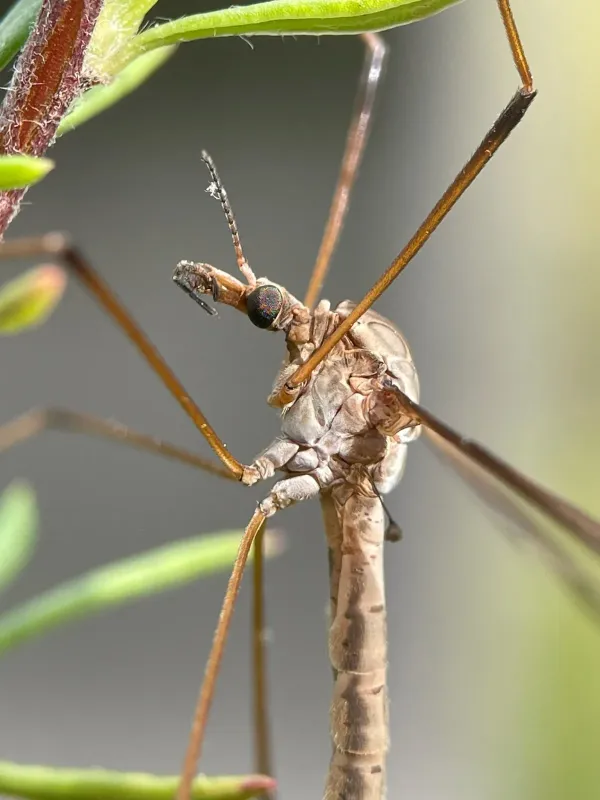
The marsh crane fly (Tipula oleracea) belongs to the order Diptera and the family Tipulidae. Adult insects resemble oversized mosquitoes with very long, fragile legs that easily detach.
The adult body is grey-brown and measures up to 25 mm in length. The larvae, commonly known as leatherjackets, are legless, cylindrical, and have tough, leathery skin. They are typically earthy grey or brown and can grow up to 40 mm long.
What it damages
This pest is a polyphage that attacks a wide variety of cultivated plants. It is particularly destructive to vegetable crops like cabbage, carrots, beets, and potatoes, as well as cereals and various garden flowers.
The damage is caused primarily by the larvae residing in the soil. They feed on the roots, underground stems, and root collars of young plants, leading to wilting, stunted growth, and death of the crops.
When it appears
The life cycle of the marsh crane fly usually involves one or two generations per year. Adult emergence occurs from late spring through the summer months.
Females prefer moist soil rich in organic matter for egg-laying. Larval activity peaks during the spring and autumn months when soil moisture levels are high, which is essential for their development.
Signs of infestation
The primary symptom of an infestation is the sudden wilting and death of seedlings or young transplants. If an affected plant is pulled from the ground, the root system is often found to be severed or chewed off.
Patches of sparse or dead vegetation in the field indicate the presence of larvae. In wet conditions, larvae may come to the soil surface at night, especially during damp weather, making them easier to spot.
Control measures
Effective management focuses on creating unfavorable conditions for larval survival in the soil. Integrated pest management practices are essential for successful control.
- Regular cultivation and tillage to expose larvae to birds and sunlight.
- Improving soil drainage to reduce the humidity favored by larvae.
- Implementing proper crop rotation to break the pest's life cycle.
- Deep autumn plowing to disturb overwintering larvae.
- Application of biological control agents, such as entomopathogenic nematodes, in infested areas.
Taxonomy
- Latin name
- Tipula oleracea
- Order
- Diptera (flies)
- Family
- Tipulidae
- EPPO code
- TIPUOL
Discussion
No discussions yet — be the first.