
Marsh crane fly
Tipula obsoleta
Description
How to identify
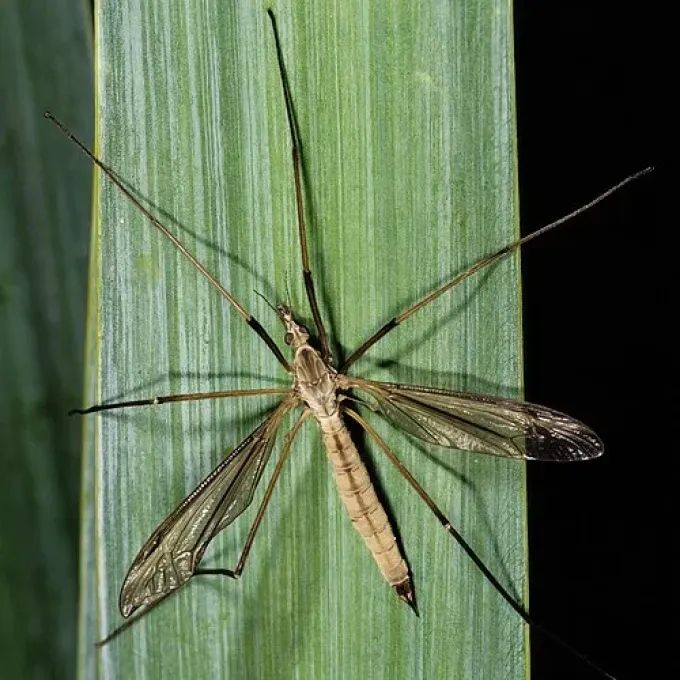
The marsh crane fly (Tipula obsoleta) is a member of the Tipulidae family, commonly known as crane flies. Adults resemble large mosquitoes with long, spindly legs that easily break off when handled.
The adult fly has a brownish-grey body with a wingspan of up to 50 mm. Despite their intimidating appearance, they do not bite and are entirely harmless to humans and plants, focusing solely on reproduction.
The larvae, often referred to as "leatherjackets," are the destructive stage of this insect. They are cylindrical, legless, and possess a tough, leathery skin that is greyish-brown in color.
These larvae typically grow to about 30–40 mm in length and reside in the upper layers of the soil, where they are protected by moisture and organic matter.
The life cycle encompasses one generation per year, including egg, larval, pupal, and adult stages. Understanding this annual cycle is crucial for timing effective management interventions.
What it damages
Marsh crane fly larvae are polyphagous, meaning they feed on a wide variety of plant roots, including grasses, cereals, and many vegetable crops like potatoes and carrots.
In lawns, the larvae feed on the root systems of turfgrass, causing the grass to yellow, thin out, and die in patches. This damage often leaves the turf loose and easily detachable from the soil.
Agricultural crops suffer significantly when seedlings are attacked, as the larvae consume roots and stems, leading to poor crop establishment and reduced overall yields.
The feeding activity creates wounds on roots, which become entry points for various soil-borne pathogens, leading to secondary rot and further plant decline.
High infestation levels are particularly devastating in damp, cool conditions, which are ideal for larval survival and development throughout the growing season.
When it appears
Adult marsh crane flies are typically active during late summer and early autumn. This is when mating occurs, and females lay eggs in moist soil or organic debris.
Larvae overwinter in the soil, often at depths of 5–10 cm. As temperatures rise in the spring, they become highly active and resume intensive feeding on root systems.
The spring months represent the most critical period for plant protection, as larvae are growing rapidly and consuming large amounts of plant tissue before reaching the pupal stage.
Pupation occurs in early summer, usually within the topsoil layer. Once the transformation is complete, adult flies emerge to start the cycle again during the next wet season.
Drier, hotter conditions in mid-summer are detrimental to larval survival, forcing them to move deeper into the soil profile to find moisture or causing them to perish.
Signs of infestation
A primary symptom of infestation is the premature wilting of plants or grass, especially during sunny afternoons, even when soil moisture appears adequate.
In turf areas, irregular brown or bare patches appear. The grass in these sections can often be pulled up easily by hand, revealing the root-destroying larvae beneath the surface.
Tunnels or small holes in the soil surface, particularly following irrigation or rain, indicate larval movement and surface activity during the night.
In commercial fields, gaps in crop stands during the spring are often the result of larvae having consumed young seedlings shortly after germination.
Observing high numbers of adult crane flies during autumn flights is a strong indicator that a significant larval population will likely cause problems the following spring.
Control measures
- Implement mechanical soil cultivation in the spring, which disrupts larval habitat and exposes them to predators like birds and environmental heat.
- Improve site drainage to reduce the excess soil moisture that attracts egg-laying females and promotes optimal larval survival.
- Apply biological controls such as beneficial entomopathogenic nematodes, which actively seek out and parasitize larvae within the soil profile.
- Utilize registered insecticides for soil application only when population thresholds are exceeded, ensuring compliance with local environmental regulations.
- Maintain weed-free borders around fields and gardens to minimize the organic matter and sheltered areas that favor larval development.
Taxonomy
- Latin name
- Tipula obsoleta
- Order
- Diptera (flies)
- Family
- Tipulidae
- EPPO code
- TIPUOB
Discussion
No discussions yet — be the first.