
Marsh crane fly
Tipula nubeculosa
Description
How to identify
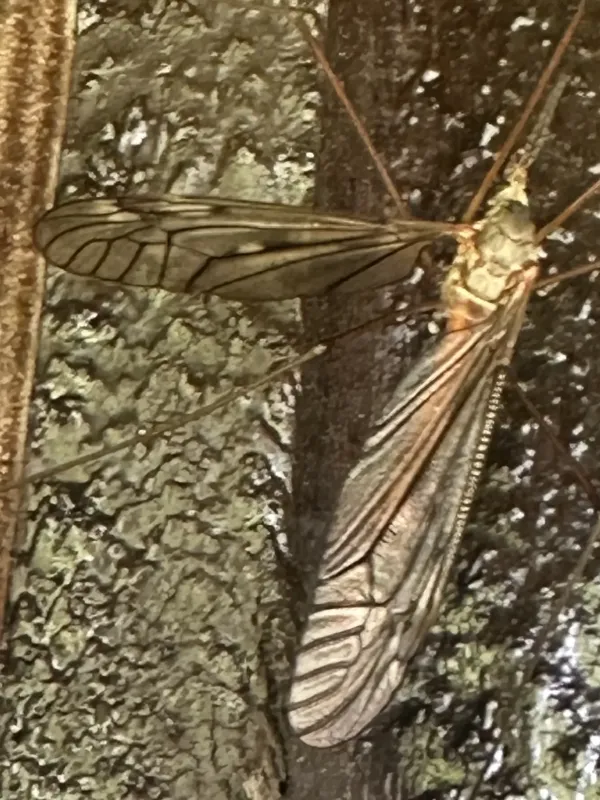
The marsh crane fly (Tipula nubeculosa) belongs to the order Diptera and the family Tipulidae. Adult flies resemble large mosquitoes with characteristically long, fragile legs that break off easily.
The body of the adult is typically greyish-brown, while the wings exhibit a smoky appearance with a dark patch located near the costal vein, distinguishing it from other species.
The larvae, often called leatherjackets, are legless, cylindrical grubs with a tough, grey, leathery skin that allows them to blend perfectly into the soil environment.
The head of the larva is partially retracted into the thorax and equipped with strong, sclerotized mandibles used for grinding plant roots and organic matter.
These insects spend most of their life cycle in the soil, which provides protection from environmental extremes and easy access to their primary food source.
What it damages
Marsh crane fly larvae are polyphagous pests that cause severe damage to a wide range of agricultural crops, particularly cereals like winter wheat, rye, and barley.
They feed on the root systems of young plants, leading to stunted growth, yellowing of leaves, and frequently the total destruction of young seedlings.
Vegetable crops, including carrots, cabbage, and sugar beets, are also susceptible, as larvae often chew through the taproots and crown area of the plants.
High infestations often result in poor crop establishment, creating visible gaps in fields where the larvae have consumed germinating seeds or young roots.
The damage is particularly significant in damp, low-lying fields where high soil moisture supports high larval survival rates and increased feeding activity.
When it appears
Adults typically emerge during late spring and early summer, taking advantage of warm and humid conditions to mate and lay eggs in moist, organic-rich soil.
Eggs are deposited near the surface, and larvae develop through several stages, with the most destructive feeding period occurring during the spring months.
There is generally one generation per year, though specific timing can vary depending on regional weather patterns and soil moisture levels during the larval development stage.
Larvae remain active in the soil during autumn, feeding on plant roots until the onset of cold winter temperatures triggers a period of winter dormancy.
As temperatures rise in the spring, larvae resume feeding, growing rapidly before transitioning into the pupal stage to complete their life cycle.
Signs of infestation
The most common indicator of a marsh crane fly infestation is the appearance of irregular dead or yellowing patches in the field, often mistaken for nutrient deficiency.
Closer examination of damaged plants typically reveals chewed-off roots or a completely severed root system just below the soil surface.
Soil samples or digging in affected areas, especially after irrigation or rainfall, often reveal the presence of leatherjackets within the root zone.
In some cases, small tunnels or disturbed soil around the base of plants can be observed, indicating the movement of larvae during nocturnal feeding activity.
- Stunted or yellowing plants.
- Irregular bare patches in crop fields.
- Presence of grey, leathery larvae in the soil.
- Chewed root systems and root crowns.
Control measures
Effective pest management begins with good agronomic practices, such as deep autumn plowing, which exposes larvae to predators and environmental stresses like frost.
Improving field drainage is critical, as marsh crane fly populations thrive in waterlogged conditions; managing soil moisture helps reduce their suitability as a habitat.
Strategic crop rotation that avoids planting susceptible cereal crops after grass or cereals can help break the lifecycle and reduce the buildup of larval populations.
Chemical control with registered insecticides may be necessary during severe outbreaks, usually timed to coincide with the early seedling stage when crops are most vulnerable.
Biological control options, such as the use of entomopathogenic nematodes, provide a targeted approach to reducing larval density without the use of harsh chemicals.
Taxonomy
- Latin name
- Tipula nubeculosa
- Order
- Diptera (flies)
- Family
- Tipulidae
- EPPO code
- TIPUNU
Discussion
No discussions yet — be the first.