
Marsh crane fly
Tipula melanoceros
Description
How to identify
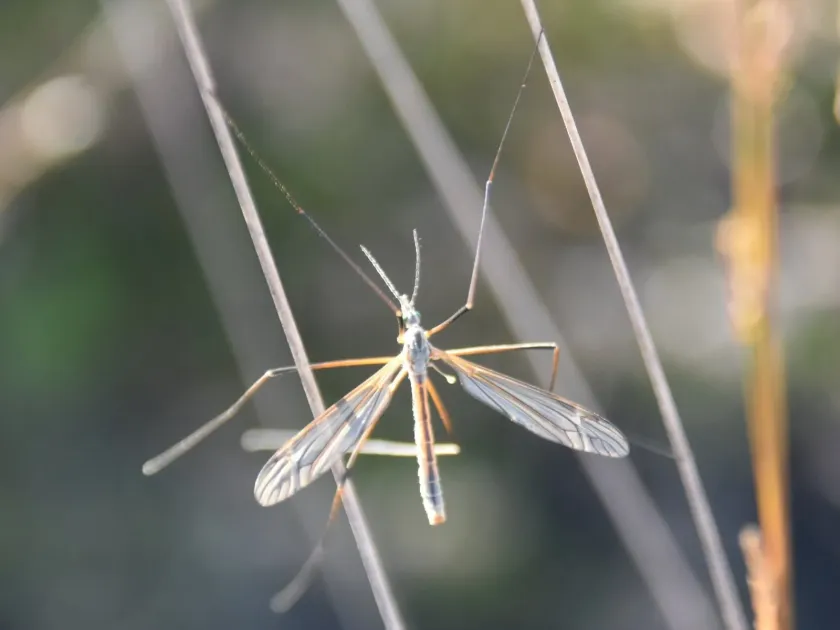
The Marsh crane fly, scientifically known as Tipula melanoceros, belongs to the Tipulidae family within the order Diptera. Adult flies resemble oversized mosquitoes but are completely harmless to humans.
Adults are slender with long, fragile legs and a wingspan that allows for effective movement. Their bodies are typically greyish-brown, which helps them blend into wetland environments.
The damaging stage is the larva, commonly referred to as a leatherjacket. These larvae are legless, cylindrical, and have a tough, leathery skin that is dark grey or brownish.
Leatherjackets possess strong mandibles capable of chewing through roots and stems of various plants. They are well-adapted to high-moisture environments and respire through posterior spiracles.
The species is primarily distributed in marshy areas, floodplains, and poorly drained pastures, where population densities can reach high levels.
What it damages
Leatherjackets are significant polyphagous pests that feed on the roots, underground stems, and sometimes the crowns of diverse agricultural crops.
Cereal crops like wheat, barley, and oats are particularly vulnerable during the seedling stage, as larvae can sever the base of the plant, leading to total crop failure.
Vegetable crops and sugar beets often suffer severe damage during spring, resulting in patchiness and thin plant stands that necessitate costly reseeding.
In addition to agricultural crops, established pastures and grassland suffer from leatherjacket infestations, which reduce forage quality and overall biomass yield.
Roots damaged by larvae are susceptible to secondary pathogens, further weakening the plant and increasing the impact of the infestation on final yield.
When it appears
Adults typically emerge in mid-to-late summer, specifically July and August. During this period, mating occurs, and females search for suitable moist sites for oviposition.
Eggs are laid in batches directly into the soil or among thick vegetation. The eggs hatch within a few weeks, and the young larvae begin feeding almost immediately.
The larvae overwinter in the soil, usually in their later instars, allowing them to remain active even during mild winter conditions and continue feeding early in the spring.
The peak feeding period occurs in the spring when temperatures rise, causing the larvae to move closer to the soil surface to feed on young plant roots.
Pupation takes place within the soil in late spring. This stage lasts for a short duration before the adults emerge to complete the annual life cycle.
Signs of infestation
The most noticeable sign of a Marsh crane fly infestation is the sudden appearance of bare patches in the field where plants are wilting and dying.
If affected seedlings are pulled from the ground, the stems appear gnawed or completely severed at the base, indicating the presence of soil-borne pests.
Physical inspection of the soil around damaged plants often reveals the larvae, which typically curl into a characteristic "C" shape when disturbed.
Increased bird activity on the field, particularly rooks and starlings foraging in the soil, is a strong indicator of a high leatherjacket population.
In wet or misty weather, or after heavy rain, larvae may occasionally come to the surface, making their presence visible even without digging into the soil.
Control measures
Effective management begins with improving soil drainage, as high moisture levels are a prerequisite for the survival and development of leatherjackets.
Strategic cultivation, such as deep autumn plowing, can significantly reduce larval populations by exposing them to predators and desiccation at the surface.
Chemical control methods include seed treatments with systemic insecticides, which provide a crucial barrier for young plants during the susceptible germination phase.
In severe infestations, the use of broadcast insecticide baits or targeted soil-applied granules can suppress larval numbers and protect the crop yield.
Biological control using entomopathogenic nematodes, such as Steinernema species, offers an environmentally friendly alternative to chemical pesticides for managing leatherjackets.
Taxonomy
- Latin name
- Tipula melanoceros
- Order
- Diptera (flies)
- Family
- Tipulidae
- EPPO code
- TIPUME
Discussion
No discussions yet — be the first.