
Marsh crane fly
Tipula lateralis
Description
How to identify
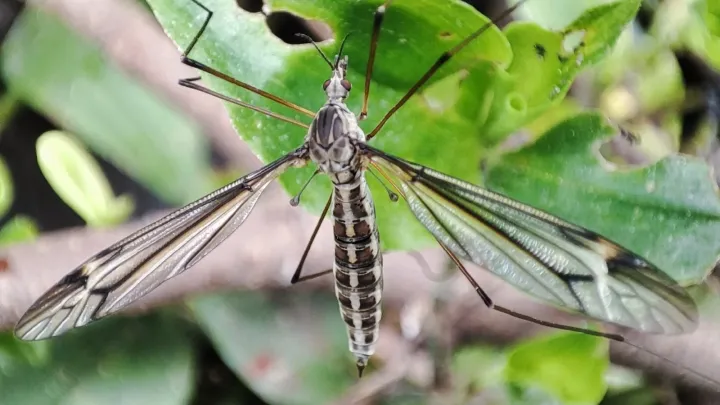
The marsh crane fly (Tipula lateralis) is a species of insect belonging to the family Tipulidae, order Diptera. Adults are large, fragile-looking insects with very long, thin legs that easily detach.
The imago has a brownish-grey body with patterned wings. Their larvae, often called leatherjackets, grow up to 40 mm in length. They are cylindrical, legless, and earthy in color, allowing them to blend into the soil perfectly.
The larval head capsule is retracted into the thorax. The posterior end is characterized by spiracles surrounded by fleshy lobes, which is a key diagnostic feature for identifying Tipula lateralis.
The insect undergoes a complete life cycle: egg, larva, pupa, and adult. The adults do not feed on crops, whereas the larvae are significant soil-dwelling pests.
This species thrives in moist environments, such as riverbanks, marshy lands, and fields with high water tables, making these areas their primary habitats.
What it damages
The larvae are polyphagous and cause significant damage by feeding on the roots and underground stems of various agricultural crops, including cereals, grasses, and vegetables.
Cereal seedlings are particularly vulnerable. The larvae chew through the root system, leading to rapid wilting and eventual death of the young plant shortly after germination.
Aside from cereals, other crops like sugar beets and potatoes may suffer. The larvae create deep grooves in the stems, which can weaken the plant structure significantly.
Damage often occurs in patches throughout the field. These damaged zones fail to establish properly, resulting in thinning stands and reduced overall crop yields.
Furthermore, feeding damage facilitates the entry of secondary pathogens, such as fungi and bacteria, which cause root rot and further debilitate the plant population.
When it appears
The activity of Tipula lateralis is heavily dependent on moisture and temperature. Adults typically emerge in spring and early summer, when they mate and lay eggs in damp soil.
Larval feeding is most intense during the autumn and spring months when soil moisture levels are optimal. They overwinter in the soil at a depth of 10–15 cm, becoming active as soon as the soil warms up.
Summer heat can lead to a reduction in activity, especially in dry conditions, but they remain a persistent threat wherever soil humidity is maintained through irrigation or rainfall.
The life cycle generally takes one year to complete. Populations can increase rapidly in fields rich in organic matter and with high moisture levels.
Monitoring is crucial in the early spring during germination. This is when the larvae are actively feeding near the surface, posing the greatest threat to emerging crops.
Signs of infestation
The most common sign of infestation is the appearance of thin or bare patches in a field. Affected plants turn yellow, lose turgor, and eventually die.
Upon inspecting the roots, one will find them severely gnawed or entirely missing. The base of the stem often displays characteristic deep furrows or exit holes caused by larval feeding.
Larvae can be found in the soil surrounding the affected plants, particularly following rainy periods when they move toward the surface to feed.
Young seedlings may disappear entirely as larvae pull them partially underground. This often looks like a localized blight or sudden thinning of crop rows.
The presence of adult flies hovering low over the ground in the evening hours is a strong indicator of an active population preparing to lay eggs for the next generation.
Control measures
The primary control method is good agricultural practice. Deep autumn plowing is effective as it exposes the larvae to predators and harsh weather conditions, significantly reducing their survival rate.
Improving drainage on low-lying, damp fields is essential for making the environment less hospitable for the marsh crane fly and its larvae.
Crop rotation helps break the life cycle of the pest, especially by avoiding crops that are highly susceptible to leatherjackets immediately after permanent grasslands or fallow land.
Chemical control includes insecticidal seed treatments, which provide a protective barrier for the roots of germinating plants during the most vulnerable early stages.
In cases of high infestation, soil-applied granular insecticides or bait treatments can be used to manage larval numbers before they cause irreversible economic damage to the crop.
Taxonomy
- Latin name
- Tipula lateralis
- Order
- Diptera (flies)
- Family
- Tipulidae
- EPPO code
- TIPULT
Discussion
No discussions yet — be the first.