
Common crane fly
Tipula graminivora
Description
How to identify
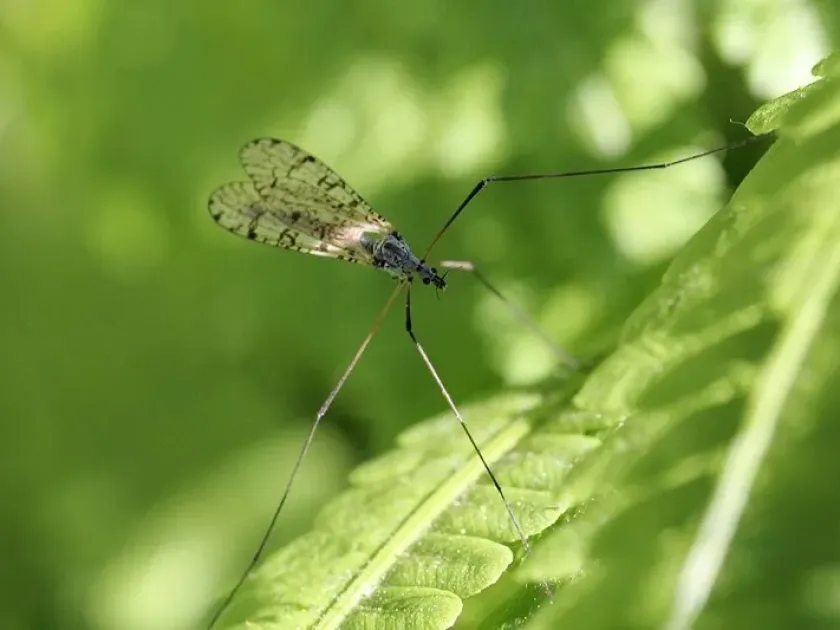
The common crane fly (Tipula graminivora) is a member of the Tipulidae family, known for its long, fragile legs and mosquito-like appearance. Despite their size, they are harmless to humans and do not feed on blood.
The adult flies are greyish-brown with spotted wings and can reach a wingspan of 30–40 mm. They are most noticeable during late summer when they emerge to mate and lay eggs.
The larvae, known as "leatherjackets," are the destructive stage of this insect. They are cylindrical, legless, and possess a tough, leathery skin, ranging in colour from grey to earthy brown.
Their head is partially retracted into the thorax and features strong mandibles designed for chewing plant tissues. They typically reside in the top layers of the soil where they find optimal moisture and food.
The life cycle involves complete metamorphosis: egg, larva (going through several instars), pupa, and adult. They generally overwinter as larvae, remaining active even in cool conditions.
What it damages
The common crane fly is a polyphagous pest that causes significant damage to cereal crops, including wheat, barley, and oats, as well as various forage grasses and pastures.
Larvae feed extensively on the roots, underground stems, and seeds of young plants. This feeding pattern creates bare patches in fields and reduces the overall crop stand density.
Seedlings are particularly vulnerable, as a single larva can sever the stem of a young plant at the soil surface, leading to rapid wilting and plant death.
Vegetable crops are also prone to attack, with larvae destroying root systems and causing economic losses in nurseries and field production settings.
Damage is typically more severe in fields with high soil moisture, poor drainage, or those situated near permanent grasslands where populations build up over several seasons.
When it appears
Adult crane flies emerge in late summer, usually between August and September. During this period, females look for dense vegetation or damp, undisturbed soil to lay their eggs.
After hatching, the larvae begin to feed in the autumn. They continue to grow throughout the winter, provided the soil temperature stays above freezing, allowing for consistent development.
Spring is the season of peak activity. As temperatures rise in April and May, larvae emerge from deeper soil levels and feed voraciously on the rapidly growing root systems of young crops.
This spring feeding period is critical for crop survival, as plants are often unable to compensate for the significant loss of root mass caused by the leatherjackets.
By early summer, the larvae reach their final stage and pupate within the soil. After a brief pupal phase, the adults emerge to start the cycle again.
Signs of infestation
One of the primary indicators of infestation is the appearance of thin or patchy stands in fields that were previously healthy. Plants may wilt or turn yellow due to compromised roots.
When pulling on plants in infested areas, they often come out of the soil very easily, as the root system has been largely consumed by the larvae.
Soil excavations around the base of damaged plants will reveal the grey, leatherjacket larvae, which typically curl up when disturbed.
Increased crane fly activity in the evenings during August can be an early warning signal for potential larval pressure on the following season's winter crops.
- Patchy crop emergence.
- Plants easily pulled from the soil.
- Presence of grey, leathery larvae in the root zone.
- Chewed roots or hollowed-out seeds in the ground.
Control measures
Cultural control is essential. Crop rotation is highly recommended; avoiding planting cereals immediately after long-term pastures can effectively disrupt the life cycle of the pest.
Proper tillage, especially deep autumn plowing, helps reduce populations by exposing larvae to surface conditions, birds, and other predators, causing them to dehydrate or die.
Maintaining clean fields by eliminating weeds and crop residues reduces the suitability of the environment for egg-laying and larval survival.
Chemical control options include the use of insecticidal seed treatments, which provide a protective shield for the developing roots of young crops against early-season attacks.
In cases of severe infestation, soil-applied insecticides may be used at planting time to reduce larval density and protect the economic viability of the crop.
Taxonomy
- Latin name
- Tipula graminivora
- Order
- Diptera (flies)
- Family
- Tipulidae
- EPPO code
- TIPUGR
Discussion
No discussions yet — be the first.