
Tipula czizeki
Tipula czizeki
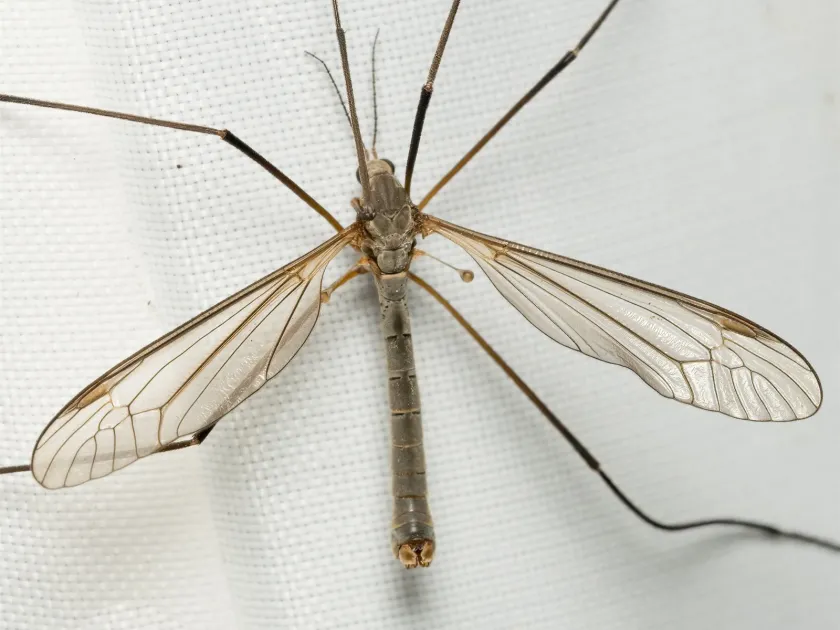
Description
How to identify
Tipula czizeki is a species of crane fly belonging to the family Tipulidae, order Diptera. While the adults look like giant mosquitoes with long, fragile legs, they are harmless to crops and do not possess biting mouthparts.
The damage is caused exclusively by the larvae, which are cylindrical and have a leathery, greyish-brown skin. They feature a well-developed, sclerotized head capsule with strong mandibles adapted for feeding on plant tissues.
These larvae live primarily in the upper layers of the soil or in the root zone. They are highly sensitive to soil moisture and prefer habitats with constant humidity and mild temperature ranges.
The life cycle typically includes the egg stage, four larval instars, pupation, and the adult stage. Development usually takes about one year depending on the regional climate and local weather conditions.
Adult emergence typically occurs in late summer or early autumn, which coincides with the egg-laying period. The number of larvae in the following season is largely determined by the success of the egg-laying in the previous autumn.
What it damages
Larvae of this crane fly are polyphagous, attacking a wide range of agricultural plants. Cereal crops, particularly winter varieties during germination and tillering, are at the highest risk of infestation.
Vegetable crops such as potatoes, carrots, beets, and brassicas are also susceptible. Furthermore, pastures, forage grasses, and saplings in plant nurseries frequently suffer from larval feeding.
The larvae feed predominantly at night, moving to the surface to chew on subterranean parts of the stem and the root system. This feeding behavior often causes plants to wilt and die quickly.
Infestation is most severe in fields with high soil moisture, low-lying areas, or land that has recently been converted from permanent grasslands. High organic matter content in these soils promotes larval survival.
When populations reach high levels, they can cause significant stand loss, resulting in bare patches in the field. This necessitates pre-planting monitoring to assess the risk for the upcoming crop cycle.
Signs of infestation
The primary symptom of an infestation is uneven plant density or the sudden death of young seedlings, which can be easily pulled from the soil due to compromised root systems.
Close inspection of the crown or root collar of the plant reveals distinct feeding marks, such as jagged holes or complete severance of the stem near the soil surface.
Wilting during the morning hours, despite adequate soil moisture, is another telltale sign that the larvae have destroyed the plant's vascular tissues and root connection.
Fields often show patchy development, where plants appear stunted, discolored, or thin compared to unaffected areas of the field, reflecting localized high larval density.
In cases of heavy rain or soil cultivation, the larvae are often driven to the surface, making them visible and allowing for an accurate population count before the crop is established.
Control measures
Effective cultural control centers on rigorous soil cultivation. Autumn plowing with moldboard inversion helps expose the larvae to the surface, making them vulnerable to desiccation and natural predators.
Crop rotation is crucial; avoiding the planting of cereals immediately after permanent pastures or meadows reduces the risk of successful larval establishment and population growth.
Land drainage and improving the water management of the field are effective long-term solutions, as lower soil moisture levels are less favorable for larval survival.
When pest density exceeds economic thresholds, seed treatment with systemic insecticides can provide critical protection for young plants during the most vulnerable germination phase.
For smaller areas or hotspots, the application of toxic baits can be an effective way to manage the population while minimizing the overall environmental footprint on the field.
Taxonomy
- Latin name
- Tipula czizeki
- Order
- Diptera (flies)
- Family
- Tipulidae
- EPPO code
- TIPUCZ
Discussion
No discussions yet — be the first.