
Tipula bicornis
Tipula bicornis
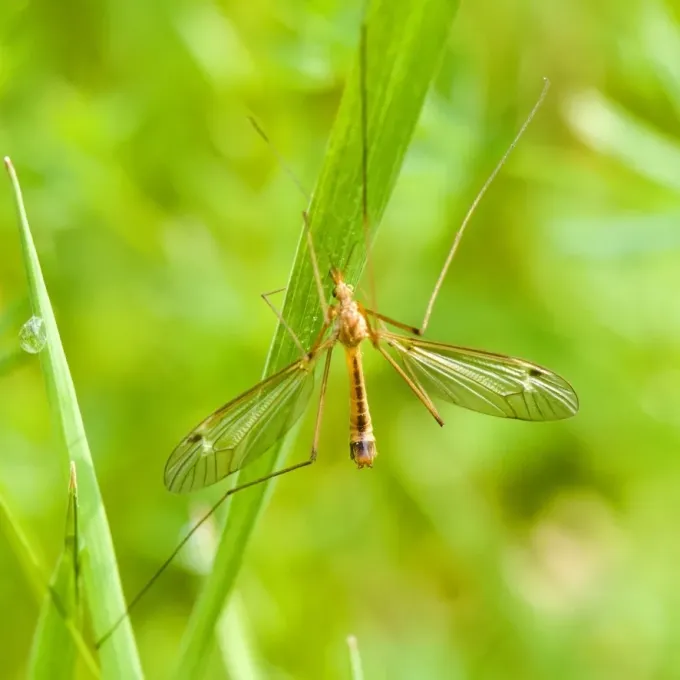
Description
How to identify
Tipula bicornis is a species of crane fly belonging to the family Tipulidae. Adult flies resemble large mosquitoes with very long, fragile legs, yet they are entirely harmless to both plants and humans during their adult stage.
The primary threat is posed by the larvae, commonly known as leatherjackets. These larvae are cylindrical, legless, and typically display earthy, greyish-brown colors that allow them to blend perfectly into the soil environment.
The skin of the larva is covered in specialized outgrowths and rigid bristles, which aid their movement through the soil profile. They possess a well-developed head capsule with robust mandibles, specifically adapted for chewing through tough plant tissues.
The life cycle involves a complete metamorphosis: egg, larva (undergoing several instars), pupa, and adult. Adults are short-lived, with their primary biological function being mating and laying eggs in moist, well-vegetated soil.
Identifying the species usually requires close inspection of male genitalia and the specific wing vein patterns, which differentiate Tipula bicornis from other similar crane fly species commonly found in the same habitats.
What it damages
The larvae of Tipula bicornis are polyphagous, feeding on the root systems and underground stems of various crops. Cereal crops, particularly wheat and barley, are among their primary targets for infestation.
Beyond cereals, these pests can cause significant damage to vegetable crops such as carrots, beets, and potatoes. Furthermore, they are frequent pests in ornamental landscapes and turf, where they consume grass roots just below the soil surface.
In conditions with high soil moisture and thick thatch or heavy weed cover, the damage potential increases. The larvae cluster around the root zone, weakening the plants and creating entry points for secondary fungal infections.
Young seedlings attacked by leatherjackets often die due to extensive root destruction, leading to sparse plant stands and the potential requirement for replanting large sections of the field.
Economic losses are most severe in poorly drained soils and unmanaged areas, where high weed competition provides an ideal environment for the early larval instars to develop and thrive.
When it appears
The life cycle of Tipula bicornis is heavily influenced by regional climatic conditions and soil moisture levels. The peak activity of adults usually occurs during the spring and early summer when mating and egg-laying happen.
Larvae are most active during the cooler, wetter months of autumn and spring. They typically overwinter in the soil at depths of 10–15 centimeters, entering a period of reduced metabolic activity to survive freezing temperatures.
As temperatures rise in the spring, larvae move toward the surface to feed actively on root systems, a timeframe that often coincides with the tillering stage of cereal crops.
Periods of extreme heat and drought during the summer can significantly slow down larval growth, as they are highly sensitive to desiccation and prefer consistent moisture in the substrate.
Pupation takes place within the soil, usually occurring in late spring or early summer, just before the emergence of the new generation of adults that continue the species' life cycle.
Signs of infestation
The first indicator of an infestation is the sudden wilting of individual plants that appear healthy but can be easily pulled from the ground due to a severed root system.
Upon inspecting the crown of the plant, you may find characteristic feeding scars or a complete absence of fine root hairs. Often, the larvae themselves can be found in the immediate vicinity of the affected roots.
Large patches of dead seedlings or thinning crop stands are common signs of high pest density. Surviving plants often exhibit stunted growth, yellowing foliage, and poor tillering capabilities compared to unaffected plants.
Following heavy rain or during humid nights, larvae may surface, causing visible damage to the lower stems of plants just at or slightly above the soil line.
Heavy infestations are frequently followed by secondary root rot diseases, as the damaged plant tissue provides an entry point for various soil-borne pathogens.
Control measures
The foundation of Tipula bicornis management is agronomic practice. Deep plowing and thorough cultivation help to reduce larval populations by physically damaging them and exposing them to birds and direct sunlight.
Maintaining optimal soil moisture and improving drainage in problematic areas is a key preventative measure, as it makes the soil environment less attractive for oviposition by female flies.
Proactive weed control, particularly against invasive grasses and cereal weeds, eliminates the primary food source required by young larvae to survive their initial stages.
In cases of extremely high pest density, insecticides, such as organophosphates or pyrethroids, may be applied to the soil or as seed treatments to protect crops during the vulnerable germination phase.
- Implement diverse crop rotations to disrupt the life cycle.
- Practice post-harvest stubble cultivation to limit egg-laying sites.
- Consider the use of biological control agents like entomopathogenic nematodes.
Taxonomy
- Latin name
- Tipula bicornis
- Order
- Diptera (flies)
- Family
- Tipulidae
- EPPO code
- TIPUBI
Discussion
No discussions yet — be the first.