
Black Crane Fly
Tanyptera atrata
Description
How to identify
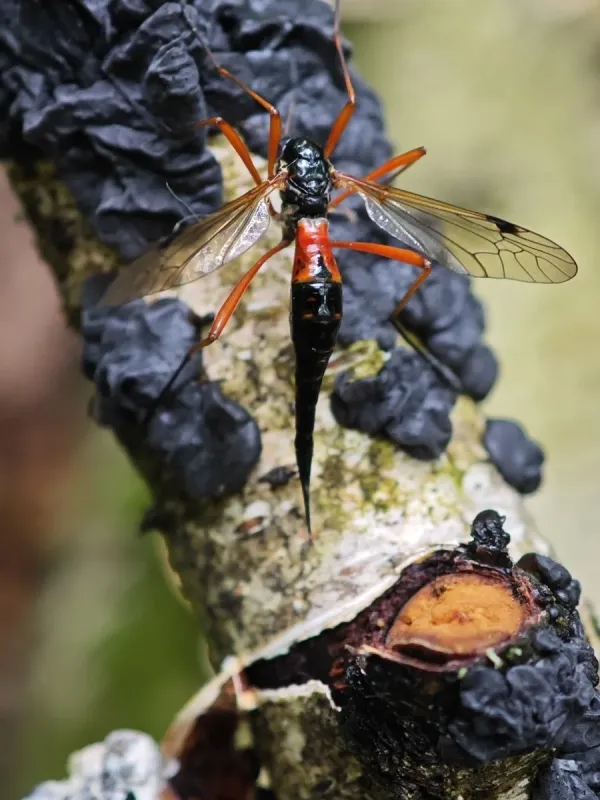
The Black Crane Fly (Tanyptera atrata) belongs to the order Diptera and the family Tipulidae. Adult insects are characterized by their long legs and a distinctive black body, distinguishing them from other common crane fly species.
Adults are fragile insects that do not bite or sting humans, despite their intimidating appearance. Their wings are often smoky or dark-tinted, which is a key identification feature for this specific member of the Tanyptera genus.
The larvae are legless, cylindrical, and have a greyish-brown color. They possess a well-developed head capsule and powerful mouthparts, which they use to feed on various organic materials, including roots.
The life cycle consists of four distinct stages: egg, larva, pupa, and adult. The species typically completes one generation per year, with the larval stage being the most active period in the soil environment.
These insects rely on moisture to survive, as their larvae require humid conditions for respiration and growth. Consequently, they are frequently found in damp soils or areas rich in decaying organic matter.
What it damages
Larval stages are the primary cause of damage, as they consume the subterranean parts of plants. They feed on the roots, tubers, and root collars, which often leads to the wilting and eventual death of young crops.
Seedlings in agricultural fields and nurseries are especially vulnerable. A single larva can significantly weaken or kill a small plant by severing its root system, resulting in patchy growth across the field.
In addition to agricultural crops, the Black Crane Fly can affect ornamental plants and grass in gardens and lawns. Their feeding activity creates entry points for fungal pathogens, further exacerbating the decline of the plant.
Although they can function as decomposers when feeding on decaying wood, their transition to living plant tissue makes them a nuisance during periods of high population density.
The severity of the damage is often tied to environmental factors, such as high soil moisture levels. Under such conditions, larvae are more mobile and move more aggressively between plants to find food.
When it appears
Adult Black Crane Flies typically emerge in late spring or early summer. This is the period when they mate and lay eggs, usually in moist soil or near decaying organic debris where the larvae will later thrive.
Once the larvae hatch, they begin to feed immediately. Their activity peaks during the late summer and autumn months as they prepare for the upcoming winter season by accumulating necessary energy reserves.
Winter is spent as larvae in deeper soil layers, where they are protected from freezing temperatures. Their metabolic activity decreases, but they remain a threat that will resurface with the arrival of spring warmth.
In spring, the larvae move to the upper soil horizons to resume feeding. This migration corresponds with the germination and early growth of most crops, making this the most critical time for monitoring.
Pupation occurs in the soil, followed by the emergence of adults, completing the annual cycle. The speed of this cycle can be influenced by the temperature of the soil throughout the spring season.
Signs of infestation
The first sign of infestation is often the unexplained wilting of plants in patches. If a plant can be easily pulled from the soil, it is a strong indicator that the root system has been destroyed by larvae.
Visual inspection of the root area usually reveals the larvae themselves or evidence of burrowing and chewing. The damaged roots appear ragged and shortened, often with signs of secondary decay.
The presence of adult crane flies hovering near the ground at dusk during the spring is a clear sign that egg-laying is occurring, signaling the need for preventative measures before the next larval generation.
Damaged areas often correlate with low-lying, poorly drained sections of a field. Identifying these spots is essential for targeted scouting and risk assessment.
Soil sampling during spring tillage is an effective diagnostic method. Finding greyish-brown, cylindrical larvae confirms the presence of the pest and justifies the need for soil-based control tactics.
Control measures
Effective management begins with sound agronomic practices. Improving soil drainage and removing weeds reduces the habitat and food sources that attract the Black Crane Fly to your crops.
Deep cultivation and frequent turning of the soil can help reduce larval populations by physically damaging them or exposing them to avian predators and desiccation by the sun.
Biological control, including the use of entomopathogenic nematodes, has proven effective in controlling soil-borne larvae without the need for harsh synthetic chemicals that might disrupt the soil microbiome.
Chemical control should be used as a last resort and only when infestation levels exceed economic thresholds. Targeted soil insecticides applied during sowing can provide protection for the most vulnerable developmental stages.
- Practice proper crop rotation to break the pest cycle.
- Ensure fields are clear of crop debris after harvest.
- Monitor soil moisture and drainage regularly.
- Use traps to estimate adult population density.
Taxonomy
- Latin name
- Tanyptera atrata
- Order
- Diptera (flies)
- Family
- Tipulidae
- EPPO code
- TANPAT
Discussion
No discussions yet — be the first.