
Tanyptera crane fly
Tanyptera
Description
How to identify
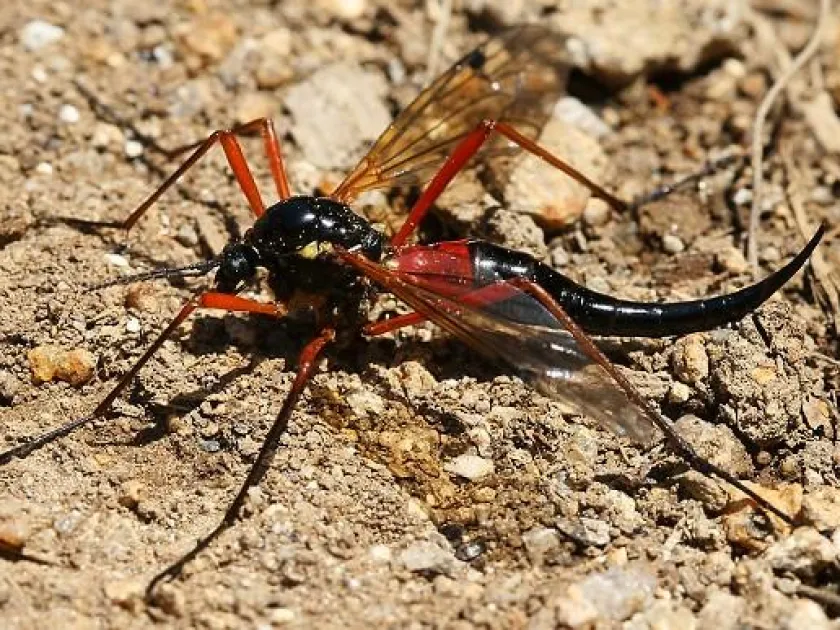
The Tanyptera crane fly (Tanyptera) belongs to the Tipulidae family within the order Diptera. Adults are large, long-legged insects with a distinct wing venation pattern.
Their bodies are often brightly colored with yellow and black patterns, serving as an evolutionary adaptation. Females possess a prominent ovipositor, which is used to insert eggs into soil or wood.
Larvae are cylindrical, legless, and typically exhibit a brownish-grey color. Their skin is thickened and wrinkled, allowing them to move efficiently through dense substrates.
These insects undergo a complete metamorphosis cycle, consisting of the egg, larval, pupal, and adult stages. The adult stage is primarily focused on reproduction, with minimal feeding.
Taxonomic identification of Tanyptera species usually requires microscopic analysis, as they share morphological similarities with other common crane fly genera.
What it damages
Larvae of Tanyptera predominantly inhabit damp, organic-rich soil and decaying deciduous wood, which serve as their primary food source.
While they are not major agricultural pests compared to other Tipulidae, they can cause significant damage in forest nurseries by feeding on the roots of young seedlings.
Damage occurs when larvae consume root tissue, leading to stunted growth, wilting, and eventually the death of susceptible young plants.
Crops cultivated in peat-heavy soils or areas with inadequate drainage are at higher risk of infestation by this specific crane fly group.
In landscape management, larvae may damage lawns and ornamental plants, causing thinning of turf and potential death in patches with high soil moisture.
When it appears
Adult flight usually occurs in late spring and early summer, when environmental temperatures are conducive to mating and egg-laying activities.
Females prioritize moist, sheltered areas for oviposition, which ensures that the newly hatched larvae have immediate access to necessary moisture and organic matter.
Larvae remain active throughout the growing season, feeding continuously on decaying matter and, if necessary, on the roots of surrounding vegetation.
Overwintering occurs in the larval stage, often deep within the soil profile or protected inside decomposing wooden debris to survive winter frosts.
Increased larval activity is typically observed in early spring when warming temperatures stimulate feeding and movement closer to the soil surface.
Signs of infestation
A primary indicator of infestation is the unexplained wilting of seedlings, even when soil moisture levels appear to be adequate for normal growth.
Root system examination often reveals the presence of greyish, legless larvae within the soil or the root zone of the affected plant.
Visible holes in decaying logs or wooden debris located near agricultural plots may suggest the presence of a Tanyptera population in the vicinity.
In turf management, patchiness and yellowing of the grass can be signs of larval feeding activity occurring just beneath the soil surface.
- Unexpected wilting of young plants.
- Larvae discovered during soil disturbance or transplanting.
- Root severance near the crown of the plant.
Control measures
Improving soil drainage is the most effective preventative measure, as it discourages females from selecting the area for egg-laying.
Autumn plowing and soil cultivation are recommended practices to expose larvae and pupae to predators such as birds and cold temperatures.
Biological control using entomopathogenic nematodes has proven to be an effective and environmentally friendly method for reducing larval populations.
Maintaining a clean field by removing decaying wood and excessive plant litter helps eliminate potential breeding habitats for the larvae.
Chemical intervention should be considered only as a last resort in professional nurseries and must follow local regulations for insect pest management.
Taxonomy
- Latin name
- Tanyptera
- Order
- Diptera (flies)
- Family
- Tipulidae
- EPPO code
- TANPSP
Discussion
No discussions yet — be the first.