
Spotted crane fly
Nephrotoma virgata
Description
How to identify
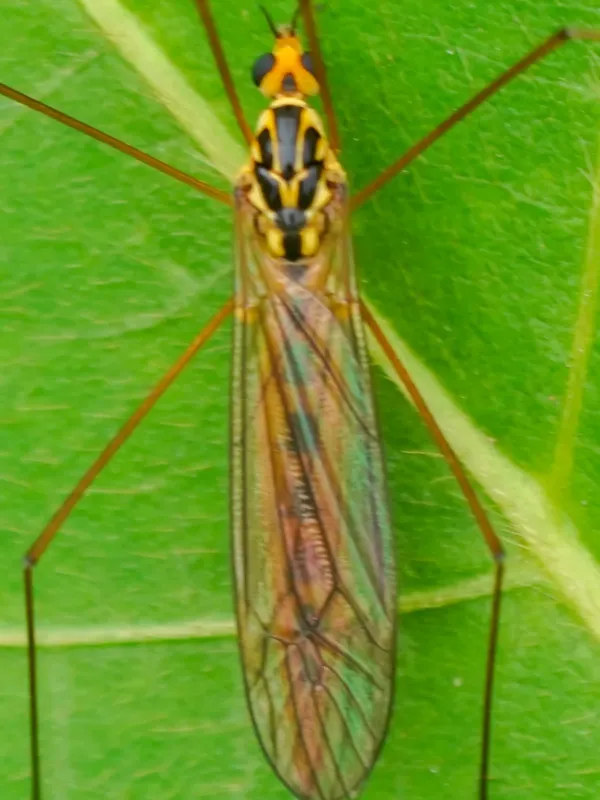
The spotted crane fly (Nephrotoma virgata) is a member of the Tipulidae family within the order Diptera. Adults look like giant mosquitoes with extremely long, fragile legs.
These insects reach 12–16 mm in length. Their body features distinctive yellow and black markings, which makes them easily recognizable in the field.
The larvae, often called leatherjackets, are cylindrical, legless, and have a tough, leathery skin that is usually greyish-brown. They possess strong mouthparts for cutting through plant tissue.
The life cycle undergoes complete metamorphosis, including egg, larval (four instars), pupal, and adult stages. Under standard field conditions, there is typically one generation per year.
Overwintering occurs primarily in the soil at a shallow depth, where larvae remain dormant during extreme cold but resume feeding as soon as temperatures rise.
What it damages
Leatherjackets are significant polyphagous pests that cause extensive damage to various crops by feeding on roots, stems, and underground plant parts.
Cereal crops, including wheat, oats, and barley, are particularly vulnerable during their germination and early establishment stages in the spring.
Corn (maize), pasture grasses, and root crops like sugar beets are also frequently attacked by these larvae, leading to substantial stand losses.
In greenhouses and vegetable nurseries, larvae can cause rapid destruction of young seedlings by severing the taproot just below the soil surface.
Heavy infestations result in sparse and uneven crop stands, as the larvae can quickly clear large patches of healthy plants in moist soil conditions.
When it appears
Adults typically emerge during late spring and early summer, primarily between May and July, and can be seen flying near field edges.
Females lay eggs in moist, well-vegetated soil, showing a clear preference for fields with high organic content or poor drainage.
After a short incubation period, larvae hatch and begin feeding immediately, continuing their growth cycle throughout the autumn months.
Spring is the period of most intensive damage, as larvae become active once soil temperatures rise, coinciding with the growth phase of newly planted crops.
Pupation takes place within the soil in spring. The pupal stage lasts approximately two weeks before the emergence of the next generation of adults.
Signs of infestation
The primary sign of an infestation is the appearance of thin or bare patches in the field where seedlings fail to establish or suddenly wither.
Affected plants often show chlorosis and yellowing, and they can be easily pulled from the ground because their roots have been severely damaged.
Closer examination of the root system often reveals gnawed edges or the complete absence of root hairs and lateral roots due to larval feeding.
In damp weather or at night, larvae may come to the soil surface, where they can be spotted; they typically coil up into a C-shape when touched.
A high number of adult crane flies spotted in a field during the spring is a strong indicator that the soil should be monitored for larval populations.
Control measures
Cultural control is the most effective strategy. Autumn tillage disrupts the soil environment, exposing larvae to desiccation and natural predators.
Managing soil moisture through improved drainage and controlling weeds in adjacent areas can significantly reduce egg-laying sites for females.
Crop rotation helps break the life cycle by removing the specific hosts that larvae require for development in the spring season.
Chemical control can be implemented using insecticidal soil treatments or seed coatings in fields with a history of high larval pressure.
Biological control options, such as the application of entomopathogenic nematodes, provide a targeted and environmentally friendly way to reduce larval numbers.
Taxonomy
- Latin name
- Nephrotoma virgata
- Order
- Diptera (flies)
- Family
- Tipulidae
- EPPO code
- PALEVI
Discussion
No discussions yet — be the first.