
Nephrotoma lineata
Nephrotoma lineata
Description
How to identify
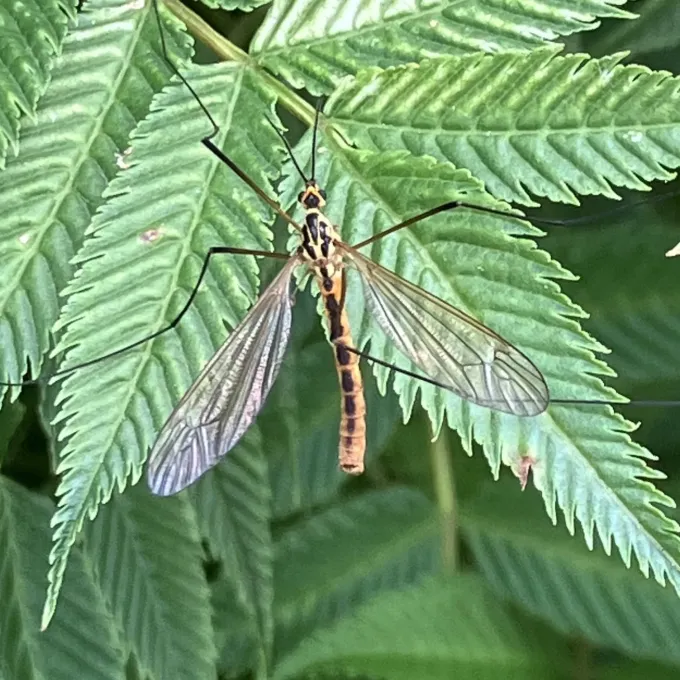
Nephrotoma lineata is a species of crane fly (family Tipulidae) within the order Diptera. The adult insect is characterized by a slender, yellow-and-black striped appearance, long fragile legs, and a wingspan of approximately 20–25 mm.
The body of the adult is delicate, with long antennae. The wings are transparent with a distinct dark vein along the anterior edge. Females possess an ovipositor used for inserting eggs into moist soil rich in organic matter.
The larvae are cylindrical, greyish-brown, and possess a tough, leathery cuticle. They lack thoracic legs, often leading to confusion with wireworms; however, their posterior morphology is distinct to this family.
The life cycle undergoes complete metamorphosis, consisting of the egg, larva, pupa, and adult stages. The entire cycle is highly dependent on environmental moisture, which is essential for larval survival.
While typically found in meadows and grasslands, the species readily colonizes agricultural fields, where it acts as a significant pest to various cultivated crops.
What it damages
The larvae are polyphagous, feeding on the roots and underground stems of a wide variety of plants, including cereals, forage grasses, and vegetable crops.
Major crops affected include winter wheat, barley, maize, potatoes, and sugar beets. The larvae chew through the root system near the soil surface, leading to plant collapse and death.
Damage symptoms include stunted growth, chlorosis of leaves, and reduced yields. In cases of high larval density, significant thinning of crop stands is common, resulting in bare patches in the field.
The most intensive feeding occurs during spring, when larvae move to the upper soil layers to feed on young seedlings, which are unable to recover from root severance.
Damage is most severe in fields with high soil moisture, which provides an optimal environment for the survival and development of the larvae throughout the growing season.
When it appears
Adult flight typically occurs from late spring to early summer. During this period, mating takes place, followed by egg-laying in moist soils, often near dense vegetation or crop residues.
Larvae hatch in late summer, initially feeding on decaying organic matter before transitioning to the roots of living plants as the season progresses.
Overwintering occurs in the larval stage deep within the soil. As temperatures rise in spring, larvae become active, migrating to the surface to resume feeding on germinating crops.
Pupation takes place within a soil chamber in late spring. After a relatively short pupal period, the next generation of adults emerges to restart the cycle.
Weather patterns significantly influence population dynamics, with cool and wet springs promoting high larval survival, while dry conditions during the egg-laying stage can significantly reduce population density.
Signs of infestation
The most prominent sign of infestation is the sudden wilting of individual plants that are not suffering from water stress. Closer inspection often reveals gnawed roots or severed stems at the soil line.
The presence of large numbers of crane flies at the field margins during the evening is a warning sign that requires further monitoring of soil larval populations.
- Yellowing and drying of seedlings without clear foliar disease.
- Irregular gaps or thinning patches in the field.
- Presence of greyish, leathery-skinned larvae in soil samples (up to 3-4 cm long).
- Visible bite marks or severance on the roots of affected plants.
Soil sampling is the most reliable method for confirming infestation, especially in low-lying areas or fields prone to water accumulation.
Control measures
Effective management begins with good agronomic practices, such as deep plowing to disturb overwintering larvae and the systematic removal of weeds that serve as alternative food sources.
Crop rotation is vital; avoiding cereals following previous years of permanent grassland or high-residue crops helps break the pest's reproductive cycle.
Chemical control options include the use of insecticide-treated seeds or the application of soil-incorporated granules at the time of planting to protect young roots.
Improved field drainage is a critical cultural control measure, as dry soil conditions are unfavorable for larval development and survival.
Biological controls, including the application of entomopathogenic nematodes, show promise in reducing larval populations in sustainable and organic farming systems.
Taxonomy
- Latin name
- Nephrotoma lineata
- Order
- Diptera (flies)
- Family
- Tipulidae
- EPPO code
- NPHTLI
Discussion
No discussions yet — be the first.