
Spotted crane fly
Nephrotoma flavescens
Description
How to identify
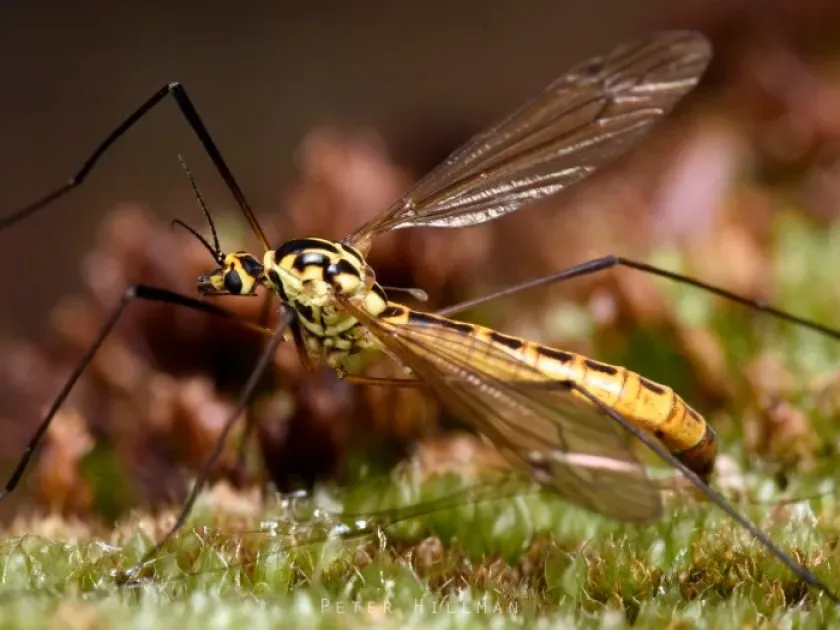
The spotted crane fly (Nephrotoma flavescens) is a member of the Tipulidae family, order Diptera. Adults resemble oversized mosquitoes with exceptionally long, fragile legs that detach easily.
The adult insect displays a yellowish-brown body with distinct dark stripes on its back and abdomen. The wingspan is between 30 and 40 mm, with the wings appearing clear but possessing a yellowish leading edge.
The larvae, often referred to as leatherjackets, are legless, cylindrical, and have a tough, leathery skin. Their coloration ranges from dull gray to brown, helping them camouflage effectively in the soil.
The head of the larva is largely retracted into the thorax, which is a key diagnostic feature. Mature larvae can grow up to 40 mm in length and reside predominantly in the topsoil layer.
The lifecycle includes egg, larva (with four instars), pupa, and adult stages. The transformation is complete, with pupation occurring in the soil before the adults emerge.
What it damages
The larvae are the primary source of damage, as they feed voraciously on roots and underground plant parts. They sever roots and chew through the base of stems, leading to plant collapse.
Crops affected by Nephrotoma flavescens include cereals like wheat and barley, corn, sugar beets, and various vegetable species. Established turf and pastures are also highly susceptible.
Feeding often results in uneven crop stands, with many plants wilting suddenly. Because the root system is destroyed, the plants lose their ability to transport water and nutrients.
Infestation is most severe in moist, organic-rich soils. In agricultural settings, a high density of larvae can lead to the total loss of seedlings on parts of a field.
The damage often leaves plants vulnerable to secondary fungal infections due to the open wounds on roots and stems created by the larvae during their feeding process.
When it appears
Adults typically emerge in late spring and throughout the summer months, with peak activity during June and July. They prefer humid conditions for mating and oviposition.
Females lay hundreds of eggs in damp soil or among thick vegetation. Eggs hatch within 2 to 3 weeks, and the young larvae begin feeding on organic matter before attacking living crops.
Larvae overwinter in the soil at various depths. As temperatures rise in the spring, they migrate toward the surface to resume feeding, which coincides with the germination and early growth of crops.
The activity level of the larvae is heavily dependent on soil moisture. Extended dry spells can force them deeper into the soil, temporarily reducing surface damage.
The entire lifecycle generally takes one year to complete. However, the timing of emergence can shift depending on local climate conditions and soil temperatures.
Signs of infestation
The most visible sign of infestation is the appearance of thin or patchy areas in fields and lawns. Plants in affected areas may yellow and can be pulled out of the soil with little resistance.
When examining the soil around damaged plants, one can often find leatherjacket larvae, especially after rainfall when they move toward the surface to breathe.
Roots show clear signs of external browsing and destruction. Unlike some other soil pests, leatherjackets consume tissues from the outside in, often leaving ragged, damaged edges on roots.
Turf damage is characterized by patches of dead or yellowing grass that can be lifted or rolled back easily, as the root connection to the soil has been completely severed.
The presence of many adult crane flies hovering over a field or lawn during the evening is a clear indicator that egg-laying is occurring and management steps should be considered.
Control measures
Cultural control is the most effective approach. Deep plowing and soil cultivation expose the larvae to predators (such as birds) and the drying effects of the sun, significantly reducing their survival rate.
Improving soil drainage is essential in areas prone to waterlogging, as Nephrotoma flavescens thrives in moist conditions. Reducing soil moisture makes the environment less hospitable for the larvae.
Crop rotation helps break the cycle of the pest. Avoiding planting susceptible crops directly after permanent grassland or clover fields can minimize the risk of infestation.
For high-value crops, insecticide treatment of seeds or the application of soil-incorporated granules before planting provides a necessary protective barrier for young, vulnerable plants.
In cases of heavy infestation, poisoned baits can be used to manage the population. Biological controls, such as beneficial nematodes, are also increasingly used in horticultural and turf management.
Taxonomy
- Latin name
- Nephrotoma flavescens
- Order
- Diptera (flies)
- Family
- Tipulidae
- EPPO code
- PALEFL
Discussion
No discussions yet — be the first.