
Nephrotoma dorsalis
Nephrotoma dorsalis
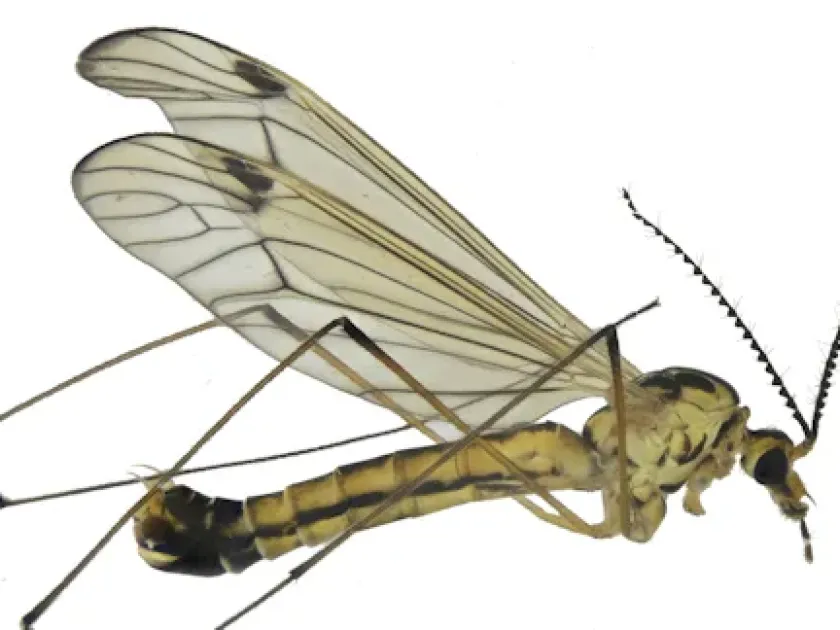
Description
How to identify
Nephrotoma dorsalis is a species of crane fly belonging to the family Tipulidae. Adult flies are characterized by their slender, elongated bodies and long legs, often resembling large mosquitoes that do not bite humans.
The adults are distinguished by a yellow and black abdominal pattern, which serves as a key identification mark. They typically emerge during the summer months to mate and lay eggs in moist soil.
The larvae, often referred to as leatherjackets, have a tough, leathery skin that is greyish-brown in color. They are legless and possess a robust, chewing mouthpart adapted for feeding underground.
Biology of the species dictates that larvae develop primarily in damp, organic-rich soils. They undergo several molts through different larval instars before pupating in the upper soil layers.
The entire lifecycle is heavily dependent on moisture levels, as both eggs and larvae are highly susceptible to desiccation in dry, sandy soils.
What it damages
The larvae are significant agricultural pests that feed on the root systems of a wide range of plants. By consuming roots, they prevent water and nutrient uptake, leading to plant wilting and death.
Crops frequently targeted by Nephrotoma dorsalis include various vegetable crops, winter cereals, and ornamental turf. Fields with poor drainage are particularly vulnerable to heavy infestations.
Damage is most severe during the spring when seedlings are developing their primary root systems. Larvae can also bore into the base of plant stems, causing structural collapse.
Yield losses can be substantial in both commercial agriculture and home gardening, particularly in years with wet autumns followed by mild winters that favor larval survival.
Unlike the larvae, adult crane flies feed mainly on nectar and are considered harmless to vegetation, often serving as a food source for birds and other predators.
Signs of infestation
Plants affected by larval feeding often show unexplained wilting or stunting. When checked, the root system is usually found to be severed or heavily damaged at the base.
Evidence of feeding often appears as chewed edges or hollowed-out tissue on taproots and underground stems. Secondary rotting is common due to bacterial or fungal infections entering through wounds.
The presence of larvae can be confirmed by digging in the top few centimeters of moist soil around damaged plants, where the greyish, legless larvae are typically found.
Patches of dead or yellowing turf or crops are key visual indicators. These patches often expand as the larvae move to adjacent plants in search of food.
In high-density populations, soil disturbances or surface movement can sometimes be seen, especially during humid nights when larvae may come to the surface.
Control measures
Improving soil drainage is the most effective long-term preventative measure. Reducing soil moisture levels makes the environment unsuitable for larval development.
Regular cultivation and tillage help expose larvae to natural predators like birds and ground beetles, significantly reducing the population density in a field.
Crop rotation should be employed to interrupt the lifecycle of the pest. Avoid planting susceptible crops immediately after removing long-term grass or sod.
Chemical control involving soil-applied insecticides is reserved for cases of severe infestation. Products must be applied according to local agricultural guidelines to ensure safety.
Biological control using entomopathogenic nematodes or fungi has shown promise in managing leatherjacket populations in specific high-value crop settings and lawns.
Taxonomy
- Latin name
- Nephrotoma dorsalis
- Order
- Diptera (flies)
- Family
- Tipulidae
- EPPO code
- PALEDO
Discussion
No discussions yet — be the first.