
Spotted crane fly
Nephrotoma crocata
Description
How to identify
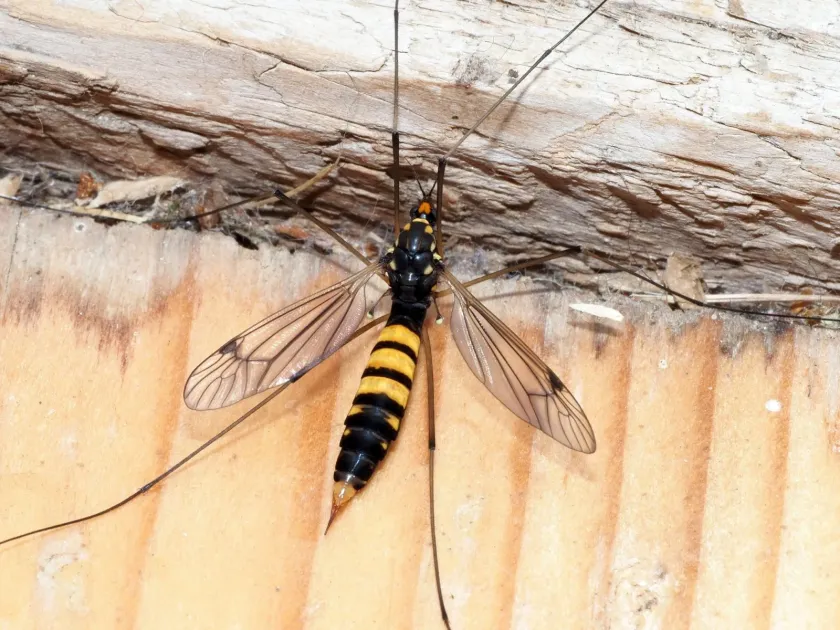
The spotted crane fly (Nephrotoma crocata) belongs to the order Diptera and the family Tipulidae. Adult insects are large and crane-like in appearance, easily recognized by their vibrant yellow and orange abdomen marked with distinct black transverse bands.
The wings of the adult are marked with a noticeable dark spot near the anterior margin. Their legs are characteristically long and delicate, detaching easily, which allows the insect to escape predators while moving through dense vegetation.
The larvae, commonly referred to as leatherjackets, have a cylindrical, toughened body that is brownish or earthy in color. They lack visible legs and possess a reduced head with hardened mandibles designed for chewing through tough plant roots and stems.
The lifecycle follows a complete metamorphosis through egg, larva (with several instars), pupa, and adult stages. While the adult stage focuses on mating and dispersal, the larval stage is the primary destructive phase causing significant agricultural losses.
Their biology is intrinsically linked to soil moisture levels. Larvae are highly sensitive to desiccation, which explains why they thrive in damp environments, particularly in low-lying fields or areas with poor drainage and high organic matter content.
What it damages
Spotted crane fly larvae are polyphagous pests that feed on the roots, tubers, and underground stems of a wide variety of agricultural crops. They are particularly destructive during the early growth stages of seedlings, where even minor damage can lead to plant death.
Cereal crops, including wheat and rye, are frequently attacked during the autumn and spring seasons. Larvae feed on the roots and the base of the stems, causing thinning of plant stands and leading to significant reductions in total crop yield.
Row crops such as maize, sugar beet, and sunflower are also susceptible to larvae feeding. Destruction of the root system prevents proper nutrient and water uptake, often causing stunted growth or the complete failure of crops on heavily infested field patches.
Vegetable gardens and nurseries are at high risk, as larvae can destroy entire batches of seedlings, such as tomatoes, cabbage, and cucumbers. The damage is often hidden beneath the soil surface, making it difficult to detect until the plant starts to wilt.
Pasturelands and alfalfa fields also suffer from larval infestations. Constant feeding on grass roots leads to the degradation of the sward and the intrusion of weeds, which negatively impacts the quality of forage provided for livestock.
When it appears
The flight period for adults typically occurs from June through August. During these months, adults emerge from the soil, mate, and deposit their eggs directly into the upper layers of moist soil, often choosing areas with high vegetation density.
Larval development initiates in the autumn. As temperatures drop, larvae remain active in the soil, feeding on organic material and the roots of winter crops. Their robust, toughened skin allows them to survive through winter even in cold soil conditions.
Spring is the season of peak activity. As soil temperatures increase, the overwintered larvae resume intense feeding to accumulate reserves for pupation. This is the period when farmers should be most vigilant for signs of crop damage.
Pupation occurs in the soil during late spring and early summer. The pupal stage is relatively short, providing a protective transition period before the adult emerges to the surface to complete the cycle and repeat the infestation process.
Periods of extreme heat and drought during the summer can significantly limit the population size. The survival rates of eggs and newly hatched larvae are drastically reduced when soil moisture levels fall below the threshold required for their development.
Signs of infestation
The most prominent sign of infestation is the sudden wilting of plants in patches across the field. Affected plants often lack sufficient root systems, making them easy to pull from the soil compared to healthy plants nearby.
When investigating, digging into the soil to a depth of 2–5 cm will often reveal the presence of leatherjackets. These larvae are easily identified by their tough skin, lack of true legs, and tendency to curl up when disturbed by human activity.
Visible swarms of adult crane flies during evening hours act as an early warning sign. High densities of adults suggest that a significant number of eggs will be laid in the soil, potentially leading to a higher pest pressure in the subsequent season.
The presence of large flocks of birds, such as crows or starlings, feeding in specific areas of the field can be a strong indicator of an underground infestation. Birds often target patches where the larvae are concentrated near the soil surface.
Secondary symptoms may include chlorosis and stunted development of crops. Because the root damage creates entry points for soil-borne pathogens, the plant may also exhibit signs of root rot, often masking the initial cause of the decline.
Control measures
Effective soil management is crucial for control. Deep autumn plowing is a highly effective method to bring larvae to the surface, where they become vulnerable to desiccation by sunlight or predation by birds, effectively reducing the population density.
Improving soil drainage in low-lying areas is essential. By reducing the soil moisture, fields become less attractive for egg-laying and less hospitable for the survival of developing larvae during the initial stages of their lifecycle.
Crop rotation serves as a strategic tool to manage crane fly populations. By alternating crops that are susceptible with those that are less attractive or require different tillage practices, the continuity of the pest lifecycle is broken.
Seed treatment with systemic insecticides provides excellent protection during the critical seedling stage. This method ensures that the plant is shielded from larval damage from the moment of germination, allowing it to establish a strong root system.
The application of poisoned baits is a practical solution in greenhouse environments or for high-value vegetable crops. These baits are placed in the evening to target larvae as they move towards the soil surface, providing a focused approach to pest suppression.
Taxonomy
- Latin name
- Nephrotoma crocata
- Order
- Diptera (flies)
- Family
- Tipulidae
- EPPO code
- PALECR
Discussion
No discussions yet — be the first.