
Crane fly
Nephrotoma
Description
How to identify
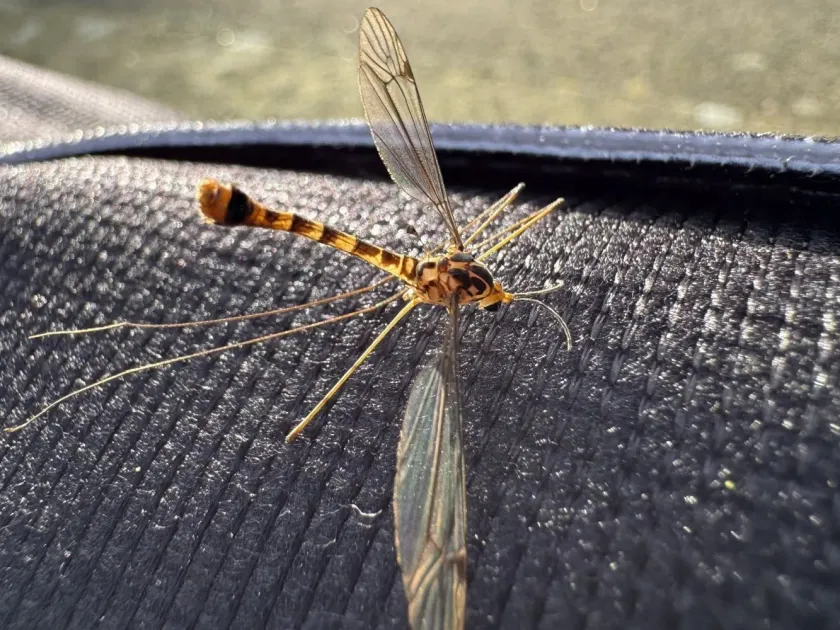
The genus Nephrotoma belongs to the Tipulidae family, commonly known as crane flies. Adults are often mistaken for giant mosquitoes due to their long, fragile legs and slender bodies.
They are characterized by a distinct yellow and black color pattern. The wings are usually clear, and the antennae are multi-segmented. Adults are generally harmless to crops, as they focus entirely on reproduction.
The larval stage, often called leatherjackets, is the true pest. These larvae are legless, cylindrical, and possess a tough, leathery skin, usually greyish-brown in color, allowing them to survive in soil.
The lifecycle consists of four stages: egg, larva (undergoing four instars), pupa, and adult. The larvae remain within the soil, providing them protection from external environmental factors.
While adults emerge in summer, they only live for a short period. Their primary role is to lay eggs in moist, vegetated soil, which will eventually support the development of the next generation.
What it damages
Leatherjackets are polyphagous soil pests that consume the roots and basal stems of a vast range of crops, including winter cereals, maize, and sugar beet. They pose a significant threat to young plants.
By feeding on roots, they sever the plant's connection to water and nutrients. This results in stunting, wilting, and often the complete death of the plant, especially during the vulnerable seedling stage.
They are particularly destructive in humid environments. The larvae thrive in moisture-retentive soils, moving through the upper layer to feed on succulent root tissues throughout the day and night.
Secondary damage occurs when the wounds created by the larvae become entry points for soil-borne pathogens. This leads to root rot, further complicating the recovery of affected crops.
Heavy infestations can lead to significant thinning of crop stands. Large patches of dead or dying plants are clear indicators of subterranean feeding activity by the crane fly larvae.
When it appears
The emergence of adult crane flies typically occurs between late spring and mid-summer. This period is when they mate and seek appropriate sites for oviposition, primarily moist, undisturbed ground.
The larvae are active for most of the year, but feeding intensity peaks in the autumn and again in the spring. Spring is the most critical time for crop protection as seedlings are rapidly developing.
During winter months, larvae remain inactive deep in the soil profile if temperatures are low, but they resume feeding as soon as the soil begins to warm up in early spring.
The pupal stage occurs just before the adults emerge. This stage is relatively short and takes place inside a protective pupal casing buried within the top few centimeters of the soil.
The duration of each stage is heavily dependent on soil temperature and humidity. Prolonged mild autumn weather allows larvae to gain more weight, increasing their survival rate through the winter.
Signs of infestation
Early symptoms include unexpected wilting of plants despite adequate soil moisture. If you tug on a dying plant, it may pull away from the soil easily because its roots have been destroyed.
Inspecting the soil around the base of the plant often reveals the larvae. Digging to a depth of 5–10 cm will usually expose the greyish-brown, leathery larvae if an infestation is present.
Plants often exhibit uneven growth patterns across the field. In many cases, damaged plants look chlorotic or stunted compared to healthy ones due to the impaired root system.
- Seedling emergence failures or large bare spots.
- Visible bite marks with jagged edges on roots and stems.
- Soil disturbances near the plant base where larvae have surfaced.
- Increased presence of secondary root-rotting diseases in the crop.
Monitoring should be conducted by performing soil pits. Finding more than a certain threshold of larvae per square meter indicates that intervention is necessary to prevent significant yield loss.
Control measures
Cultural control is highly effective. Tilling the soil exposes larvae to avian predators and desiccation by the sun, significantly reducing their population density before planting.
Improving field drainage is vital. Since crane fly larvae are highly moisture-dependent, lowering soil moisture levels creates a hostile environment that discourages survival and development.
Crop rotation helps break the life cycle by removing the specific vegetation the larvae prefer. Avoid planting susceptible crops in fields known for high soil moisture and past crane fly activity.
Seed treatments with systemic insecticides are a common approach to protect young plants during the germination and establishment phases when they are most susceptible to root attack.
In high-pressure situations, granular insecticides applied during planting can provide a protective zone for the developing root system. Always ensure application complies with regional safety standards.
Taxonomy
- Latin name
- Nephrotoma
- Order
- Diptera (flies)
- Family
- Tipulidae
- EPPO code
- NPHTSP
Discussion
No discussions yet — be the first.