
Stiletto fly
Thereva
Description
How to identify
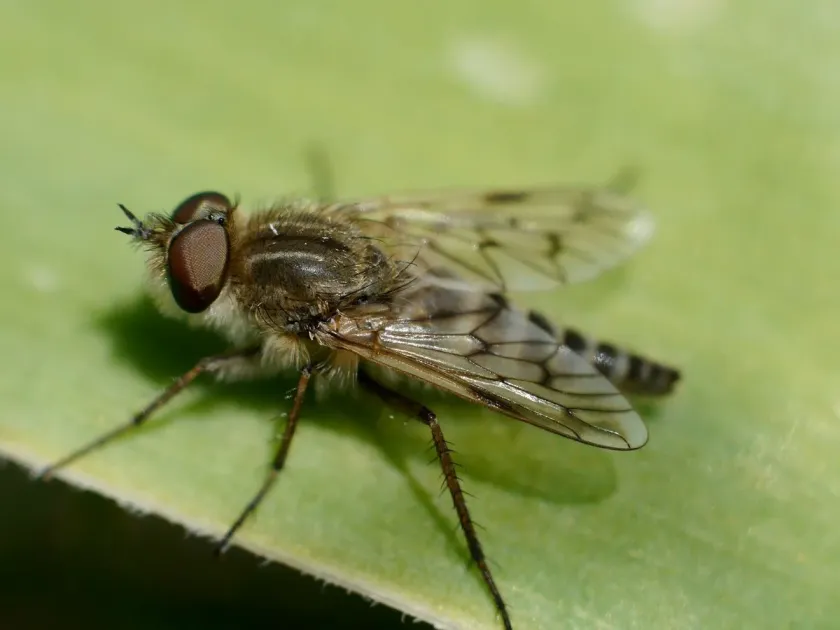
Adult stiletto flies (genus Thereva) are medium-sized insects characterized by an elongated body covered in fine, dense hairs, often appearing grayish or brownish.
A distinctive feature of the females is the conical-shaped tip of the abdomen, which is a key morphological marker for identifying this genus in the field.
The larvae are particularly notable for their thin, flexible, and segmented bodies, which give them a wire-like appearance similar to wireworms.
They lack visible legs and move through the soil with a serpentine motion, aided by their smooth, segmented structure that allows for easy penetration.
Their coloration is generally pale yellow or tan, which helps them camouflage within the soil layers where they spend most of their life cycle.
What it damages
The damage to agricultural crops is caused by the larvae, which inhabit the topsoil layers where they feed on organic matter and decaying plant tissue.
While many species are primarily saprophagous, they frequently become pests when they consume the roots of young seedlings during periods of food scarcity.
Cereal crops, vegetables, and greenhouse seedlings are most susceptible to root damage, which results in stunted growth and weakened plant immunity.
In cases of high infestation, the roots of the plants are severely girdled or consumed, leading to widespread wilting and the eventual death of the crop.
Fields rich in organic debris, such as those where cover crops were recently tilled, are particularly attractive to females for egg-laying, increasing the risk of damage.
When it appears
Adult stiletto flies emerge in late spring or early summer, coinciding with the warming of the soil, which triggers their mating and egg-laying activities.
Eggs are typically deposited in loose soil or within accumulated organic matter, providing the emerging larvae with an immediate food source.
The larval stage is long-lived, often spanning over a year, which means that infestations can persist throughout multiple growing seasons if not managed properly.
Larval activity reaches its peak during spring and autumn, when soil moisture levels are conducive to their movement in search of root tissues.
During the winter months, the larvae burrow deeper into the soil profile to avoid freezing temperatures, allowing them to survive harsh winter conditions.
Signs of infestation
The presence of stiletto fly larvae is often evidenced by irregular germination patterns and the presence of wilted patches across the field.
An inspection of the root system often reveals tunnels or bite marks on the primary and secondary roots, which can be distinguished from other pests.
Field soil samples taken from affected areas often confirm the presence of these wire-like larvae when the soil is sifted or carefully inspected.
In greenhouses, signs include the sudden collapse of young plants where the roots are found to be partially missing or damaged near the root collar.
Observing the flight of adult flies around field borders or on nearby flowers during the spring can serve as an early warning for potential soil infestation.
Control measures
Managing stiletto fly populations requires a combination of cultural practices aimed at reducing the suitability of the soil for larval development.
Deep autumn plowing is a highly effective cultural control method, as it exposes the larvae to predators and unfavorable environmental conditions.
- Maintaining clean fields by eliminating weeds that harbor larvae.
- Proper management of crop residues to avoid attracting egg-laying adults.
- Crop rotation to break the life cycle of the pest.
- Applying soil-based insecticides only when infestation thresholds are exceeded.
Biological control using entomopathogenic fungi or nematodes offers a sustainable alternative to chemical insecticides, particularly in protected environments.
For high-value crops, treating seeds with systemic insecticides can provide a critical window of protection against early-stage root damage.
Taxonomy
- Latin name
- Thereva
- Order
- Diptera (flies)
- Family
- Therevidae
- EPPO code
- THEVSP
Discussion
No discussions yet — be the first.