
Black fly
Simulium venustum
Description
How to identify
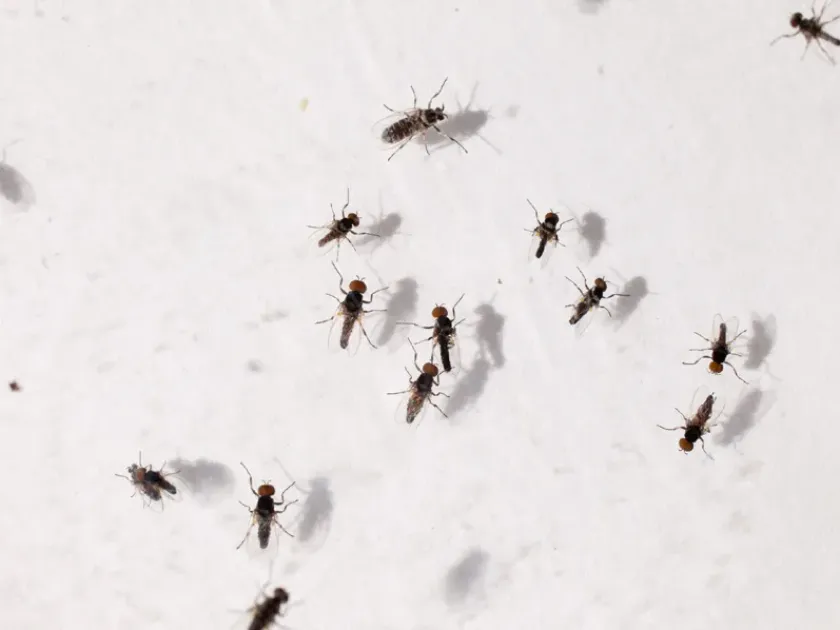
The black fly (Simulium venustum) is a small, stout-bodied dipteran insect belonging to the Simuliidae family. Adults typically measure between 3 to 4 mm in length and are dark brown to black in color.
They possess broad, clear wings with a distinct vein pattern. Their mouthparts are specialized for cutting the skin of warm-blooded hosts and feeding on blood, which is essential for female egg production.
The larvae are aquatic and cylindrical, often called "black fly larvae." They anchor themselves to submerged rocks, branches, or vegetation in flowing water using a posterior hook-like structure.
Pupation occurs within a silken cocoon attached to a submerged substrate. This structure protects the developing insect from the turbulence of the stream or river.
Adults are strong fliers and are highly attracted to hosts by visual cues, carbon dioxide emissions, and heat signatures, making them persistent pests during the warm season.
What it damages
While Simulium venustum does not directly consume agricultural crops, it poses a severe threat to the livestock sector, causing significant economic losses to farmers.
The massive attacks by swarms of black flies cause intense irritation and blood loss in cattle, leading to decreased weight gain, reduced milk production, and overall stress.
In extreme cases, the toxic saliva injected during bites can cause anaphylactic reactions in livestock, sometimes resulting in the death of the animals.
The presence of these insects forces farmers to disrupt grazing routines and restricts access to pastures located near streams, impacting feed efficiency and land management.
Furthermore, human workers in the field are frequently forced to stop activities due to the extreme annoyance and painful bites caused by the insects during peak seasons.
When it appears
The activity of black flies is heavily dependent on water temperature and flow. Adults typically emerge in late spring and early summer, creating a peak period of nuisance.
Depending on the climatic conditions, the life cycle from egg to adult can be completed in a few weeks, allowing for multiple generations per season in favorable environments.
They are most active during the calm hours of the early morning and late evening, usually avoiding the intense heat of midday unless it is overcast or humid.
Winter survival is typically achieved through the egg stage, which remains dormant in the sediment or on aquatic plants until the water warms up in the spring.
Weather patterns with high rainfall in the spring often lead to increased stream flow, providing more breeding ground and resulting in larger adult populations.
Signs of infestation
A primary indicator is the presence of swarms hovering over running water or near livestock. The sound of their flight can often be heard before the flies are spotted.
Signs of infestation on livestock include restlessness, agitation, and the tendency of the herd to huddle together or move constantly to escape the biting insects.
Visual confirmation of larvae can be found by examining submerged vegetation or rocks in streams; they appear as dark, velvety patches clinging to the surface.
Persistent scratching, inflamed bite marks, or swollen ears in animals are direct physical signs that a herd has been heavily attacked by black flies.
Reduced milk yield in dairy herds and poor weight gain in cattle, especially when pastures are near water, serve as secondary indicators of black fly activity.
Control measures
The most effective approach is the targeted application of biological larvicides, such as Bacillus thuringiensis israelensis (Bti), to infested streams to kill larvae without harming aquatic life.
Livestock protection is crucial and involves using insecticidal ear tags, pour-on treatments, and protective blankets to deter flies from feeding on the animals.
Habitat modification, including the removal of excessive aquatic vegetation in small streams and irrigation canals, can significantly reduce available breeding sites.
For field personnel, using light-colored clothing, head nets, and effective DEET-based repellents is the recommended practice to avoid painful bites and allergic reactions.
Integrated pest management strategies focusing on consistent monitoring of stream populations alongside defensive measures for livestock provide the best protection outcomes.
Taxonomy
- Latin name
- Simulium venustum
- Order
- Diptera (flies)
- Family
- Simuliidae
- EPPO code
- SIMUVE
Discussion
No discussions yet — be the first.