
Black fly
Simulium damnosum
Description
How to identify
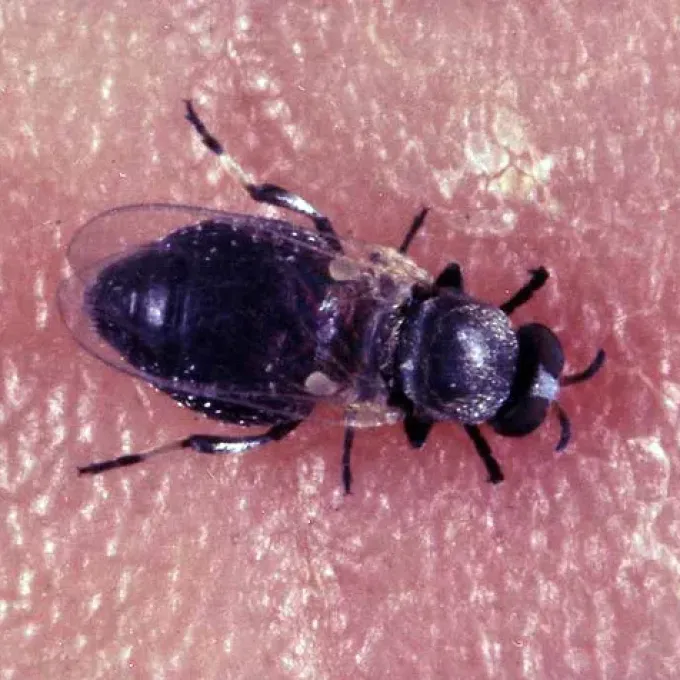
The black fly (Simulium damnosum) is a small dipteran insect belonging to the Simuliidae family, typically ranging from 2 to 4 mm in length.
These insects are characterized by a stout body, short antennae, and a dark, often black or deep brown coloration that defines their common name.
Females possess specialized mouthparts designed for blood-feeding, making them persistent and aggressive pests for various warm-blooded animals.
While they are not primary pests of plants, they are significant vectors for several debilitating diseases, impacting the productivity of agricultural sectors.
Identification often relies on their breeding habitats, which are exclusively restricted to clean, fast-flowing oxygenated water sources.
What it damages
The primary economic impact occurs in the livestock industry, where cattle, sheep, and horses suffer from relentless biting and harassment.
Bites from black flies cause severe irritation, allergic dermatitis, and secondary infections, leading to significant stress and reduced weight gain in animals.
Dairy cattle often experience a substantial drop in milk production during peak fly seasons due to extreme stress and avoidance of grazing areas.
Beyond physical damage, *Simulium damnosum* is a known vector for onchocerciasis and other parasitic diseases in both humans and animals.
Although they do not feed on crops, the presence of these flies often disrupts agricultural operations, delaying essential fieldwork near riverine areas.
When it appears
The life cycle of the black fly is strictly tied to environmental conditions, specifically water velocity and temperature in breeding sites.
Adult populations typically emerge in late spring and remain active throughout the summer, with peak activity during calm dawn and dusk periods.
The complete metamorphosis includes four stages: egg, larva, pupa, and adult, allowing the species to complete multiple generations within a single season.
Temperature and humidity levels significantly influence the flight range and aggression level of female flies as they search for a blood meal.
Their persistence ensures that they remain a constant threat throughout the warmer months, especially in regions with abundant fast-flowing streams.
Signs of infestation
Livestock often exhibit defensive behaviors such as bunching together or seeking refuge in shaded or smoky areas to escape the flies.
Skin examination of affected animals reveals clusters of hemorrhagic bites, inflammation, and localized swelling, particularly around the head and ears.
A sudden decline in animal welfare, coupled with visible skin lesions, serves as a strong indicator of an intense black fly infestation in the pasture.
The sight of swarming clouds of small dark flies near riverbanks is a direct sign of high population density and imminent attack risk.
Personnel working in the field may experience significant discomfort, as the aggressive biting habits of the flies make outdoor labor difficult.
Control measures
Effective management focuses on a combination of physical barriers and chemical repellents to protect livestock from bites.
Strategic grazing schedules, moving herds away from streams during peak fly activity, significantly reduce the impact of infestations.
Veterinary oversight is crucial to treat bite wounds and manage the secondary health complications that often follow massive fly attacks.
- Application of specialized insecticidal pour-ons approved for livestock.
- Installation of protective netting in stables and milking parlors.
- Use of smoke-pots to deter flies in concentrated holding areas.
Integrated pest management strategies, combining environmental monitoring and protective measures, are essential for maintaining herd health.
Taxonomy
- Latin name
- Simulium damnosum
- Order
- Diptera (flies)
- Family
- Simuliidae
- EPPO code
- SIMUDA
Discussion
No discussions yet — be the first.