
Prosimulium mixtum
Prosimulium mixtum
Description
How to identify
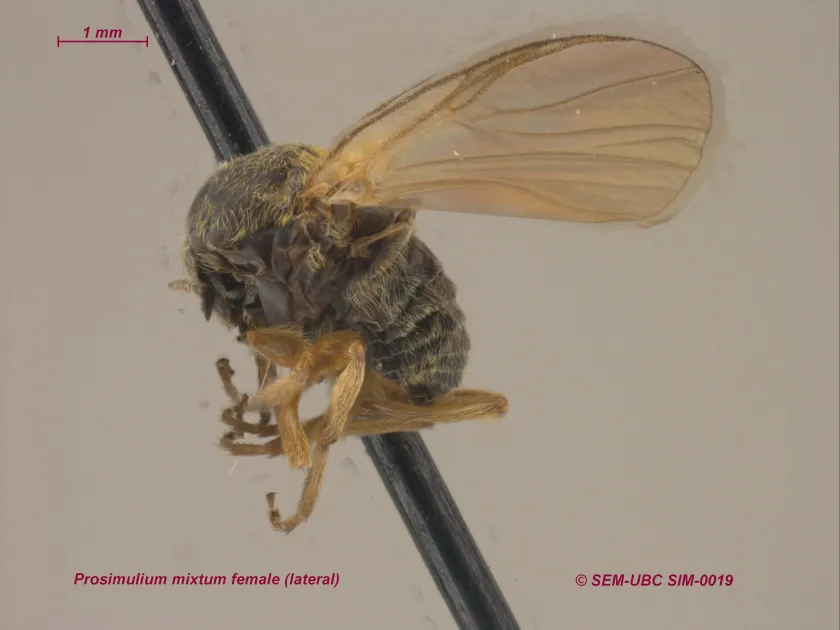
Prosimulium mixtum is a small biting fly species belonging to the family Simuliidae. These insects are characterized by a stout, dark-colored body typically measuring 3 to 5 mm in length.
Adult females possess specialized biting mouthparts used to pierce the skin of hosts to obtain a blood meal. Males do not bite and subsist primarily on nectar from flowers.
The larval stage occurs exclusively in running freshwater environments, such as streams and rivers. Larvae use a posterior suction disk to attach firmly to submerged rocks or vegetation.
Pupation takes place within distinct cocoons, which are essential for identifying the specific developmental stage of the insect during field surveys.
The species is known for its synchronized, massive emergence in early spring, creating significant pressure on livestock populations in temperate regions.
What it damages
While this insect does not directly feed on crops, it is a severe pest in the livestock industry, causing substantial indirect economic losses for farmers.
Massive swarms of black flies attack cattle, sheep, and horses, causing immense stress, which leads to reduced growth rates and significantly lower milk yields.
The bites are painful and cause toxic saliva to enter the bloodstream, resulting in severe allergic reactions, localized swelling, and persistent irritation.
In cases of severe infestation, livestock may develop dermatitis and open wounds, which increase the risk of secondary infections and attract other parasites.
Producers often face the need for emergency housing for animals or the implementation of strict grazing schedules, adding operational costs to the farming business.
When it appears
The life cycle of Prosimulium mixtum begins in early spring, coinciding with the immediate thawing of local waterways. It is among the first pests to emerge after winter.
Peak adult activity occurs during the months of May and June. During this window, females are highly aggressive in their search for blood hosts to facilitate egg production.
Development time is highly sensitive to water temperature and flow rates. Under optimal conditions, the generation cycle progresses rapidly through the spring.
As summer heat sets in and water currents slow down, the larval development is disrupted, leading to a natural decline in the population of these biting flies.
By late summer, adult populations have largely died off, having laid eggs that will enter diapause, ensuring survival through the next winter season.
Control measures
Effective control focuses on managing larval populations in streams using environmentally friendly biological agents, such as formulations of Bacillus thuringiensis.
Protecting livestock involves the application of topical repellents and contact insecticides that are approved for use on farm animals to deter biting behavior.
During peak flight periods, it is recommended to keep animals in sheltered barns during early morning and late evening when black fly activity is at its highest.
Habitat management, including the clearing of brush and maintaining short grass around grazing areas, can reduce resting sites and lower the density of flies.
- Utilizing insecticide-impregnated ear tags for livestock.
- Installing high-density mesh screens on animal housing windows.
- Monitoring stream flows to time biological treatments accurately.
Taxonomy
- Latin name
- Prosimulium mixtum
- Order
- Diptera (flies)
- Family
- Simuliidae
- EPPO code
- PRSMMI
Discussion
No discussions yet — be the first.