
Carrot rust fly
Chamaepsila nigricornis
Description
How to identify
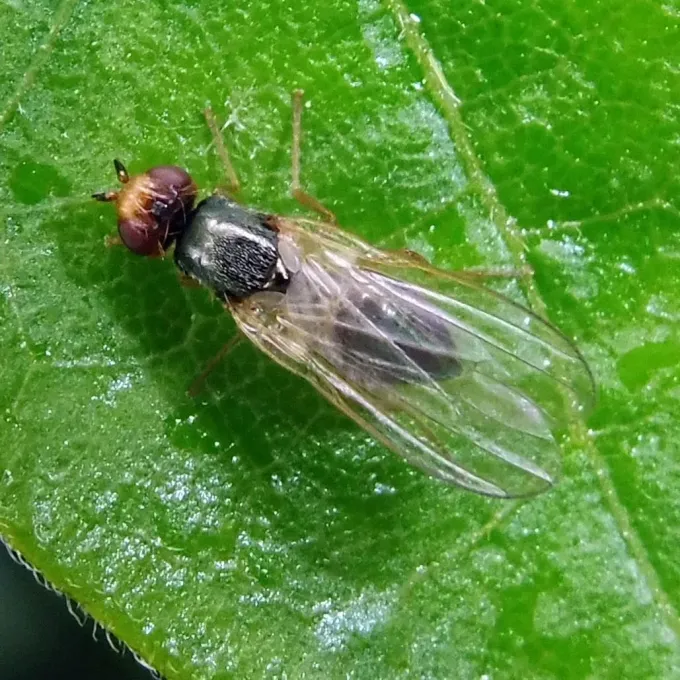
The carrot rust fly (Chamaepsila nigricornis) belongs to the Psilidae family. It is a small fly, about 4-5 mm long, with a shiny black body and a yellowish head.
These flies are nocturnal and prefer damp, sheltered areas. They are weak fliers and usually stay close to the ground, moving within the canopy of the host plants.
The larvae are legless, creamy-white maggots that grow up to 8-10 mm in length. They are the stage responsible for the economic damage caused to crops.
The life cycle involves two generations in many regions. Adults emerge in spring, mate, and lay eggs near the base of host plants in the soil.
They overwinter as pupae in the soil or as late-stage larvae inside unharvested roots, remaining dormant until the favorable spring temperatures arrive.
What it damages
The primary hosts of this pest include carrots, parsnips, celery, parsley, and other members of the Apiaceae family, which are commonly grown in gardens.
Larvae burrow into the taproots of the plants, creating tunnels that eventually turn rusty-brown and rot, rendering the vegetables inedible.
In addition to physical damage, the tunnels serve as entry points for soft rot bacteria, which can cause the entire root to decay rapidly in storage.
Seedlings attacked by larvae may wilt and die completely, as the root system is severed by the feeding activities of the developing maggots.
High infestations can result in total crop failure, making it one of the most destructive pests for root vegetable production in temperate climates.
When it appears
The first generation of adults emerges in late spring, often synchronized with the flowering of hawthorn or apple trees, indicating the start of the risk period.
The second generation typically occurs in mid-to-late summer, posing a severe threat to late-harvested carrot crops that remain in the ground during this time.
Egg-laying is most intense during periods of calm, warm weather, as the flies avoid windy environments where they might be easily buffeted about.
The development time from egg to adult is highly dependent on ambient temperatures, with warmer seasons leading to faster life cycle completion.
Constant monitoring using sticky traps is a recommended practice for agronomists to determine the exact peak of adult activity in their specific location.
Signs of infestation
The first noticeable symptom is the bronzing or reddening of the carrot foliage, which later turns yellow and eventually wilts under sun exposure.
Upon inspection, the roots show distinctive jagged tunnels filled with reddish-brown frass, which is a hallmark of the larval feeding process.
Stunted growth of the plant tops compared to surrounding healthy plants is a clear indication that root damage has already occurred beneath the soil surface.
When harvested, infested carrots may have a bitter taste and a woody texture, making them unattractive and unacceptable for culinary purposes.
In cases of severe damage, the root may appear severely deformed, with large cavities that penetrate deep into the central part of the carrot.
Control measures
Crop rotation is fundamental; moving carrot beds at least 30-50 meters away from previous sites helps break the life cycle of the pest.
Floating row covers or fine-mesh netting, applied immediately after sowing, act as a physical barrier preventing the flies from reaching the soil.
Thinning should be performed during the evening or on windy days to minimize the release of volatile compounds that attract the flies to the plants.
Companion planting with strong-smelling crops like onions, leeks, or garlic can help mask the scent of carrots and reduce the attraction of the flies.
- Remove and destroy all infested roots immediately
- Deep cultivation in autumn to expose pupae to frost and predators
- Avoid unnecessary damage to the soil and foliage during the growing season
Taxonomy
- Latin name
- Chamaepsila nigricornis
- Order
- Diptera (flies)
- Family
- Psilidae
- EPPO code
- PSILNI
Discussion
No discussions yet — be the first.