
Carrot rust fly
Chamaepsila
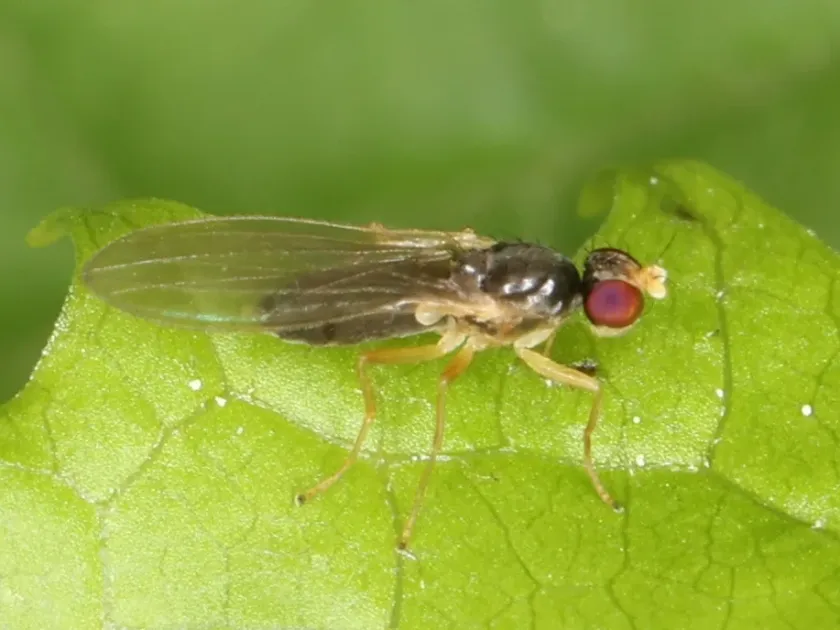
Description
How to identify
The carrot rust fly (Chamaepsila rosae) is a member of the Psilidae family within the order Diptera. The adult fly is small, measuring about 4–5 mm long, with a shiny black body and a yellowish head.
The larvae are legless, cylindrical, and pale yellow, growing up to 6–7 mm in length. They possess specialized mouthparts that allow them to tunnel into the roots of host plants.
The pest typically produces two generations per year. The winter is spent as pupae in the soil or as larvae inside overwintering roots left in the field after the harvest.
The emergence of the first generation of adults usually corresponds with the blooming period of hawthorn and apple trees, serving as a biological marker for growers.
Females lay their eggs in the soil near the base of host plants, preferring cool, moist, and shaded environments which protect the eggs from desiccation and excessive heat.
What it damages
The carrot rust fly primarily attacks plants of the Apiaceae family. Key host crops include carrots, parsnips, parsley, celery, and fennel, which are susceptible throughout the growing season.
Upon hatching, the larvae burrow into the root system. In young seedlings, this results in the destruction of the taproot and often leads to the death of the entire plant.
As the roots develop, larvae create narrow, winding tunnels filled with excrement. These tunnels not only ruin the edible part of the vegetable but also facilitate entry for rot-causing pathogens.
The damage caused by the larvae makes the produce unmarketable and highly unpalatable due to the bitter taste developed in the injured tissues.
High infestations can result in significant yield losses, particularly in late-season carrots which are exposed to the second generation of larvae.
Signs of infestation
The first external sign of infestation is often the yellowing and wilting of the leaves, which may also develop a characteristic reddish-purple tinge.
Upon closer inspection, the surface of the carrot root will show entry points made by the larvae. Breaking the root reveals internal tunnels and the larvae themselves.
Affected plants often appear stunted or show uneven growth compared to healthy plants in the same row. This is a result of the root system being compromised.
In cases of severe infestation, the root may become completely honeycombed by tunnels, leading to the collapse and decay of the plant in the soil.
Scouting for these symptoms should be intensified during periods of larval activity, typically following the initial detection of adult flies.
Control measures
Cultural practices are essential for managing the carrot rust fly. Crop rotation is the primary strategy, ensuring that carrots are not grown in the same area more than once every four years.
Physical barriers such as fine mesh row covers or horticultural fleece are highly effective at preventing the females from laying eggs near the base of the plants.
- Harvest crops as early as possible to avoid late-season larval damage.
- Deep soil cultivation in autumn to expose pupae to predators and frost.
- Avoid thinning or disturbing the soil around the plants to prevent the release of carrot scent.
- Remove any Apiaceous weeds from the vicinity to reduce local pest populations.
Insecticides can be used as a last resort, provided they are authorized for use on vegetable crops and applied according to the manufacturer’s instructions at the peak of adult activity.
Yellow sticky traps are recommended for monitoring the presence and population density of the flies, enabling targeted timing of preventive measures.
Taxonomy
- Latin name
- Chamaepsila
- Order
- Diptera (flies)
- Family
- Psilidae
- EPPO code
- CHPSSP
Discussion
No discussions yet — be the first.