
Nose bot fly
Rhinoestrus
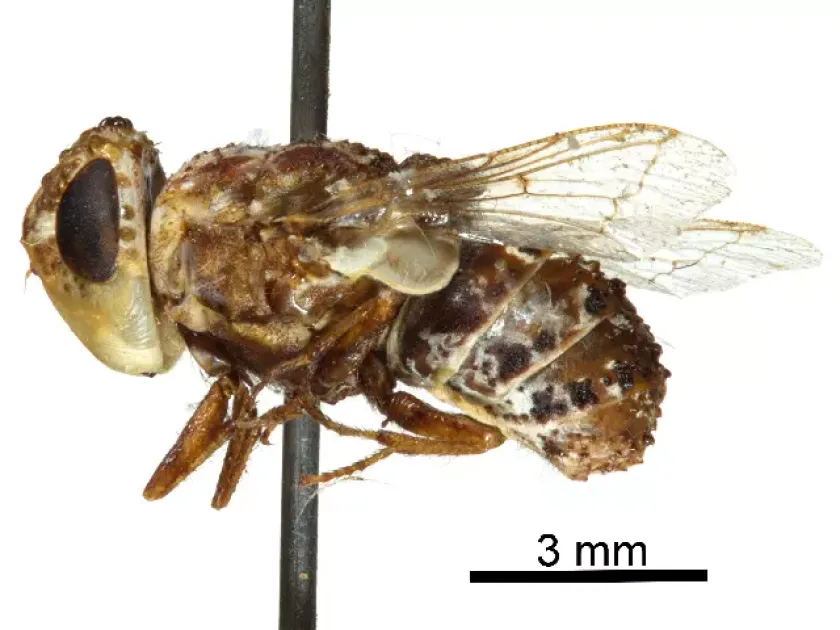
Description
How to identify
The Nose bot fly (Rhinoestrus) is a dipteran insect belonging to the Oestridae family, known for being an obligate parasite of horses, donkeys, and mules.
The adult fly is a brownish-gray insect, about 10–12 mm long, covered with fine hairs, and possessing a reduced mouthpart, meaning they do not feed during their adult stage.
The life cycle includes the egg, three larval stages, and the pupal stage, which takes place in the soil after the larvae leave the host's body.
Females are viviparous; they hover near the nostrils of the animal and eject larvae in a fluid jet, which then crawl into the nasal passages.
Adult flies are highly active during warm, sunny days, focusing their entire lifespan on finding a host and reproducing.
What it damages
Despite being listed as a pest in some contexts, the Nose bot fly does not attack plants; it is a serious parasitic threat to equine livestock, causing a condition called oestrosis.
The larvae attach themselves to the mucous membranes of the nose and throat using strong oral hooks, causing significant mechanical damage.
This feeding activity leads to chronic inflammation, edema, and secondary bacterial infections resulting in purulent nasal discharge.
Horses suffer from respiratory distress, chronic coughing, and severe discomfort, which leads to decreased physical performance and body weight loss.
The constant annoyance and stress caused by the flies during the summer months negatively affect the grazing efficiency and well-being of the herd.
When it appears
The flight season of the Nose bot fly begins with the onset of warm spring weather and continues throughout the summer months.
Their activity peaks during hot, sunny weather conditions, which are ideal for the flies to target the nostrils of their hosts.
The larval stage inside the horse can be quite prolonged, with larvae sometimes overwintering within the nasal or sinus cavities.
In spring, the mature larvae crawl out of the nostrils and drop to the ground to pupate, completing the cycle.
Environmental factors like humidity and soil temperature significantly influence the timing of pupation and the emergence of the next generation of adults.
Signs of infestation
Signs of infestation include severe distress in horses while grazing, especially when they shake their heads or stamp their feet frequently.
Nasal discharge is a primary clinical sign, which can vary from clear fluid to thick, yellowish pus as the infection progresses.
Affected animals may frequently sneeze, rub their muzzles against structures, and exhibit labored or noisy breathing sounds.
In severe cases, the chronic irritation of the nasal passages can lead to visible restlessness and a refusal to graze properly.
A definitive diagnosis is usually made by a veterinarian through clinical examination or by observing the larvae in nasal secretions.
Control measures
Effective control relies on the systemic use of antiparasitic treatments, such as macrocyclic lactones, administered under veterinary supervision.
Management practices include protecting horses from fly strikes by providing shelter or using protective masks during peak fly activity hours.
Good pasture management and regular cleaning of stable areas can help reduce the pupation sites for the larvae dropped by infested horses.
Early detection and treatment of infected individuals are crucial to reducing the overall parasite burden within a herd.
- Application of equine-safe insect repellents.
- Regular veterinary check-ups for early signs of infestation.
- Strategic deworming programs tailored to regional fly seasons.
Taxonomy
- Latin name
- Rhinoestrus
- Order
- Diptera (flies)
- Family
- Oestridae
- EPPO code
- RHIUSP
Discussion
No discussions yet — be the first.