
Sheep bot fly
Oestrus ovis
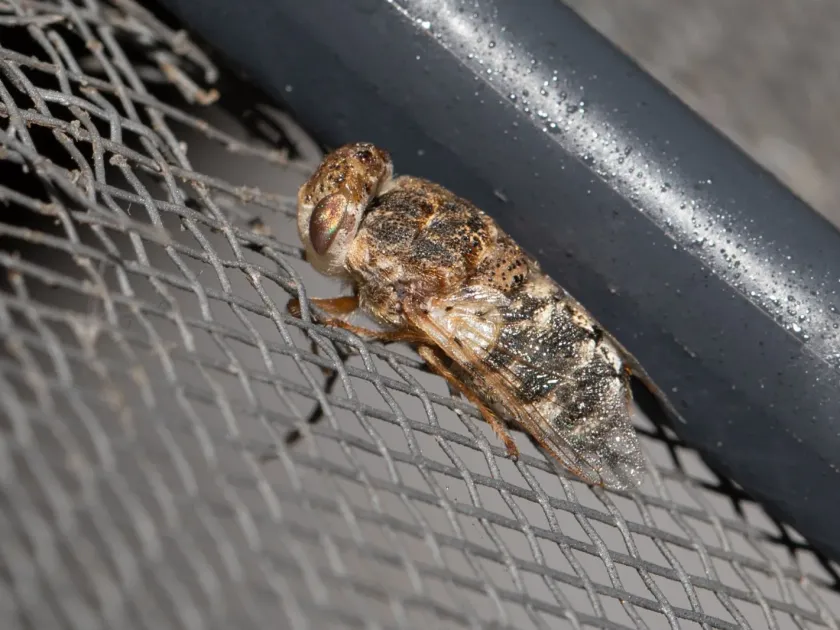
Description
How to identify
The sheep bot fly, scientifically known as Oestrus ovis, is a dipteran parasite belonging to the Oestridae family. The adult fly is approximately 10-12 mm long, with a dull, grayish-brown body.
The insect possesses a large head with well-developed eyes, but its mouthparts are vestigial. As a result, adult flies do not feed and live only for a few days to reproduce.
The species is viviparous; females fly near the nostrils of sheep and eject a jet of fluid containing first-instar larvae directly into the nasal passages of the host.
The larvae are equipped with oral hooks, allowing them to attach firmly to the nasal mucosa. They go through three larval instars, growing significantly in size over time.
Once mature, the larvae leave the host's nasal passages, fall to the ground, and pupate in the soil to emerge later as adult flies.
What it damages
This fly does not attack plants but is a major health hazard for sheep and goat farming globally. The condition caused by these larvae is known as oestrosis.
Inside the nasal cavities, the larvae cause intense irritation, inflammation, and secondary bacterial infections. This leads to chronic nasal discharge and respiratory distress.
The infestation significantly reduces animal productivity. Affected sheep often lose appetite, suffer from weight loss, and exhibit decreased wool quality and milk yield.
In severe cases, larvae can migrate into the frontal sinuses, causing extreme pain, neurological symptoms, and sometimes death due to secondary bacterial meningitis.
Economic losses in the sheep industry due to this parasite are substantial, necessitating consistent monitoring and management strategies by farmers.
When it appears
Adult flies are most active during warm, dry summer months. Their activity period usually spans from late spring until early autumn depending on the climate.
The females are particularly aggressive on hot, sunny days when temperatures are favorable for flight and rapid larval deposition.
The lifecycle length varies; in many regions, larvae can remain in the host's nasal passages for several months, often overwintering inside the animal.
During the winter, larval development slows down, and they enter a stage of dormancy, resuming growth with the onset of warmer spring temperatures.
The emergence of the next generation of adult flies marks the beginning of a new infestation cycle for the upcoming pasture season.
Signs of infestation
Early symptoms of infection are characterized by behavioral changes in the flock. Animals show clear signs of distress when flies are nearby.
- Violent head shaking, stamping feet, and rubbing the nose against the ground or legs.
- Unilateral or bilateral nasal discharge that becomes purulent as the infestation progresses.
- Sneezing and snorting as the animal attempts to expel the larvae.
- Labored, noisy breathing indicating swollen nasal tissues.
- "False gid" or neurological issues, where sheep may appear dizzy or uncoordinated.
Control measures
Effective control relies on systemic antiparasitic treatments. Macrocyclic lactones, such as ivermectin, are highly effective in killing larvae at various stages.
Treatment should be scheduled twice a year: once in the autumn after the grazing season ends and once in the spring to minimize the parasite load before summer.
Maintaining clean farm environments and avoiding overgrazing helps reduce the likelihood of high fly concentrations in the vicinity of livestock.
Farmers should implement strict quarantine protocols for newly introduced animals to prevent the entry of infested sheep into the healthy flock.
Veterinary consultation is essential for determining the timing of treatments based on the specific climatic conditions and the intensity of infestation in the area.
Taxonomy
- Latin name
- Oestrus ovis
- Order
- Diptera (flies)
- Family
- Oestridae
- EPPO code
- OESTOV
Discussion
No discussions yet — be the first.