
Reindeer warble fly
Oedemagena tarandi
Description
How to identify
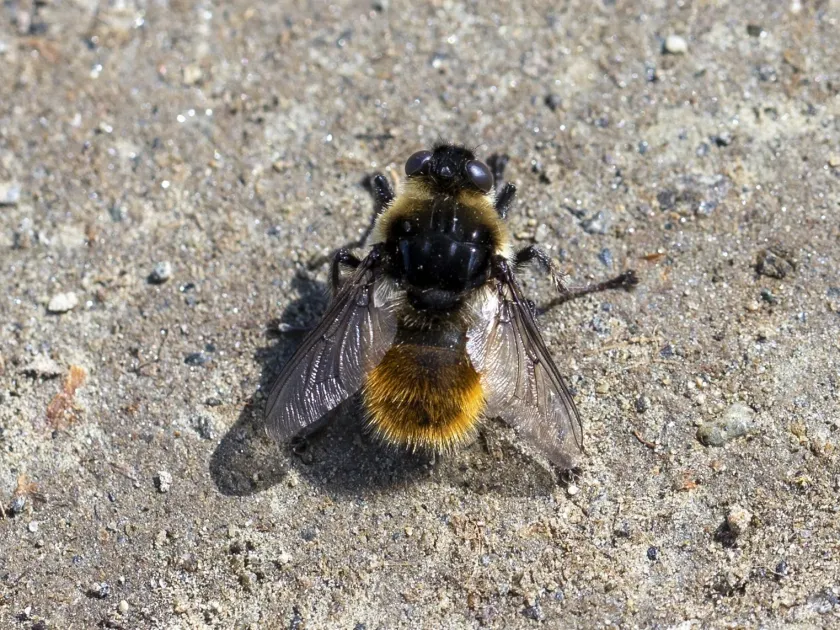
The reindeer warble fly (Oedemagena tarandi) is a member of the Oestridae family. It is a large, hairy insect that resembles a bumblebee and is specialized in parasitizing reindeer.
Adult flies do not possess functional mouthparts and do not feed. Their brief adult life stage is entirely dedicated to reproduction, lasting only a few weeks in the Arctic summer.
Females are highly adapted for oviposition, laying eggs directly onto the hair of the host reindeer while in flight.
The larvae progress through three distinct stages of development, all of which occur within the host's body, specifically in the subcutaneous tissues.
This species is an obligate parasite, meaning it cannot complete its life cycle without the specific host animal, the reindeer.
What it damages
The reindeer warble fly exclusively attacks reindeer (Rangifer tarandus). It is not a plant pest, but rather a severe livestock parasite causing economic losses in reindeer husbandry.
Larval infestation leads to a condition known as edemagenosis, which causes physical debilitation and weight loss in the affected animals.
The primary damage includes the destruction of the hide's integrity due to holes created by larvae, significantly reducing the commercial value of reindeer leather.
Infested herds suffer from immense stress and distraction, leading to reduced grazing efficiency and overall poor body condition before the harsh winter arrives.
In addition to physiological stress, secondary infections at the larval exit sites can lead to localized inflammation, abscesses, and further health degradation.
When it appears
The adult fly activity is limited to the short Arctic summer, typically spanning from June to August, depending on the latitude and local climate.
The flies are most active during warm, calm, and sunny days. Wind and rain inhibit their flight, providing temporary relief to the reindeer herds.
The infection process starts in summer with egg-laying, followed by the hatching of larvae that burrow into the skin to begin their growth.
Larvae hibernate under the skin during the winter months and resume development in the spring, when temperatures rise and the host's metabolic rate increases.
The larvae emerge from the host during the spring and early summer to pupate in the soil, completing the annual cycle.
Signs of infestation
Visible signs of infestation include severe distress in the herd, with reindeer clustering together or running to avoid the flies.
Large, painful lumps (warbles) appear under the skin, especially along the back of the animal, where the larvae are developing.
Presence of small exit holes in the skin is a hallmark sign of the third larval stage exiting the host's body.
The hair coat may appear patchy or ruffled in areas where the larvae have caused tissue damage or where the animal has been rubbing against objects to relieve irritation.
General weakness and reduced productivity are common indicators in herds that have not received appropriate veterinary care against warble fly infestations.
Control measures
The most effective control strategy involves the application of systemic parasiticides, typically macrocyclic lactones, which kill larvae within the host tissue.
Strategic treatment during the autumn, after the flies' flight season ends, is crucial to eliminate the larvae before they cause significant subcutaneous damage.
Spring treatments may also be employed to target larvae as they emerge, effectively reducing the population of flies for the upcoming season.
Herd management practices, such as moving animals to windier areas during the peak summer flight period, can help minimize the contact between flies and reindeer.
Collaborative veterinary programs involving entire regional herds are necessary to maintain low parasite prevalence and ensure the long-term health of the reindeer population.
Taxonomy
- Latin name
- Oedemagena tarandi
- Order
- Diptera (flies)
- Family
- Oestridae
- EPPO code
- OEDETA
Discussion
No discussions yet — be the first.