
Reindeer warble fly
Oedemagena
Description
How to identify
The reindeer warble fly (Oedemagena tarandi) is a parasitic insect belonging to the Oestridae family in the order Diptera.
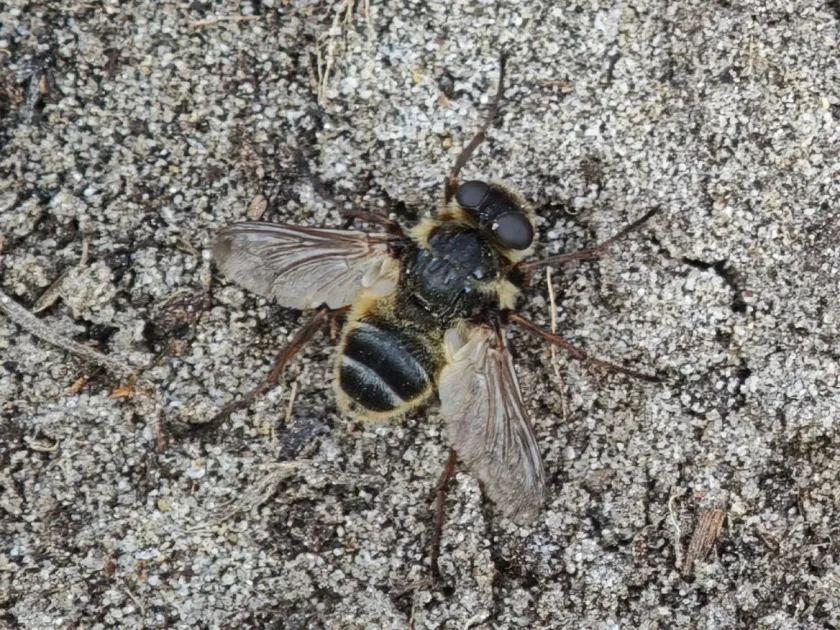
The adult fly resembles a large bumblebee, with a hairy body and distinctive yellow and black markings for mimicry.
Adults do not feed as their mouthparts are vestigial; their primary purpose is reproduction during their short lifespan of a few weeks.
The life cycle involves complete metamorphosis, where the larvae undergo three distinct developmental stages inside the host.
Female flies are prolific, capable of depositing hundreds of eggs on the hairs of reindeer during the summer season.
What it damages
This species is an obligate parasite of reindeer and is not classified as a plant pest, though it causes significant damage to livestock.
The larvae migrate through the animal's subcutaneous tissues, causing physical injury, pain, and the formation of breathing holes.
Infestation leads to severe weight loss, reduced quality of hide, and decreased milk and meat production in herds.
High infestation levels may cause edematous tissue damage and secondary infections, significantly lowering the animal's survival rate.
The economic impact is primarily felt in the reindeer husbandry industry, where hide wastage and meat downgrading are major concerns.
When it appears
Adult fly activity is restricted to the summer months, typically occurring when the climate is warm and calm in northern regions.
The infestation period is synchronized with the reindeer's presence on summer pastures, allowing the fly to find hosts easily.
During autumn, larvae migrate through the host's skin towards the back, where they spend the majority of the winter.
In spring, the larvae reach maturity and emerge through the skin to fall into the soil to pupate.
The developmental cycle is strictly seasonal, which dictates the timing for veterinary interventions and herd management.
Signs of infestation
Increased restlessness and erratic behavior within the herd during the fly season are the most visible early indicators.
Small yellow-white eggs can be observed attached to the hair shafts of the reindeer, often concentrated on the legs and flanks.
Visible lumps under the skin, which develop into open sores (warbles), appear on the back and sides of the animal in early spring.
General condition decline, thinning coat, and visible distress are common in animals with high larval burdens.
- Erratic herd behavior during fly season.
- Egg clusters on animal fur.
- Subcutaneous bumps and breathing holes on the back.
Control measures
Systemic insecticides administered in autumn are the most effective method for controlling larval populations before they mature.
Strategic timing of treatment ensures that the majority of larvae are neutralized within the host tissue before causing severe damage.
Repellents can be used during peak fly activity to discourage females from depositing eggs on the animals.
Regular herd inspections and proper pasture management are essential to maintain low levels of infestation in reindeer populations.
Integration of veterinary treatments and sanitary practices is the best approach for long-term control of this parasite.
Taxonomy
- Latin name
- Oedemagena
- Order
- Diptera (flies)
- Family
- Oestridae
- EPPO code
- OEDESP
Discussion
No discussions yet — be the first.