
Horse stomach bot fly
Gasterophilus haemorrhoidalis
Description
How to identify
The horse stomach bot fly is a large dipteran insect belonging to the family Oestridae. Adults resemble bees or bumblebees, covered with dense yellowish-brown hair. They lack functional mouthparts, meaning they do not feed as adults and survive solely on energy reserves accumulated during the larval stage.
Systematically, this species belongs to the order Diptera. The wingspan reaches 15-20 mm. The head is large with well-developed compound eyes, allowing them to locate hosts rapidly during the summer season.
The larvae go through several instars that differ significantly in morphology. First-instar larvae are small, transparent, and equipped with hooks to anchor themselves into the host's tissues upon entry.
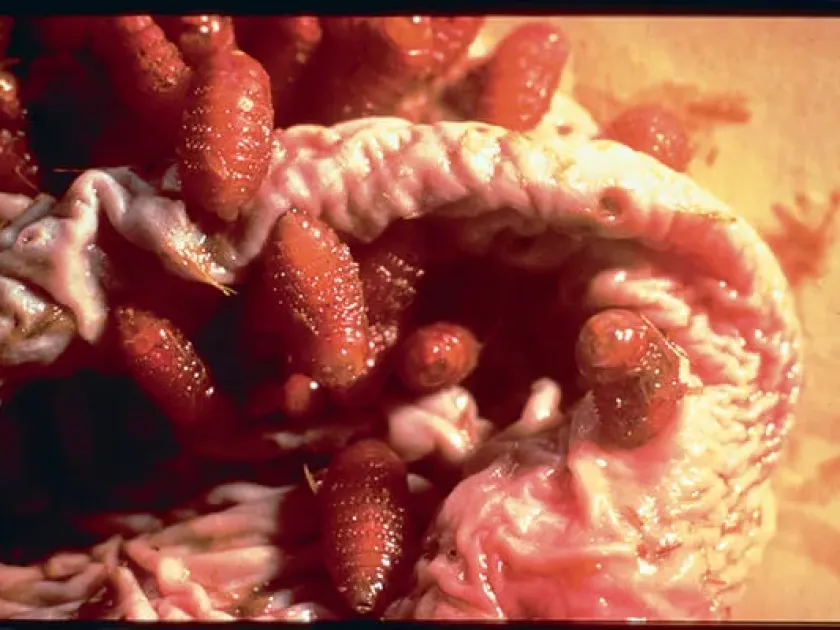
Third-instar larvae are barrel-shaped, can reach up to 16 mm in length, and are covered in spines that facilitate movement within the horse's gastrointestinal tract.
The eggs are yellowish and feature a specialized stalk for firm attachment to the horse's hair, particularly around the mouth and nostrils, ensuring the larvae are ingested or migrate into the oral cavity.
What it damages
The primary hosts for the stomach bot fly are horses, donkeys, and mules. Infestation with these larvae causes a condition known as gastric myiasis or gasterophilosis, which can cause significant economic losses in equestrian operations.
Both adults and larvae cause harm. During egg-laying, females induce severe distress in horses, leading to restlessness, decreased grazing time, and reduced productivity.
Once larvae enter the oral cavity, they burrow into the mucous membranes of the gums and tongue, causing inflammation, painful erosions, and secondary bacterial infections that impede the animal's ability to chew and eat.
Upon reaching the stomach, the larvae attach to the stomach lining using their powerful oral hooks. This causes deep ulcerations, inflammation of the stomach wall (gastritis), and interference with digestive enzyme secretion.
Heavy infestations can lead to physical obstruction of the pylorus or small intestine, gastric perforation, and peritonitis, all of which pose a life-threatening risk to the animal without immediate medical intervention.
When it appears
Adult bot fly activity occurs during the warm summer months, primarily from June to August. The emergence timing of these insects depends heavily on regional climate and average daily temperatures.
On sunny days, the flies are most aggressive, actively pursuing horses in pastures. They are attracted to the scent and movement of the animals, which they use as cues for egg-laying.
The larval stage inside the host lasts approximately 9-10 months. In the spring, mature third-instar larvae pass through the digestive tract and are excreted in the feces, where they crawl into the soil to pupate.
The pupal stage in the soil lasts 3 to 6 weeks, depending on soil moisture and temperature. After this period, new adult flies emerge to complete the life cycle.
Consequently, the risk of infestation is highest in the second half of summer, requiring vigilant monitoring and protective measures during this window of high insect density.
Signs of infestation
One of the first signs of infestation is abnormal behavior in horses at pasture, such as frequent head tossing, snorting, and attempts to flee from the buzzing flies. This constant annoyance prevents the animal from resting and grazing effectively.
Visual inspection of the mouth area often reveals yellowish eggs on the hair near the lips. Closer inspection of the gums and tongue may show inflammation, small ulcers, or tiny bleeding wounds caused by the entry of first-instar larvae.
Digestive disturbances present as recurrent colic, loss of appetite, excessive salivation, and difficulty chewing. The animal's overall condition may decline, characterized by a dull coat and weight loss.
In severe cases, anemia and pale mucous membranes occur because the larvae feed on host tissue fluids and blood. The animal becomes lethargic and loses body condition due to the chronic nutritional depletion.
Veterinary diagnosis involves a thorough oral exam, checking for larvae in feces, and sometimes serological tests to detect specific antibodies if the infestation has become a chronic health issue.
Control measures
The cornerstone of bot fly management is regular deworming. Targeted treatment is typically conducted in the autumn, after the first frost or end of the fly season, to eliminate any larvae that have already migrated into the horse's system.
Modern anthelmintics, particularly those containing macrocyclic lactones, are highly effective against all larval stages and are available in convenient paste, gel, or injectable formulations for equine use.
Sanitation is crucial; maintaining clean stables and pasture management is key. Regularly removing and composting manure prevents larvae that have exited the host from successfully completing their pupation cycle.
During the peak fly season, applying insect repellents to the horse's coat can deter flies from landing. Protective gear like fly masks or sheets can also shield vulnerable areas of the horse from egg deposition.
Ongoing veterinary supervision and regular check-ups help minimize the prevalence of gasterophilosis, protecting horse health and ensuring the animals remain in peak physical condition throughout the year.
Taxonomy
- Latin name
- Gasterophilus haemorrhoidalis
- Order
- Diptera (flies)
- Family
- Oestridae
- EPPO code
- GASEHA
Discussion
No discussions yet — be the first.