
Moose nose bot fly
Cephenemyia ulrichii
Description
How to identify
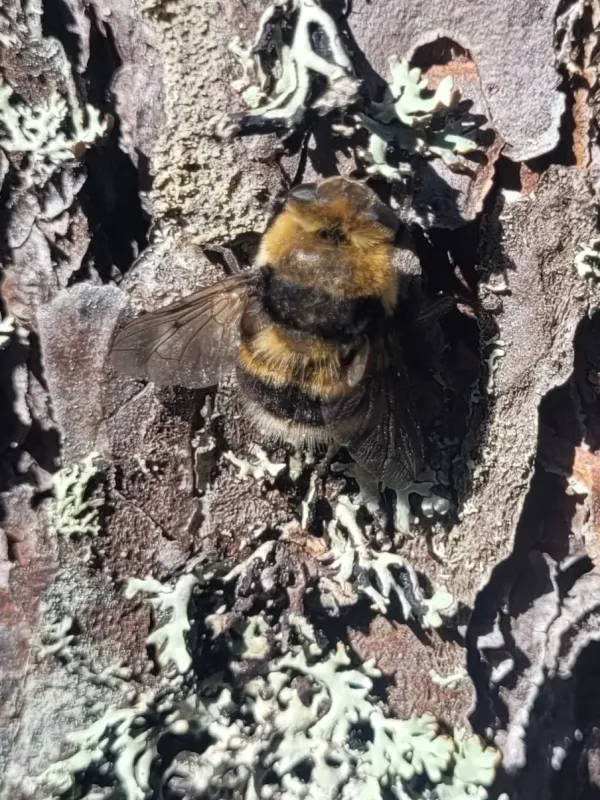
The moose nose bot fly (Cephenemyia ulrichii) is a large dipteran insect belonging to the family Oestridae. Adults are robust, densely hairy, and resemble large bees or bumblebees in their appearance.
They possess non-functional mouthparts, meaning adult flies do not feed. Their short adult lifespan is dedicated entirely to reproduction and the infestation of their mammalian hosts.
The larvae develop inside the nasopharyngeal passages of moose and other deer species. They go through three distinct larval stages, growing significantly in size and developing tough, barrel-shaped bodies.
Females are viviparous, which is a key adaptation for this species. They fly rapidly around the host and propel first-instar larvae directly into the nostrils of the moose without landing.
This species is strictly a parasite of wildlife. It has absolutely no association with agriculture, plant pathology, or the destruction of cultivated crops.
What it damages
The moose nose bot fly is not a plant pest. It does not feed on, bore into, or damage any crops, fruits, vegetables, or forest timber species used in agriculture.
Its "damage" is strictly biological and limited to wildlife, specifically moose and certain deer species. It causes a condition known as cephenemyiasis in these animals.
The presence of larvae causes inflammation of the pharyngeal mucosa, irritation, and potential breathing difficulties, which can be detrimental to the health of the host during harsh winter months.
Economic damage is only relevant to game management and conservation, where high infestation rates can lead to the deterioration of the animal's physical condition.
Agronomists and farmers do not need to monitor for this fly, as it poses no threat to field production or garden crops.
When it appears
The adult stage of the moose nose bot fly is observed during the summer months, typically mid-to-late summer, when mating and infestation flights occur.
The larval phase is a winter-long process. Larvae remain inside the host's nasopharyngeal cavity throughout the cold season, feeding on secretions and mucus.
In spring, the mature third-instar larvae leave the host's body, usually expelled through sneezing or coughing, to drop onto the ground and pupate.
The pupal stage occurs in the soil or under leaf litter, where the insects remain until they emerge as adults in the following summer.
This one-year cycle is highly synchronized with the seasons, ensuring that larvae are present in the host when winter stresses are high.
Signs of infestation
Signs of infestation in moose include frequent sneezing, vigorous head shaking, and rubbing the nose against trees or the ground to alleviate intense irritation.
When carcasses are examined in a veterinary or game management context, large clusters of larvae can be found deep within the nasopharyngeal region.
Visible distress in the animal, such as poor coat quality, lethargy, and difficulty breathing, may indicate a heavy parasitic load.
The flies are sometimes seen hovering around moose during the summer, but they are fast and easily confused with other large flies.
There are no signs of activity on plants, as the lifecycle of this insect is exclusively dependent on the presence of its host mammal.
Control measures
There are no pest control measures for this insect in an agricultural setting because it does not interact with agricultural systems.
Control in wildlife management is typically not performed, as populations are generally self-regulating through environmental and host-density factors.
Veterinary interventions are minimal and usually reserved for managed or captive deer populations, involving parasite control treatments if necessary.
Protection of habitat and maintaining healthy wildlife ecosystems is the best way to ensure the parasite does not reach epidemic levels in host populations.
Since the species does not harm plants, no pesticides or agronomic mitigation strategies are ever recommended or required for this insect.
Taxonomy
- Latin name
- Cephenemyia ulrichii
- Order
- Diptera (flies)
- Family
- Oestridae
- EPPO code
- CEPMUL
Discussion
No discussions yet — be the first.