
Reindeer nostril fly
Cephenemyia trompe
Description
How to identify
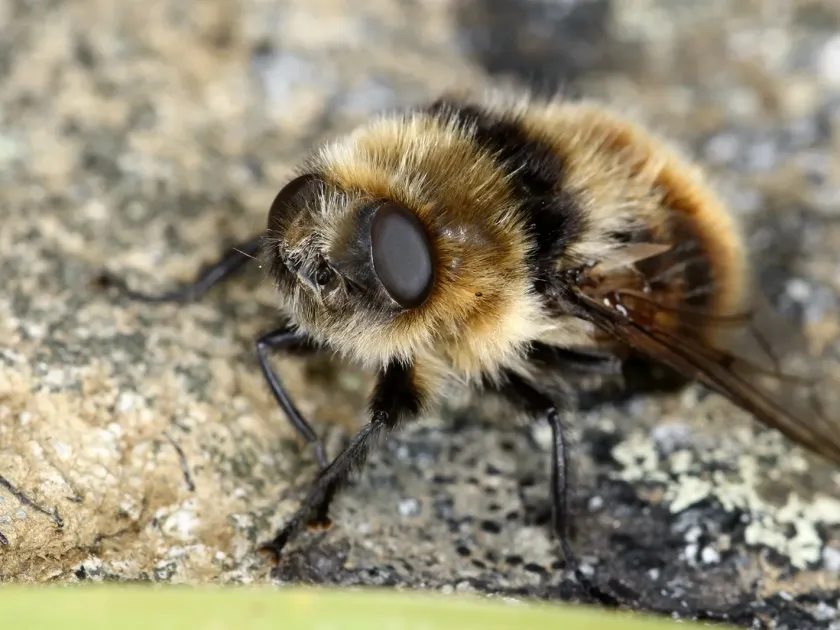
The reindeer nostril fly (Cephenemyia trompe) is a member of the Oestridae family within the order Diptera. The adult insect is a large, hairy fly resembling a bumblebee, with a body length ranging from 12 to 15 mm.
Adult flies have reduced mouthparts and do not feed; they live off energy reserves accumulated during their larval stage. They possess a large head with prominent eyes, which is a key characteristic of the Cephenemyia genus.
Larvae undergo three stages of development, increasing in size and transitioning from transparent-white to a yellowish-brown color. In the final stage, the larva reaches 30 mm in length and features distinct spines on its body segments for attachment.
This parasite is highly host-specific, relying entirely on reindeer for its life cycle. The insect is a strong flyer, allowing females to effectively track and pursue reindeer herds for reproduction.
Adult flies are difficult to detect in the wild due to their elusive nature and fast flight. However, their presence during the summer is often indicated by the agitated behavior of reindeer in the vicinity.
What it damages
This species is not a plant pest; it is a serious parasite of reindeer, causing a condition known as oestrosis. By inhabiting the nasal and pharyngeal cavities of the host, the larvae cause significant health issues for the herd.
Infested animals experience severe pain, leading to physical exhaustion and reduced herd productivity. In extreme cases, the blockage of nasal passages causes difficulty in breathing and impedes the animal's ability to feed properly.
The larvae secrete toxins into the host's bloodstream, triggering allergic reactions and systemic intoxication, which weakens the reindeer's immune system. This makes the animals more susceptible to secondary infections.
The parasite causes major economic losses in reindeer husbandry through reduced skin quality, calf mortality, and poor meat production. Large-scale infestations can jeopardize the sustainability of an entire herd.
Although the parasite does not affect crops, its detrimental impact on livestock health has significant negative consequences for the agrarian economy in reindeer-herding regions.
When it appears
The activity period for adult females occurs during the summer months, primarily from June to August. During this time, they actively search for hosts to deposit larvae into the nasal openings of the reindeer.
Females are viviparous; they fly rapidly and spray a liquid containing microscopic larvae directly into the host's nostrils. This process is extremely fast, allowing a single female to infest multiple animals in a short period.
During autumn and winter, the larvae continue to develop in the nasopharyngeal cavity, feeding on the host's mucus secretions. This stage is characterized by sedentary parasitism where the larvae attach firmly to the mucous membranes.
In the spring, having reached the third larval stage, mature larvae exit the animal's body during bouts of sneezing. Once expelled, they fall to the ground to begin the pupation process.
Pupation occurs in the upper layers of the soil, where the insect stays for several weeks until the adult fly emerges. The complete life cycle of the reindeer nostril fly takes exactly one year.
Signs of infestation
The first sign of an infested herd is extreme agitation when flies are active. Animals exhibit restless behavior, including head shaking, pressing their muzzles against their chests, and running in circles to escape the parasites.
Clinical examinations reveal frequent sneezing and coughing caused by larval irritation of the nasopharyngeal mucosa. Serous or purulent nasal discharge may also be present in affected animals.
During winter and spring, reindeer suffering from heavy larval loads become lethargic and lose weight rapidly. Labored breathing, often accompanied by wheezing sounds, is a common indicator of infestation.
Post-mortem examinations of deceased animals typically reveal larvae within the nasal cavity, pharynx, and larynx. The mucosa in the attachment areas shows signs of inflammation and swelling.
The presence of larvae obstructing the soft palate and choanae prevents normal swallowing and air intake, which confirms clinical oestrosis caused by Cephenemyia trompe.
Control measures
The primary method for control involves the use of modern systemic antiparasitic drugs. Injectable macrocyclic lactones are widely used and are highly effective in eliminating larvae within the host's body.
Proper timing is essential for effective treatment; applications should be carried out in the autumn after the fly season concludes to prevent the larvae from further developing inside the reindeer.
In reindeer-herding operations, collective protection methods are employed, such as using specialized enclosures for large-scale herd treatment to minimize exposure to parasites.
- Administration of ivermectin injections or similar systemic compounds.
- Regular veterinary monitoring and herd health checks.
- Isolation of infested animals to prevent further herd spread.
- Use of repellents during peak fly activity periods.
Preventative measures include managing grazing areas to avoid locations with high adult fly density. Rational pasture management and proactive veterinary care significantly reduce the prevalence of the parasite.
Taxonomy
- Latin name
- Cephenemyia trompe
- Order
- Diptera (flies)
- Family
- Oestridae
- EPPO code
- CEPMTR
Discussion
No discussions yet — be the first.