
Roe deer nose bot fly
Cephenemyia stimulator
Description
How to identify
The roe deer nose bot fly (lat. Cephenemyia stimulator) is a dipteran insect belonging to the family Oestridae, acting as an obligate parasite.
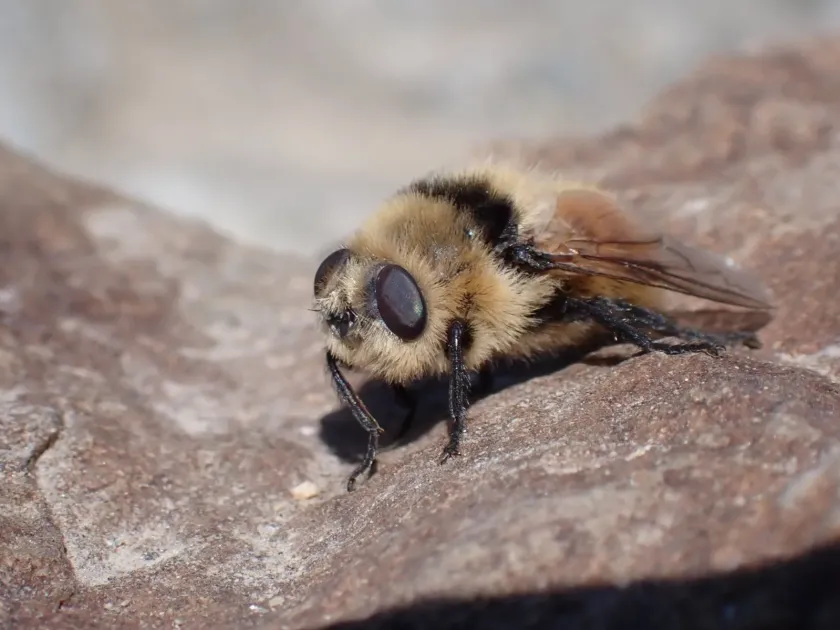
Adult flies are large, bee-like insects covered in dense hairs, which helps them maintain body temperature during their agile flight.
The life cycle is unique because the female fly is viviparous, depositing larvae directly into the nostrils of a roe deer while in flight.
Upon entering the nasal cavities, larvae attach to the mucosa and undergo three stages of development by feeding on secretions and tissue fluids.
Once mature, the third-stage larvae detach, fall onto the soil, and pupate, eventually emerging as adult flies to repeat the life cycle.
What it damages
This species is not a pest of agricultural crops; it is a specialist endoparasite exclusively affecting roe deer and related wild ungulates.
The harm caused by the infestation is primarily related to the health and vitality of the wild animal population in their native habitats.
Heavy parasite burdens can lead to the physical exhaustion of host animals, especially during harsh winters when food resources are scarce.
The presence of larvae in the nasal passage causes chronic irritation and mucosal inflammation, hindering the animal's respiratory efficiency.
While natural, high levels of infestation can increase mortality rates among young or weak individuals, acting as a natural population regulator.
When it appears
Adult flies are most active during the warmer summer months, typically ranging from June through August across their European distribution.
The infection period occurs during these summer months when females actively pursue roe deer to deliver their offspring.
The larvae spend the majority of their developmental time inside the host's nasal cavity throughout autumn, winter, and early spring.
Migration of mature larvae from the host to the ground typically peaks in the spring months of April and May.
Pupation in the soil lasts for several weeks, depending on ground temperature, before the next generation of adults emerges.
Signs of infestation
Identifying an infestation often relies on observing the behavioral changes of the deer population during the summer fly season.
- Increased frequency of sneezing and head shaking by deer.
- Mucopurulent discharge appearing around the nostrils.
- Noticeable lack of body condition in late winter or early spring.
- Lethargy and reduced grazing efficiency within the affected herd.
- Detection of larvae during post-mortem examination of harvested wild game.
Control measures
Management of the nose bot fly is primarily conducted within the framework of wildlife and hunting estate management programs.
The most effective method involves the use of medicated mineral licks or supplementary feeding stations treated with antiparasitic compounds.
These treatments effectively reduce the larval burden in the host population when administered systematically during high-risk periods.
Sanitation of common feeding and bedding areas helps in minimizing the environment's suitability for larvae transition and pupation.
Effective wildlife veterinary monitoring ensures early detection of infestations, allowing for timely intervention to protect the health of the population.
Taxonomy
- Latin name
- Cephenemyia stimulator
- Order
- Diptera (flies)
- Family
- Oestridae
- EPPO code
- CEPMST
Discussion
No discussions yet — be the first.