
Deer nose bot fly
Cephenemyia auribarbis
Description
How to identify
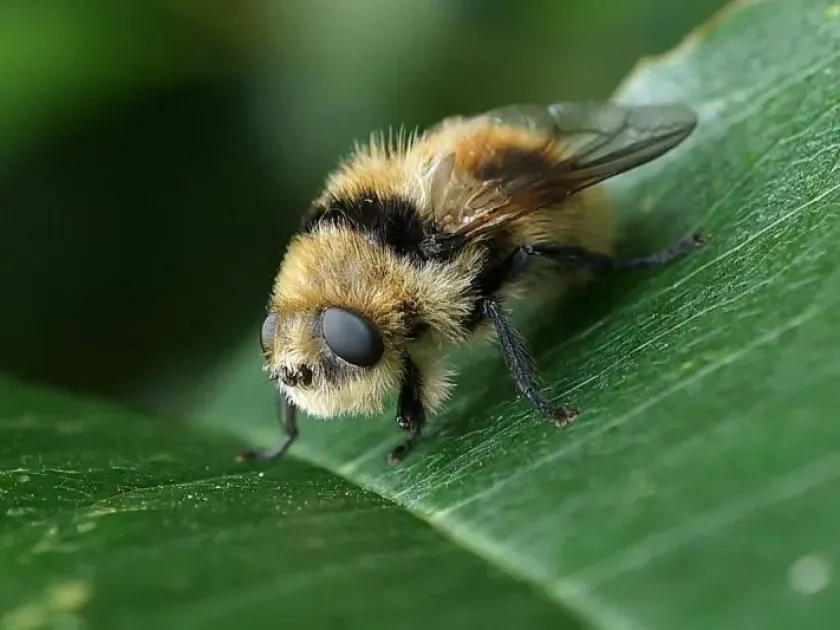
The Deer nose bot fly (Cephenemyia auribarbis) is a large dipteran insect belonging to the family Oestridae. Adults resemble bumblebees, featuring dense, fuzzy hair that helps them maintain body temperature in northern climates.
Adult flies lack functional mouthparts, meaning they do not feed during their short adult life. Their primary focus is to find a host and complete the reproductive cycle, making them highly specialized parasites.
The larvae exhibit a characteristic barrel-shaped body, consisting of 11 to 12 segments. They possess specialized spiracles at the posterior end, protected by chitinous plates, allowing them to breathe within the host's nasal passages.
The life cycle involves a complex metamorphosis: egg, three larval stages, pupa, and adult. This development is strictly dependent on the host’s internal environment, where they survive as obligate parasites.
These flies are highly adapted to parasitize members of the Cervidae family. Their survival is entirely contingent on the presence of wild deer, making them a significant factor in wildlife health and population dynamics.
What it damages
This pest primarily affects wild cervids, including red deer, roe deer, and marals. In wildlife management and deer farming, the presence of these larvae represents a significant biological stressor.
Larvae inhabit the nasal passages and throat of the host, causing chronic irritation and inflammation of the mucous membranes. This leads to respiratory discomfort and a general decline in the host's physiological health.
Secondary infections often arise in the damaged tissues, further weakening the animal. This can lead to significant weight loss, poor condition of the coat, and overall reduced fitness, which is detrimental to animal health.
Mass infestations cause immense distress to the herd, leading to interrupted grazing and energy depletion. During winter months, when resources are scarce, the weakened state of the animals can even lead to increased mortality rates.
Although they do not feed on plant material, they are classified as agricultural pests because they negatively impact the economic viability of deer farms and sustainable wildlife populations.
When it appears
The adult flies are most active during the summer months, typically from June through August. During this period, they emerge to mate and seek out hosts for larval deposition.
The species is viviparous, meaning the female sprays first-instar larvae directly into the nostrils of the deer while in flight. This process is highly synchronized with the seasonal patterns of the host.
Larvae spend the autumn and winter months inside the host's respiratory tract. During this time, they remain protected from environmental cold while feeding on mucus and secretions.
In spring, usually around April or May, the mature third-instar larvae exit the host's nasal passages, often triggered by the animal's sneezing or snorting. They drop to the ground to initiate the pupation phase.
The pupal stage occurs in the soil and typically lasts for several weeks. Once the metamorphosis is complete, the new adult fly emerges, ready to start the cycle over again in the coming summer.
Signs of infestation
A primary sign of infestation is abnormal behavior in deer, such as frequent head shaking, sneezing, and snorting. Animals may also retreat to dense cover to avoid being targeted by the flies.
Post-mortem examination of carcasses remains the most accurate way to detect an infestation. The presence of larvae in the pharyngeal pouches and nasal cavities confirms the activity of Cephenemyia auribarbis.
Clinical signs include respiratory distress, audible wheezing, and nasal discharge. The inflammation caused by larval feeding often leads to loss of appetite and general lethargy in the affected animal.
- Persistent agitation and head shaking;
- Frequent sneezing and nasal discharge;
- Visible larvae found in the nasal and throat passages;
- Significant weight loss and exhaustion in the herd.
If a large number of animals exhibit these signs, it indicates a high prevalence of the parasite, suggesting that the herd is under significant stress from the infestation.
Control measures
Managing the Deer nose bot fly is primarily conducted through veterinary intervention. The most effective approach is the use of systemic antiparasitic medications administered to the deer herd.
Strategic treatment during the autumn ensures that larvae are eliminated before they cause severe damage to the host's throat. These treatments are commonly delivered via injections or feed additives.
Sanitation practices in deer farming facilities are essential. Maintaining clean environments and proper management of enclosures helps reduce the population of flies by minimizing breeding opportunities.
Biological control involves monitoring the local environment and potentially using traps to reduce adult fly populations in high-traffic areas frequented by the deer.
Rotational grazing systems can help break the lifecycle of the parasite. By moving herds away from areas where pupae have accumulated in the soil, owners can significantly reduce the risk of re-infestation for the next season.
Taxonomy
- Latin name
- Cephenemyia auribarbis
- Order
- Diptera (flies)
- Family
- Oestridae
- EPPO code
- CEPMAU
Discussion
No discussions yet — be the first.