
Nasal bot fly
Cephenemyia
Description
How to identify
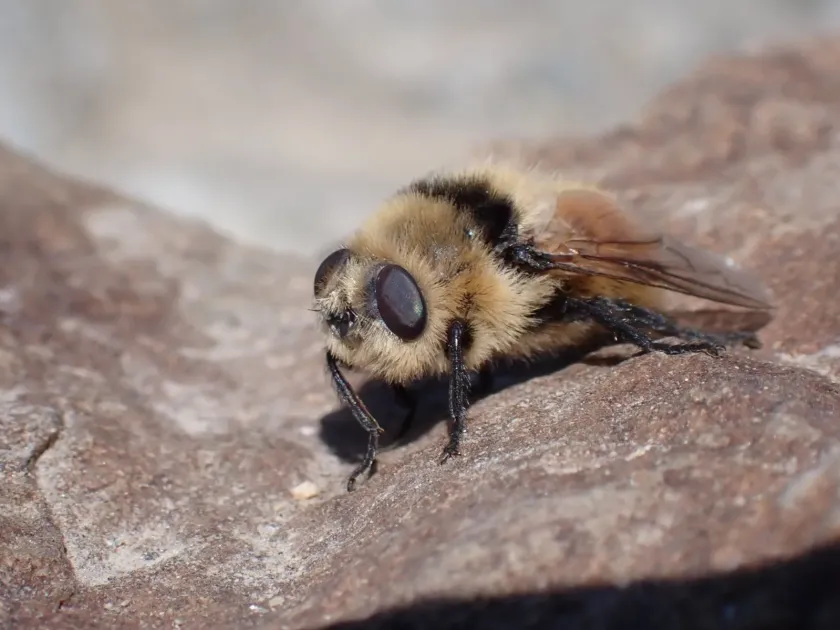
The nasal bot fly (Cephenemyia) belongs to the family Oestridae. These are large, robust insects covered in hair, resembling bumblebees.
Adult flies do not feed, as their mouthparts are vestigial; they live solely on energy reserves accumulated during their larval stage.
Females are viviparous, meaning they spray a liquid containing first-instar larvae directly into the nostrils of host animals while in flight.
Larvae possess specialized oral hooks used to anchor themselves securely to the mucous membranes within the host's nasal passages and throat.
Once the larval development is complete, they are expelled from the nose and pupate in the soil, eventually emerging as adult flies.
What it damages
This parasite does not damage plants, as it is a specialized endoparasite of wild and domestic ungulates, such as deer and caribou.
In agricultural settings, particularly in reindeer herding, it causes economic loss by reducing animal health and productivity.
The attachment of larvae causes severe irritation, inflammation, and potential secondary bacterial infections in the nasal cavities.
Heavily infested animals experience difficulty breathing, leading to decreased appetite, weight loss, and overall lethargy.
While primarily a veterinary issue, it indirectly affects land management in areas where deer farming or conservation is practiced.
When it appears
Adult activity typically occurs during the warmer months, usually from June through August, depending on the geographical latitude.
Females are most active on warm, sunny days with low wind, as these conditions are ideal for locating hosts and depositing larvae.
The larval stage remains inside the host throughout the autumn and winter, which serves as a protective mechanism against extreme cold.
In the spring, as temperatures rise, mature larvae exit the host and pupate in the soil to continue their life cycle.
Climatic factors such as soil temperature and humidity significantly influence the success of the pupation phase.
Signs of infestation
The most common clinical sign is excessive head-shaking and sneezing as animals attempt to dislodge the larvae from their nostrils.
Observed respiratory distress, including loud snorting, wheezing, and nasal discharge, indicates significant larval presence.
General condition decline is evident through poor hair coat quality, reduced weight gain, and increased irritability among the herd.
On examination, swollen nasal tissues and the presence of visible larvae in the throat can confirm the diagnosis of nasal myiasis.
Secondary necrosis of the mucous membranes can develop in chronic cases if the infestation is not treated promptly.
Control measures
Effective control relies on systemic antiparasitic treatments, such as ivermectin, administered after the fly season has concluded.
Good pasture management, including rotating grazing lands, can help reduce the density of overwintering pupae in the soil.
Repellents can be applied to livestock during peak fly activity to discourage female flies from approaching the herd.
Regular monitoring of herd health ensures that early-stage infestations are identified before they lead to severe complications.
- Systemic antiparasitic medication.
- Rotational grazing strategies.
- Use of protective netting or repellents.
- Veterinary surveillance and seasonal check-ups.
Taxonomy
- Latin name
- Cephenemyia
- Order
- Diptera (flies)
- Family
- Oestridae
- EPPO code
- CEPMSP
Discussion
No discussions yet — be the first.