
Hilara
Hilara
Description
How to identify
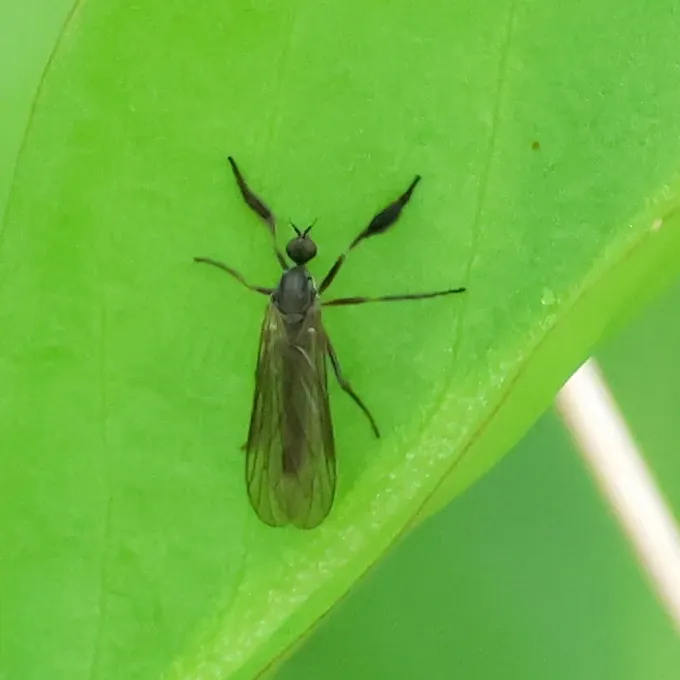
Hilara is a genus of insects from the order Diptera, belonging to the family Empididae, commonly known as dance flies. Adult specimens are small flies frequently observed near water bodies and vegetation.
The body of the adult insect is typically colored in dark, gray, or black tones, with transparent wings and often thickened forelegs in males, used during mating rituals.
Hilara larvae have an elongated shape and lead a hidden lifestyle in the soil, forest floor, or moist plant debris, making them difficult to detect.
The mouthparts of adult flies are adapted for predation or nectar feeding, while larval development occurs in environments rich in organic matter.
Identifying specific species of Hilara without specialized entomological equipment is challenging due to the high number of similar-looking species within the genus.
What it damages
Hilara is not typically considered a primary mass pest of agricultural crops, though larvae can occasionally damage the root systems of young seedlings under specific conditions.
The main damage occurs in greenhouses and nurseries, where high soil moisture creates ideal conditions for the reproduction and development of these larvae.
Damaging the root system weakens young plants, making them more susceptible to secondary infections and fungal diseases.
In some cases, large aggregations of adult flies may cause nuisance, but their role as a significant crop pest is often overstated in agricultural literature.
Their economic impact is primarily linked to their presence in seedling trays, where they can contribute to the loss of weak vegetable sprouts.
When it appears
The flight of adult insects usually begins in late spring and continues throughout the summer, depending on the temperature regime of the region.
The peak activity of Hilara occurs during morning and evening hours, when flies form characteristic "dancing" swarms over moist soil areas.
The lifecycle includes egg, larva, pupa, and adult stages, with larval development being highly dependent on the moisture level of the environment.
Larvae overwinter in the soil, safely hiding in deeper ground layers until the arrival of favorable conditions in the next season.
Usually, there is one generation of this pest per year, which limits the potential for massive outbreaks during the summer period.
Signs of infestation
The first sign of Hilara presence is the appearance of swarming flies over garden beds or near greenhouses during the day.
Gradual wilting of seedlings without visible damage to the above-ground parts often indicates damage to the roots by soil-dwelling larvae.
Visual inspection of the root system of affected plants may reveal small tunnels and signs of tissue grazing.
The appearance of seedlings showing chlorosis despite adequate watering requires a check of the soil for the presence of larvae.
The accumulation of large amounts of organic debris in the soil is an indirect indicator of a favorable environment for Hilara larval development.
Control measures
The primary control measure is the implementation of proper agronomic practices aimed at normalizing soil moisture in greenhouses and nurseries.
It is essential to remove plant debris in a timely manner, as it serves as the main substrate for the nutrition and development of the larvae.
Regular soil cultivation helps destroy a portion of the larvae and disrupts their normal lifecycle in the upper layers of the soil.
- Utilizing crop rotation to reduce pest populations.
- Installing screens on greenhouse vents to limit adult access.
- Applying biological products based on entomopathogenic nematodes.
In exceptional cases of high pest density, the use of permitted soil insecticides according to the official regulations is allowed.
Taxonomy
- Latin name
- Hilara
- Order
- Diptera (flies)
- Family
- Empididae
- EPPO code
- HILASP
Discussion
No discussions yet — be the first.