
Wyeomyia smithii
Wyeomyia smithii
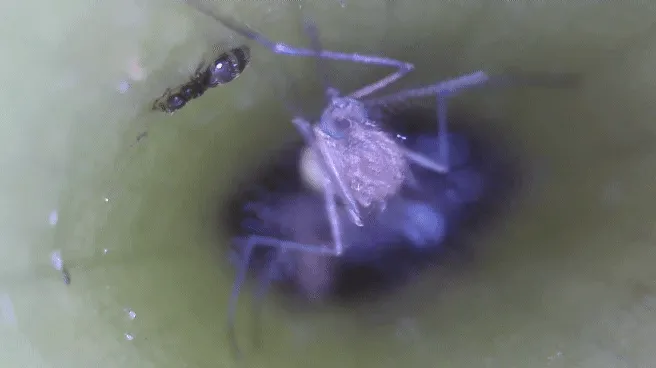
Description
How to identify
Wyeomyia smithii, commonly known as the pitcher plant mosquito, is a unique mosquito species belonging to the Culicidae family.
This mosquito is highly specialized, as it spends its entire larval and pupal stages living inside the water-filled leaves of the pitcher plant Sarracenia purpurea.
Adult mosquitoes are small and dark, often exhibiting physiological traits that differ significantly from other common mosquito species.
The species is well-studied in evolutionary biology due to its precise adaptation to photoperiodic cues, which dictate its seasonal activity.
It can be distinguished from other insects by its specific habitat requirements and its unique symbiotic relationship with its host plant.
What it damages
The primary impact of Wyeomyia smithii is its role as a commensal or parasite within the pitchers of the Sarracenia purpurea plant.
Larvae feed on the prey captured by the pitcher plant, effectively competing with the plant for essential nutrients such as nitrogen.
While the mosquito does not usually kill the plant, it significantly reduces the amount of nutrients available for the plant's growth and survival.
Heavy infestations can lead to a measurable decline in the overall vigor and reproductive capacity of the host pitcher plant.
This interaction is a classic example of an ecological trade-off, where the plant provides habitat while the insect consumes the plant's nutritional intake.
When it appears
The lifecycle of Wyeomyia smithii is strictly seasonal and tied to the climatic conditions of its host plant's environment.
Larvae overwinter in a state of diapause inside the pitcher leaves, surviving freezing temperatures until spring warming triggers their growth.
Development accelerates in the spring, leading to the emergence of adult mosquitoes that mate and lay eggs in fresh pitchers.
The timing of the mosquito's development is highly synchronized with the growth of the pitcher plant leaves.
Photoperiod sensing allows the species to adjust its reproductive cycles to match the temperate climate of North America.
Signs of infestation
The most reliable sign of an infestation is the presence of small, wiggling larvae visible within the fluid of the pitcher plant leaves.
Reduced growth rates or yellowing leaves can indicate that a significant colony of larvae is depleting the plant's nutrient supply.
Adult mosquitoes hovering near the pitcher plants during the summer months suggest a breeding population in the area.
The discovery of pupal cases near the rim of the pitcher indicates that the mosquitoes have successfully completed their metamorphosis.
Observation of high activity in the pitcher fluid using a flashlight confirms the presence of this specific mosquito species.
Control measures
Control measures for Wyeomyia smithii are generally unnecessary in wild ecosystems as they represent a natural ecological relationship.
In cultivated collections, the most effective management strategy is to exclude adult mosquitoes using fine-mesh netting over the plants.
Physically removing heavily infested pitchers at the end of the season can help break the lifecycle and reduce future mosquito populations.
Chemical control is strictly discouraged, as most insecticides are highly toxic to sensitive pitcher plants and will cause severe damage.
Maintaining optimal plant health through proper watering and clean conditions helps the plant mitigate the nutrient loss caused by the mosquitoes.
Taxonomy
- Latin name
- Wyeomyia smithii
- Order
- Diptera (flies)
- Family
- Culicidae
- EPPO code
- WYEOSM
Discussion
No discussions yet — be the first.