
Wyeomyia
Wyeomyia
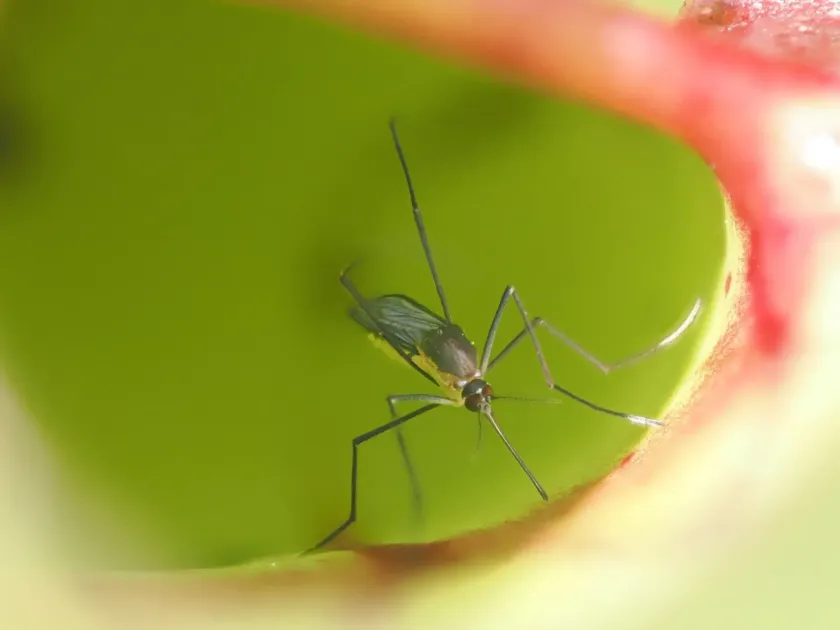
Description
How to identify
The genus Wyeomyia belongs to the Culicidae family (mosquitoes) within the Diptera order. These insects are distinguished by their often vibrant colors and unique mouthpart structures.
Adults typically feature a curved body shape and legs adorned with distinct scales. Identifying specific species within the genus requires detailed microscopic analysis of morphological features.
Unlike most blood-feeding mosquitoes, females of many Wyeomyia species have mouthparts adapted primarily for feeding on plant nectar.
The larvae possess unique morphology and are specialized to develop in phytotelmata — the water reservoirs found in the leaf axils of plants like bromeliads.
Wyeomyia adults are typically diurnal, meaning they are active during the day, which makes them easier to observe in natural forest habitats.
What it damages
While Wyeomyia are not major agricultural pests, they share a symbiotic-like relationship with bromeliads, as females use leaf tissues for oviposition.
Larvae developing within the leaf axils feed on organic debris and microorganisms, which can alter the chemical composition of the water in the leaf rosette.
High larval density can lead to physiological stress in ornamental bromeliads, occasionally resulting in stunted growth or yellowing of the foliage.
These insects can act as vectors for fungal or bacterial pathogens, inadvertently transferring them between plants within a nursery or greenhouse setting.
In a horticultural context, they are primarily monitored to ensure the aesthetic quality of ornamental plants, particularly sensitive tropical species.
When it appears
The lifecycle of these mosquitoes is strictly dependent on the availability of water within the leaf axils of their host plants.
Activity peaks during rainy seasons when humidity is high and plant reservoirs remain fully replenished with water.
In arid climates or during dry seasons, the population cycle may slow significantly or enter a dormant phase until favorable moisture levels return.
Adults are most commonly observed during the summer months, when temperatures are optimal for rapid metamorphosis and development.
In greenhouses, seasonal restrictions are largely negated by controlled irrigation and climate management, allowing for year-round development.
Signs of infestation
The primary sign of infestation is the presence of larvae swimming in the water held by bromeliad rosettes, detectable upon close inspection.
Small necrotic spots on leaves may indicate damage caused by female mosquitoes piercing tissues during the egg-laying process.
Plant distress, such as general wilting or chlorosis of the lower leaves, can indicate that the internal water reservoir is heavily colonized.
The frequent sight of adult mosquitoes resting on the undersides of leaves is a clear indicator of a breeding population within the area.
Finding pupal exuviae (empty casings) floating on the water in the leaf axils confirms that the insects have successfully completed their life cycle.
Control measures
Regular flushing of bromeliad rosettes with fresh, clean water is a highly effective mechanical method to remove larvae and debris.
Applying biological control agents, such as products based on Bacillus thuringiensis, targets the larval stage without harming the host plants.
Improving air circulation and preventing excessive stagnant water around plants can make the environment less conducive to mosquito breeding.
The use of light traps and sticky boards can effectively reduce the number of adult mosquitoes within a greenhouse or conservatory.
- Flushing leaf axils with water
- Biological insecticide application
- Improving greenhouse ventilation
- Sanitary removal of dead leaves
- Monitoring with insect traps
Taxonomy
- Latin name
- Wyeomyia
- Order
- Diptera (flies)
- Family
- Culicidae
- EPPO code
- WYEOSP
Discussion
No discussions yet — be the first.