
Haemagogus andinus
Haemagogus andinus
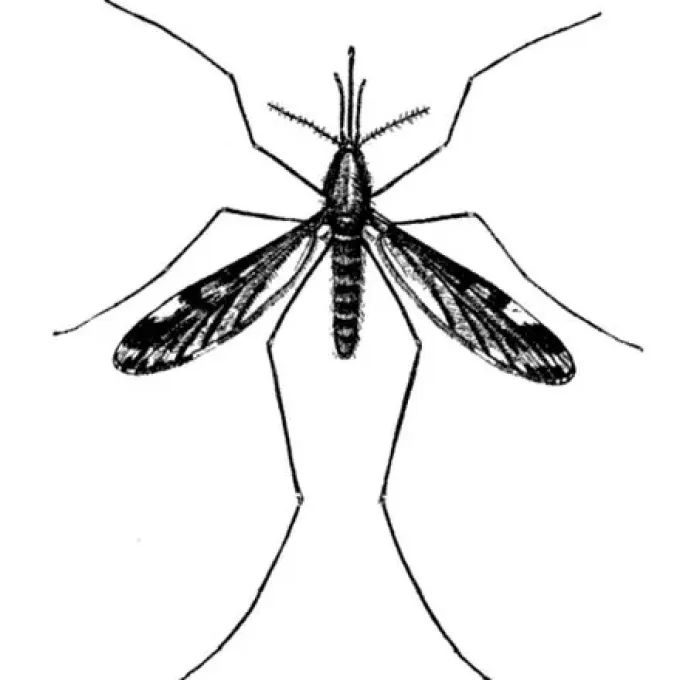
Description
How to identify
Haemagogus andinus is a species of mosquito belonging to the family Culicidae. These insects are well-known in tropical biology for their specific ecological niches and their potential role as disease vectors.
Adults exhibit a brilliant metallic appearance, often with green or blue reflections, which distinguishes them from many other nocturnal mosquito species. They are small in size and possess long, slender legs and a specialized proboscis.
In terms of classification, the species falls under the order Diptera. Their identification usually requires professional taxonomic analysis of their physical features, particularly the scales on the thorax and male reproductive anatomy.
The larval stage typically occurs in small, water-filled natural containers, such as tree holes in forested areas. This adaptability allows them to thrive in complex forest ecosystems adjacent to agricultural zones.
Eggs of this species are remarkably resistant to desiccation, an evolutionary adaptation that enables the population to survive through extended dry periods prevalent in their habitat.
What it damages
While Haemagogus andinus does not directly damage crops as a herbivore, it acts as a significant operational constraint for agricultural activities in forested or tropical environments.
The primary concern is the hazard posed to farm personnel due to the mosquito's blood-feeding habits. This presence can lead to a decrease in agricultural labor efficiency during peak activity hours.
In areas where these mosquitoes are abundant, there is a risk of them acting as vectors for zoonotic diseases, which may affect livestock on nearby farms, necessitating rigorous animal health monitoring.
The need for protective measures and constant monitoring creates an additional economic burden for agricultural enterprises operating in endemic regions.
Therefore, managing the presence of this insect is essential for ensuring safe working conditions and maintaining the continuity of agricultural production in affected zones.
When it appears
The seasonal activity of Haemagogus andinus is heavily influenced by precipitation patterns. Population peaks align with the rainy season when natural water containers become available for oviposition.
Temperature plays a crucial role in their life cycle; warmer conditions typically accelerate the development from larvae to adults, leading to rapid population growth during the wet months.
Unlike many other mosquito species, Haemagogus andinus is known for being primarily diurnal, or active during the day. This requires specific precautions for agricultural workers who operate during daylight hours.
Agronomic planning in these regions must account for these seasonal surges to minimize human exposure and ensure safety on the farm.
Continuous monitoring of weather patterns helps agronomists predict the onset of peak activity and schedule necessary interventions or protective measures accordingly.
Signs of infestation
A primary indicator of their presence is high adult activity in forested fringes or woody areas bordering agricultural fields. Swarming or persistent biting during the day is a clear sign of infestation.
The identification of potential breeding sites, such as hollow tree trunks, bromeliads, or discarded containers holding rainwater, strongly suggests the species' presence.
An increased frequency of mosquito sightings around equipment or storage areas suggests that the surrounding environment is providing favorable breeding conditions.
Standard entomological surveillance, including the use of mosquito traps, is the most reliable way to confirm the species and density within an area.
Observations by field workers regarding increased biting activity in specific areas serve as a crucial early warning sign for management teams.
Control measures
Integrated pest management strategies are required to mitigate the impact of Haemagogus andinus. The focus should be on both environmental sanitation and personal protection.
Sanitary practices, such as removing standing water from equipment and managing tree-hollow debris, significantly reduce the number of potential breeding sites.
Personal protection measures, including the use of high-quality repellents and long-sleeved clothing, are mandatory for protecting laborers working near potential habitats.
Biological control, such as the application of Bacillus thuringiensis israelensis (Bti) in water bodies, provides an environmentally friendly and effective way to suppress larval populations.
- Remove stagnant water from containers and farm equipment
- Implement perimeter control with biological larvicides
- Mandate the use of protective clothing for field staff
- Clear brush and debris near field boundaries
- Conduct regular monitoring of mosquito population densities
Taxonomy
- Latin name
- Haemagogus andinus
- Order
- Diptera (flies)
- Family
- Culicidae
- EPPO code
- HAEGAD
Discussion
No discussions yet — be the first.