
Haemagogus
Haemagogus
Description
How to identify
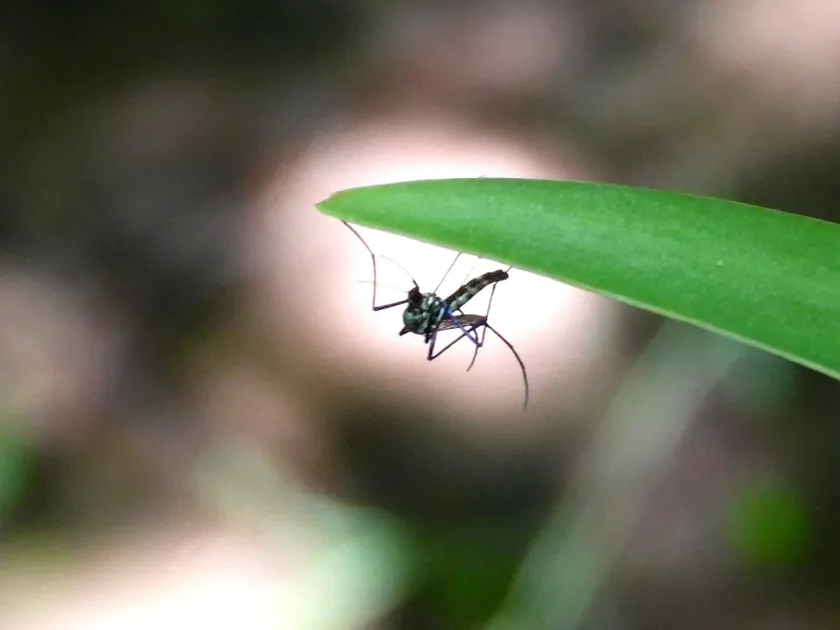
The genus Haemagogus belongs to the order Diptera and the family Culicidae. These mosquitoes are notable for their brilliant metallic coloration, often exhibiting shades of blue or green, which distinguishes them from many other species.
Adult insects have a slender body structure and are primarily diurnal, meaning they are most active during daylight hours. They prefer the forest canopy, although they frequently descend to ground level to seek hosts.
The females possess specialized mouthparts for piercing skin and drawing blood, a necessary stage for egg production. The males, however, feed on nectar and are not involved in blood-feeding.
Identifying specific species within this genus is complex and usually requires morphological examination of male genitalia or genetic testing, as many species appear nearly identical in the field.
They are highly adapted to tropical rainforest environments, utilizing natural cavities such as tree holes to sustain their populations throughout the rainy season.
What it damages
While Haemagogus mosquitoes do not consume plant tissues, their impact on agriculture is profound due to their role as vectors for dangerous pathogens, most notably the yellow fever virus.
Agricultural operations near forested areas are frequently disrupted because workers face significant health risks, necessitating the suspension of manual labor during peak mosquito activity hours.
Livestock operations are also negatively affected, as persistent biting causes stress in animals, leading to reduced feed intake, lower weight gain, and diminished milk production.
The economic damage is characterized by high costs associated with medical protection, lost labor hours, and the potential need for expensive veterinary interventions to protect livestock health.
Consequently, managing Haemagogus is essential for maintaining the safety and viability of farm operations in tropical and subtropical regions.
When it appears
The population dynamics of Haemagogus are heavily dictated by regional climate patterns, specifically the timing and intensity of the rainy season.
Optimal environmental conditions, including high humidity and temperatures ranging from 25°C to 30°C, trigger rapid larval development and increased adult activity.
During the rainy months, multiple generations can emerge in a short timeframe, as stagnant water in tree holes and plant debris provides ample breeding grounds for the larvae.
In contrast, the dry season typically sees a decline in adult activity, though the species is capable of surviving through resilient egg stages that can endure temporary drought conditions.
Farmers and agricultural planners must analyze local weather reports to predict these surges and implement preventive measures before the population reaches critical levels.
Control measures
Integrated pest management (IPM) for Haemagogus emphasizes the modification of the habitat and the use of protective equipment for personnel working in high-risk zones.
Environmental management involves reducing potential breeding sites, such as clearing stagnant water from containers and removing debris in areas adjacent to agricultural lands.
Protective clothing, including long-sleeved garments and the application of effective repellents, remains the first line of defense for human workers against mosquito bites.
- Regular monitoring of adult mosquito populations using surveillance traps.
- Targeted application of insecticides in identified high-density resting areas.
- Use of biological larvicides to manage populations at the source in woodland ponds.
A proactive approach, combining rigorous monitoring with community health education, is necessary to mitigate the risks these insects pose to the rural economy and human safety.
Taxonomy
- Latin name
- Haemagogus
- Order
- Diptera (flies)
- Family
- Culicidae
- EPPO code
- HAEGSP
Discussion
No discussions yet — be the first.