
Crab hole mosquito
Deinocerites cancer
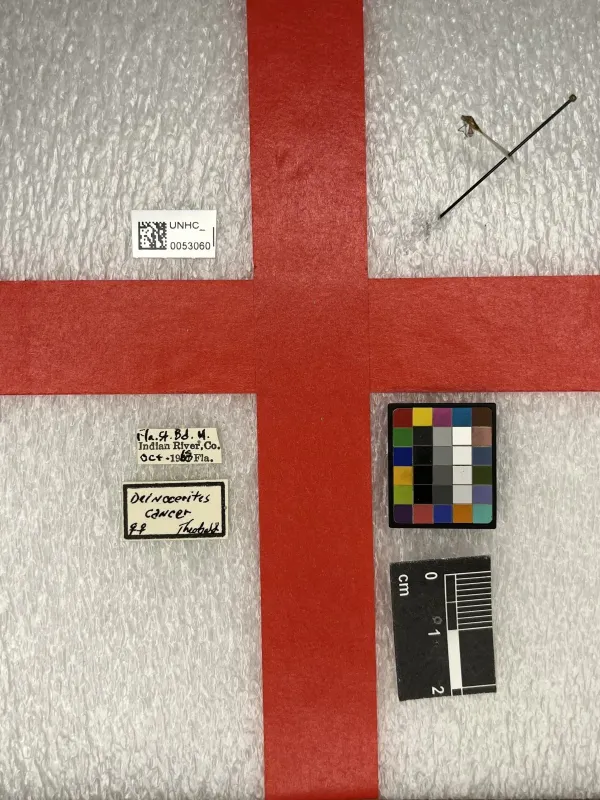
Description
How to identify
The crab hole mosquito (Deinocerites cancer) is a species of mosquito belonging to the family Culicidae, noted for its unique behavioral and physiological adaptations.
Unlike most mosquitoes, this species is closely associated with land crabs, particularly those in the genus Cardisoma, utilizing their burrows for shelter and breeding.
Morphologically, adult males possess distinctively elongated antennae, which serve as an evolutionary adaptation for detecting mates in the confined spaces of crab burrows.
The insect prefers the humid and stable microclimate found within these burrows, which protects the adults from the harsh coastal winds and sunlight.
The life cycle, including all aquatic stages, takes place in the brackish water accumulated at the bottom of the crab burrows or nearby tide pools.
What it damages
The primary concern regarding Deinocerites cancer is its role as an aggressive biter, which impacts agricultural productivity by disrupting manual field labor.
During periods of high population density, workers in coastal plantations experience significant discomfort, which directly affects the efficiency of agricultural operations.
These mosquitoes are known vectors for several arboviruses, posing a risk of disease transmission to humans and local livestock grazing in nearby pastures.
The presence of high numbers of these mosquitoes creates an unhealthy working environment, potentially leading to increased absenteeism among agricultural workers.
Although they do not feed on crops directly, their negative impact on labor force dynamics makes them a significant concern for coastal farm management.
Control measures
Managing the crab hole mosquito requires specialized strategies that account for the delicate ecological balance of the coastal areas where they thrive.
Chemical control via broad-spectrum insecticides is often discouraged due to the risk of harming the native crab populations that share the same habitat.
Biological control methods are preferred, specifically the application of Bacillus thuringiensis israelensis (BTI) into known breeding sites within the crab burrows.
Habitat modification, such as proper drainage of man-made structures and removal of debris, significantly reduces the availability of breeding water.
Personal protective measures, including protective gear and site-specific repellents, are essential for ensuring worker safety in infested coastal regions.
Taxonomy
- Latin name
- Deinocerites cancer
- Order
- Diptera (flies)
- Family
- Culicidae
- EPPO code
- DEINCA
Discussion
No discussions yet — be the first.