
Deinocerites
Deinocerites
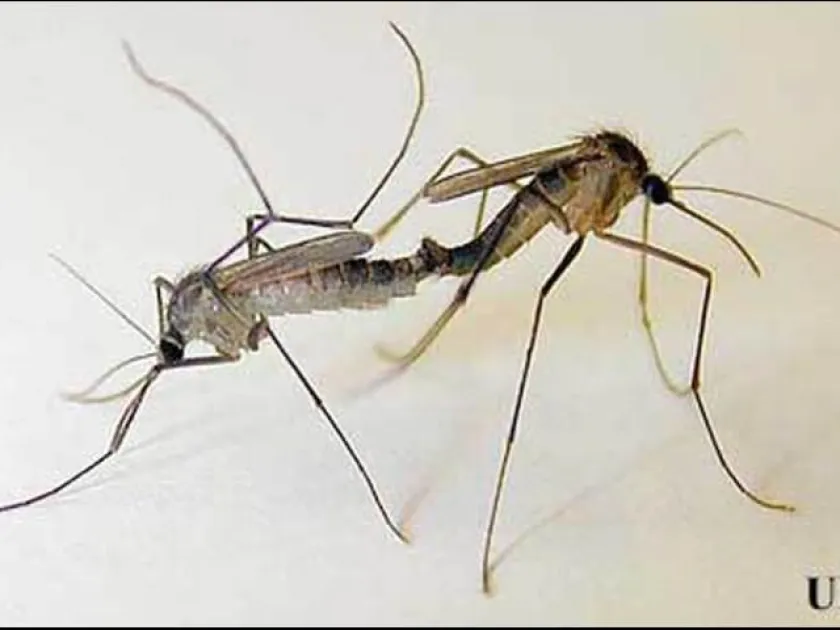
Description
How to identify
The genus Deinocerites belongs to the family Culicidae (mosquitoes) within the order Diptera. These insects are distinguished by their uniquely long antennae, which serve as a primary identification marker for entomologists.
Adult mosquitoes are typically dark in color, a trait that aids in camouflage within their specific coastal and brackish habitats. They are evolutionarily linked to the burrows of land crabs, which serve as their primary shelter.
Larvae of this genus possess physiological adaptations allowing them to thrive in brackish and often polluted aquatic environments where other mosquito species cannot survive.
Adult activity is primarily crepuscular or nocturnal, with individuals remaining inactive during peak daylight hours. Their behavior is highly specialized to match the microclimate of their surroundings.
Proper identification usually requires microscopic examination of the male and female genitalia, as well as the patterns of body bristles, as they can be easily confused with other culicid genera.
What it damages
The primary impact of Deinocerites on agriculture is indirect, primarily involving their status as persistent human pests. Their aggressive blood-feeding behavior disrupts field operations significantly.
By making outdoor work uncomfortable and potentially risky due to bites, they reduce the efficiency of agricultural labor, leading to delays in planting, maintenance, or harvesting activities.
While not direct plant consumers, their presence in irrigation water or stagnant reservoirs requires additional maintenance efforts, as they prefer waters enriched with organic matter.
The need for repeated insecticidal interventions to manage high population densities can lead to chemical runoff into local water sources, potentially harming other non-target species.
In regions where these mosquitoes are abundant, they represent a recurring labor management challenge that requires strategic planning to mitigate the negative impact on agricultural productivity.
When it appears
The seasonal activity of Deinocerites is strictly governed by environmental moisture levels and precipitation patterns. Populations often surge following rainfall events that flood the burrows they inhabit.
In tropical and subtropical climates, they exhibit year-round activity with multiple generations. The density of the population often follows the reproductive cycles of their crab hosts.
During drier seasons, the population undergoes a significant decline, as the mosquitoes retreat to deep, moist micro-refugia to survive until more favorable conditions return.
Quick succession of generations allows for rapid population explosions when environmental conditions are optimal, posing a challenge for rapid response control measures.
Agricultural managers should monitor weather patterns to anticipate these surges, allowing for timely application of prevention methods before populations reach critical levels.
Control measures
The most effective management strategy involves habitat modification, specifically the reduction of breeding sites such as stagnant water and areas around crab burrows in the vicinity of fields.
Biological control methods, particularly the application of Bacillus thuringiensis israelensis, have proven successful in managing larval populations without significant environmental damage.
Personal protection for field staff, including the use of repellents and protective clothing, is essential for maintaining operational continuity in infested areas.
Regular inspection and sanitation of irrigation infrastructure are critical to preventing the proliferation of larvae in farm-related water systems.
- Draining unnecessary standing water near fields.
- Applying larvicides in targeted breeding sites.
- Implementing regular monitoring using traps to track population density.
- Promoting natural predator habitats where applicable.
Taxonomy
- Latin name
- Deinocerites
- Order
- Diptera (flies)
- Family
- Culicidae
- EPPO code
- DEINSP
Discussion
No discussions yet — be the first.