
Culiseta morsitans
Culiseta morsitans
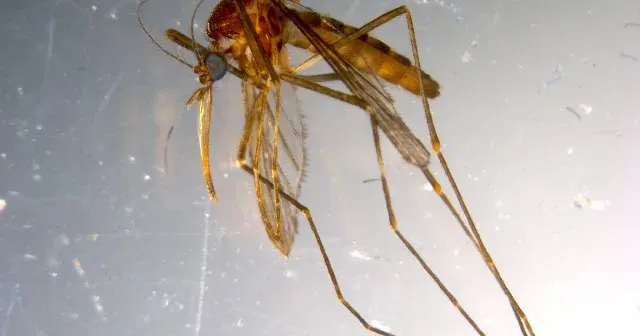
Description
How to identify
Culiseta morsitans is a mosquito species within the family Culicidae. Like other members of its genus, it possesses a slender body, long, fragile legs, and a specialized proboscis for blood-feeding.
The adult mosquitoes exhibit a brown coloration that serves as effective camouflage in wooded areas. They are known for their preference for dark, shaded environments, particularly in and around forests.
The morphology of the wings shows distinct venation patterns typical for the Culiseta genus. Females are the ones that seek blood meals from hosts, which is essential for egg production.
Identifying this species in the field can be challenging due to its similarity to other mosquito species. Taxonomic confirmation usually requires specialized entomological study.
This species is well-adapted to cooler climates, showing a behavioral pattern that distinguishes it from common urban or tropical mosquito pests.
What it damages
The primary impact of Culiseta morsitans is directed at the livestock industry. By acting as a constant irritant, these mosquitoes cause stress and discomfort to farm animals.
Chronic irritation leads to decreased productivity in dairy and meat-producing livestock. Animals subjected to frequent biting tend to eat less and gain weight more slowly.
These insects can serve as potential vectors for various diseases. While not always directly killing the host, the transmission of infections can lead to significant veterinary expenses.
Agricultural operations can be hampered during peak mosquito season. Farm workers and field staff often face difficulties in performing tasks efficiently due to the high density of biting insects.
Economic damage is largely measured by the cumulative loss of productivity and the costs associated with repeated pest control measures on farms near forest edges.
When it appears
The seasonal cycle of Culiseta morsitans begins early in the year. Unlike many other species, they are among the first mosquitoes to emerge as temperatures rise in early spring.
The peak activity period is typically observed in late spring and early summer. During this timeframe, new generations emerge, and female mosquitoes actively seek blood meals.
The life cycle encompasses four distinct stages: egg, larva, pupa, and adult. Larvae are typically found in cold, stagnant water bodies such as ditches or woodland pools.
Development is highly dependent on environmental conditions, including water temperature and moisture levels, which directly influence the speed of the transition through stages.
In some regions, the species can show two distinct peaks of activity if the late summer and autumn weather conditions provide sufficient moisture for breeding sites.
Control measures
Effective management of Culiseta morsitans requires a multi-faceted strategy focused on environmental modification and the protection of livestock.
Environmental control is the most sustainable approach. This involves drainage of stagnant water, cleaning of ditches, and modification of habitats where larvae thrive.
- Application of livestock-safe repellents to protect animals on pasture.
- Installation of screens and netting in livestock barns to reduce exposure.
- Strategic use of insecticides around farm perimeters during high-activity periods.
Biological control methods are recommended to maintain ecological balance. Encouraging predators like dragonflies and various amphibians can help keep larval and adult populations in check.
For chemical interventions, the use of targeted biological larvicides (such as Bacillus thuringiensis) is highly recommended, as it minimizes impact on non-target species and the environment.
Taxonomy
- Latin name
- Culiseta morsitans
- Order
- Diptera (flies)
- Family
- Culicidae
- EPPO code
- CULSMO
Discussion
No discussions yet — be the first.