
Culiseta melanura
Culiseta melanura
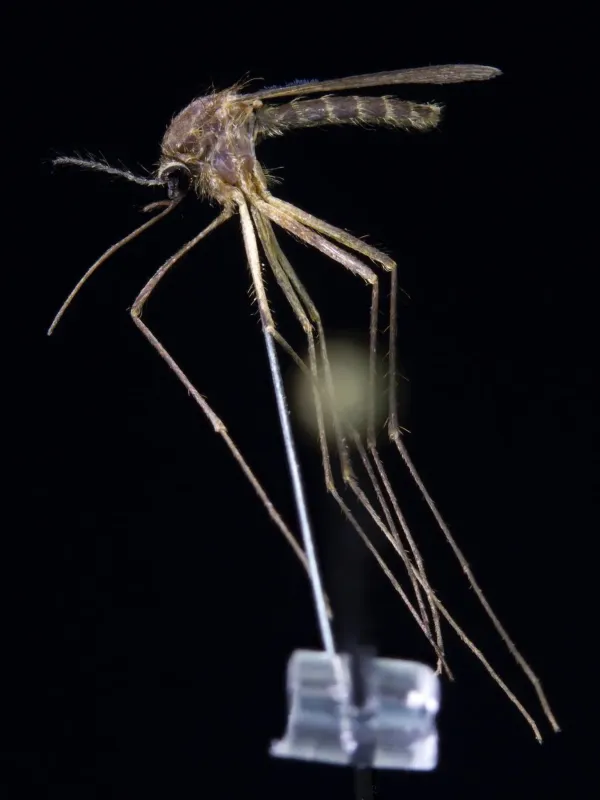
Description
How to identify
Culiseta melanura is a species of mosquito within the Culicidae family and Diptera order. It is primarily recognized as a significant vector in various ecosystems, particularly in North America.
Adult mosquitoes of this species possess dark coloring and unique wing morphology that distinguishes them from more common house mosquitoes.
The species biology is tightly linked to swampy, forested environments where they utilize small, cryptic aquatic habitats for their immature stages.
They are primarily nocturnal, showing peak feeding activity during twilight hours, which makes their control particularly challenging.
The larval stage is uniquely adapted to survive in cool, permanent water bodies, often overwintering at the bottom of these sites.
What it damages
While Culiseta melanura does not consume plant matter, its impact on agriculture is substantial through its role as a disease vector for livestock.
The species is a known primary vector for Eastern Equine Encephalitis, a virus that can cause severe illness or death in horses and other farm animals.
Heavy infestation levels cause severe stress in livestock, leading to reduced grazing efficiency, weight loss, and general decline in animal health.
Farm operations are often hampered by the presence of large swarms, necessitating adjustments to work schedules for employees in the field.
The economic impact involves not just veterinary care costs, but also the investments required for continuous facility protection and insect population control.
When it appears
The seasonal activity of this mosquito begins in early spring, as temperatures rise enough to initiate larval growth in water habitats.
Peak population densities are typically reached during the mid-to-late summer months when high temperatures accelerate their development cycle.
Rainfall patterns significantly influence the species' abundance, as increased moisture creates more breeding sites in the surrounding woodland.
As autumn arrives, the population growth slows, and generations shift focus towards preparing for the upcoming winter dormant phase.
Survival through winter is achieved by the larval stage, which remains in a state of diapause until environmental cues trigger the start of the next cycle.
Control measures
Integrated Pest Management (IPM) for this species focuses heavily on environmental source reduction, specifically the drainage of small, permanent water pools.
Biological control agents, such as Bacillus thuringiensis israelensis, are recommended to target larval populations in water without harming non-target species.
Physical exclusion methods, such as fine-mesh netting on animal housing and the use of fans to disrupt flight, are effective for protecting livestock.
Routine monitoring using CO2 or light traps provides essential data to time the application of insecticides and maximize their efficacy.
Personal protection equipment and specialized animal-safe repellents are critical components for managing exposure in infested agricultural regions.
Taxonomy
- Latin name
- Culiseta melanura
- Order
- Diptera (flies)
- Family
- Culicidae
- EPPO code
- CULSME
Discussion
No discussions yet — be the first.