
Culiseta longiareolata
Culiseta longiareolata
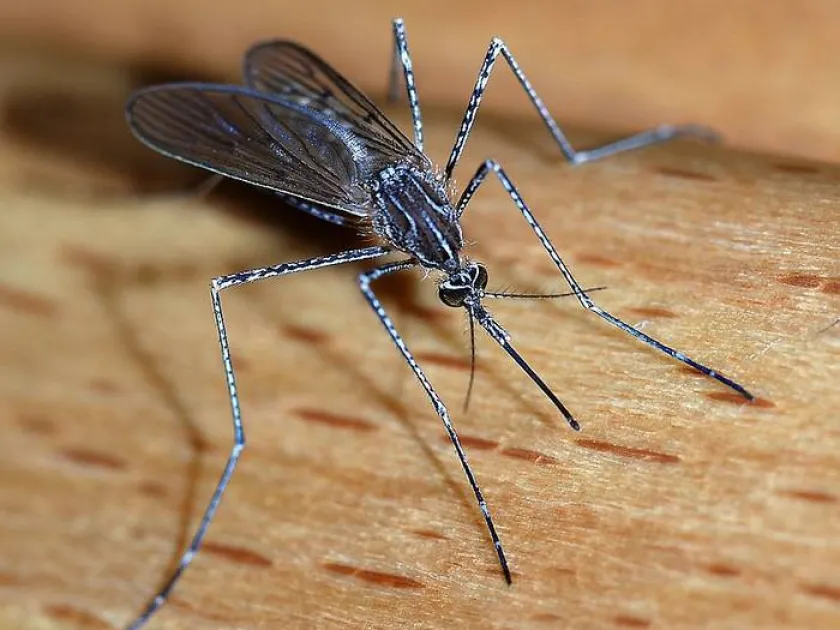
Description
How to identify
Culiseta longiareolata is a large-bodied mosquito species belonging to the family Culicidae. It is recognized by its distinct pale banding on the legs and a unique wing pattern that separates it from other common mosquito species.
Adult females are persistent blood-feeders, often impacting humans and livestock near agricultural zones. Males, in contrast, rely on plant nectar and are not blood-feeders.
The larval stage is primarily found in stagnant water sources, including man-made containers, concrete tanks, and irrigation basins, making them frequent residents in farm environments.
Identification often requires careful examination of wing venation and the hypopygium structure in males, confirming the species within the Culicinae subfamily.
The species is highly resilient, allowing it to adapt to various environmental conditions, from natural wetlands to complex man-made agricultural landscapes.
What it damages
While Culiseta longiareolata is not a direct phytophagous pest, it acts as a significant nuisance that interferes with agricultural operations. High populations disrupt field work and greenhouse labor efficiency.
These mosquitoes serve as vectors for several pathogens that affect poultry and livestock, leading to health issues and reduced productivity in mixed-farming systems.
Excreta deposited on fruits and vegetables during the harvesting period can compromise the aesthetic and commercial quality of the produce, leading to market rejection.
Constant biting pressure on workers reduces the number of hours spent on precision agricultural tasks, potentially delaying harvests and quality control processes.
Economic losses arise indirectly through reduced labor output and the need for medical intervention for workers and livestock exposed to the pest's activity.
When it appears
The seasonal cycle begins in early spring when water temperatures rise sufficiently to initiate egg hatching and larval development in ponds and tanks.
Peak abundance is typically observed in mid-to-late summer, coinciding with optimal warm conditions that accelerate the mosquito's life cycle.
During the autumn transition, adults seek shelter in protected structures like storage sheds, warehouses, and greenhouses to survive impending colder weather.
Multiple generations can be produced throughout a single growing season if temperature and hydration conditions remain stable in the environment.
The species exhibits a high capacity for recovery, with population numbers quickly rebounding after temporary environmental disturbances.
Control measures
Integrated Pest Management (IPM) for this species focuses on source reduction. Eliminating stagnant water reservoirs is the most effective long-term strategy for control.
Biological control using Bacillus thuringiensis israelensis (Bti) is highly recommended for treating water sources as it targets larvae without harming non-target organisms.
Physical barriers, such as fine-mesh screening on greenhouse vents and doorways, are essential to maintain a comfortable working environment for agricultural staff.
Vegetation management around water sources, including the removal of tall grasses, reduces resting sites for adults, thereby lowering the population near work areas.
- Elimination of stagnant water containers
- Application of bio-larvicides in water basins
- Installation of insect-proof netting
- Monitoring of larval density in irrigation systems
Taxonomy
- Latin name
- Culiseta longiareolata
- Order
- Diptera (flies)
- Family
- Culicidae
- EPPO code
- THEDLO
Discussion
No discussions yet — be the first.