
Culiseta inornata
Culiseta inornata
Description
How to identify
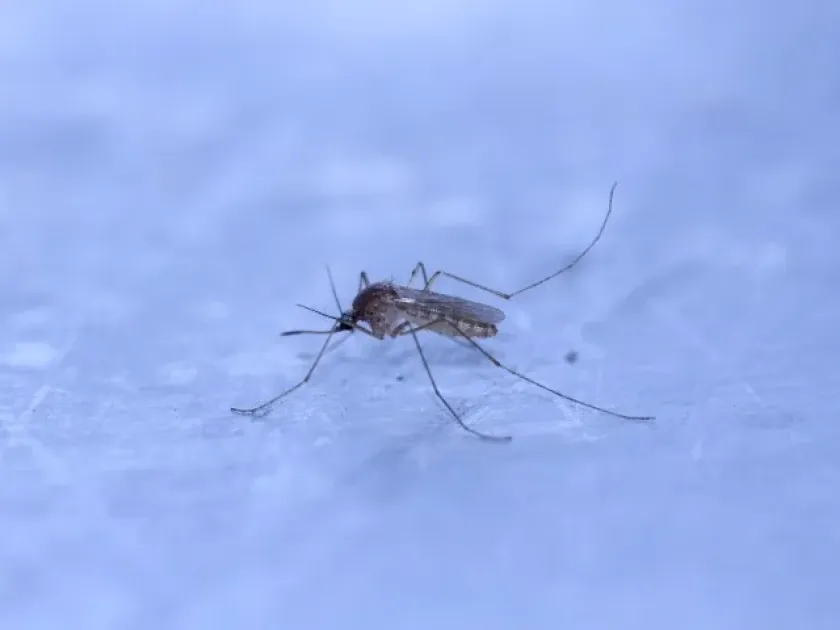
Culiseta inornata is a large species of mosquito belonging to the Culicidae family. The adults are recognized by their grayish-brown coloration and the notable absence of distinct white bands on their legs, which distinguishes them from many other local mosquito species.
The wings of the adult Culiseta inornata are characterized by clear venation without the dense scale patterns commonly found in other mosquito genera. Measuring between 6 to 8 millimeters, they are significantly larger than the average household mosquito.
The larvae of this species typically develop in stagnant water sources, often favoring sites rich in organic matter. They possess a long, distinct breathing siphon used to obtain oxygen from the water surface throughout their development stages.
Unlike synanthropic species, Culiseta inornata is predominantly an outdoor pest. It is most commonly encountered in rural landscapes, pastures, and near livestock facilities, where it seeks out large mammals for blood meals required for egg development.
The species is highly adaptive to various environmental conditions and exhibits significant tolerance for lower temperatures compared to other mosquitoes. This allows the species to remain active during the cooler months of the early spring and late autumn.
What it damages
The economic damage caused by Culiseta inornata is primarily related to the livestock industry. By persistently biting cattle and horses, these mosquitoes cause significant physical stress, which directly results in decreased animal productivity and weight gain.
Constant biting induces behavioral changes in livestock, such as excessive movement and reduced feeding time. This stress-related behavior often manifests as a decline in milk production and overall physiological condition of the animals kept on pastures.
These mosquitoes are recognized as potential vectors for various pathogens, including viruses that can infect domestic animals. The presence of high mosquito populations can therefore pose a significant epizootic risk to farming operations.
Although they do not feed directly on crops, the indirect impact of Culiseta inornata on grazing management and animal health necessitates consistent mitigation efforts to ensure the economic viability of agricultural enterprises.
In regions where the mosquito population density is high, farmers often report significant losses in animal growth rates during the peak summer months. This warrants the implementation of protective measures to minimize the contact between mosquitoes and herd animals.
When it appears
The activity cycle of Culiseta inornata begins in early spring, often immediately after the snow melts and water temperatures rise sufficiently for larval development. The first generation of adults typically emerges in late April or May.
The mid-summer season is characterized by peak population numbers, especially following periods of high rainfall that create numerous temporary water pools. The number of generations per year is heavily dependent on regional climate and moisture availability.
The late summer and early autumn represent a period of intensified biting activity as female mosquitoes strive to secure enough blood meals to survive the winter. They are particularly active during the dawn and dusk hours in these months.
As nighttime temperatures begin to drop, the adult population gradually declines. While most adults perish as winter approaches, fertilized females enter a state of diapause, seeking shelter in barns, sheds, or other dark, protected locations.
The species' ability to survive harsh winters in a state of diapause ensures a rapid resurgence in the following spring, provided that the initial environmental conditions allow for the survival of the overwintering females.
Control measures
Effective control of Culiseta inornata requires an integrated approach focusing on both larval habitat modification and adult population suppression. Land management, such as draining stagnant pools and clearing clogged drainage ditches, is the primary preventative measure.
Biological control agents, specifically those containing Bacillus thuringiensis israelensis, are highly effective when applied to larval habitats. These agents are environmentally safe and do not impact the health of livestock grazing in treated areas.
For direct livestock protection, the use of repellent sprays and topical treatments is recommended. Additionally, installing insecticide-treated mesh screens on barn windows and providing shaded areas can significantly reduce the pressure of mosquitoes on sheltered animals.
Cleaning and treating agricultural buildings with residual insecticides before the onset of winter is a critical step in reducing the number of overwintering females, which in turn helps lower the population density for the following spring season.
- Drainage of stagnant water and marshy areas
- Application of biological larvicides in breeding sites
- Use of livestock-safe repellents and physical barriers
- Residual insecticide treatment in barn structures
- Regular monitoring and mapping of larval habitats
Taxonomy
- Latin name
- Culiseta inornata
- Order
- Diptera (flies)
- Family
- Culicidae
- EPPO code
- CULSIN
Discussion
No discussions yet — be the first.