
Culiseta incidens
Culiseta incidens
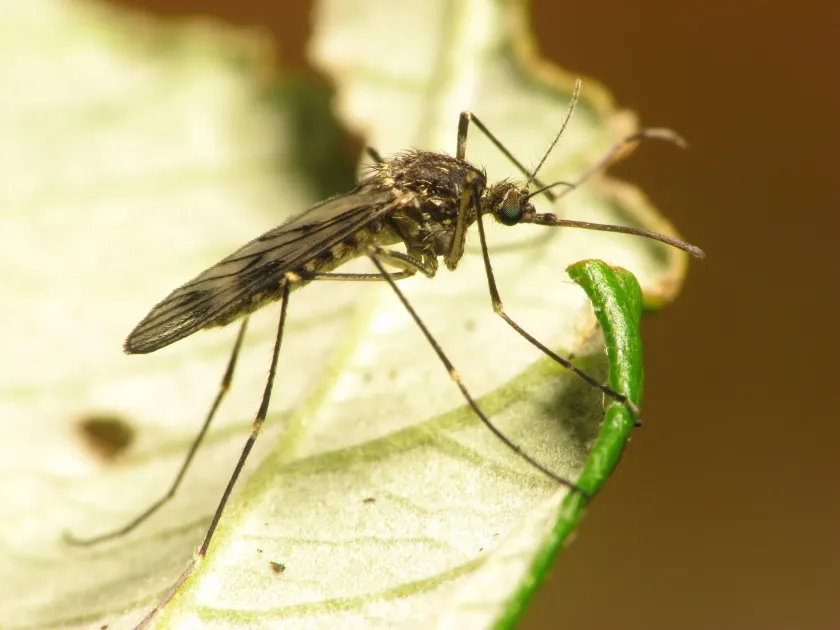
Description
How to identify
Culiseta incidens is a species of mosquito belonging to the family Culicidae, recognizable by its specific wing patterns and body structure.
The adults are characterized by dark markings on their wings, which distinguish them from many other local mosquito species commonly found in the environment.
Larvae of this species are highly adaptable and can develop in various water bodies, including irrigation ditches, artificial containers, and stagnant ponds.
The absence of pale bands on the hind tarsi is a key diagnostic feature used by entomologists to identify this specific mosquito during field surveys.
As a relatively large mosquito, it is often noticed by field workers, which facilitates the early detection of its presence in agricultural landscapes.
What it damages
Culiseta incidens acts as a pest mainly by causing severe annoyance to agricultural personnel and livestock, affecting their productivity and health.
Constant attacks on livestock during grazing or in housing facilities result in increased stress levels, which can lead to reduced weight gain and lower output.
The presence of large populations in areas with irrigation systems can disrupt the workflow and decrease the efficiency of daily farm operations.
While they do not damage crops directly, their ability to breed in irrigation infrastructure necessitates increased maintenance and sanitation efforts.
They can also serve as mechanical vectors for various pathogens, potentially threatening the well-being of animals housed in close proximity to their breeding sites.
When it appears
The activity cycle of Culiseta incidens is highly dependent on temperature, with peak emergence usually occurring during late spring and summer months.
Warm weather accelerates the development of larvae, leading to multiple overlapping generations throughout the active agricultural season.
As temperatures begin to drop in autumn, adult females look for suitable overwintering sites to survive until the following season.
Increased rainfall creates transient pools of water that can lead to rapid population spikes, requiring vigilant monitoring by farmers.
The length of the active period is largely determined by local climatic conditions, which can fluctuate significantly depending on the region.
Signs of infestation
The most common sign of infestation is the observation of mosquito larvae in water containers, drainage pipes, or stagnant irrigation water.
High levels of adult mosquito activity during twilight hours, especially near livestock barns, strongly indicate a high population density.
Distressed behavior in livestock, such as frequent ear flicking and tail swishing, provides evidence of heavy mosquito pressure in the area.
Light traps are highly effective tools for capturing samples, helping to confirm the species presence and assess the severity of the infestation.
The constant sound of buzzing, particularly on warm and windless days near water sources, is a clear indicator of a thriving mosquito population.
Control measures
Source reduction is the most effective management strategy, involving the removal or covering of standing water where larvae develop.
Biological control agents, such as specific bacterial larvicides, provide an environmentally friendly way to manage populations in water storage tanks.
Installing fine mesh screens on livestock buildings prevents mosquitoes from gaining access to animals, thereby reducing stress and disease transmission.
Maintaining clear irrigation ditches and removing vegetation around water sources helps to decrease the availability of ideal breeding grounds.
Integrated Pest Management (IPM) practices, including regular monitoring and timely intervention, are essential to maintain populations below harmful levels.
Taxonomy
- Latin name
- Culiseta incidens
- Order
- Diptera (flies)
- Family
- Culicidae
- EPPO code
- THEDIN
Discussion
No discussions yet — be the first.