
Culiseta impatiens
Culiseta impatiens
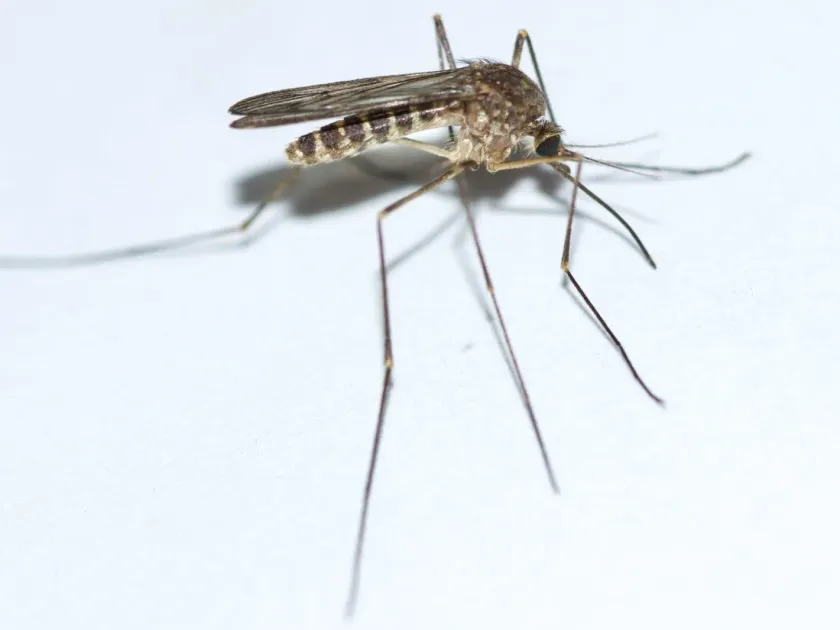
Description
How to identify
Culiseta impatiens is a robust species of mosquito belonging to the family Culicidae, widely distributed across temperate regions of the Northern Hemisphere.
Adult mosquitoes are distinguished by their brownish coloration, specific wing vein patterns, and distinct scale arrangements, which are critical for taxonomic identification.
The larvae primarily inhabit cold, permanent or semi-permanent water bodies, including forest pools, bogs, and shaded ditches with significant organic matter content.
Unlike some other genera, Culiseta larvae exhibit high tolerance to lower temperatures, allowing them to colonize northern wetlands successfully.
Pupae are active and demonstrate significant phototactic behavior, providing them with the ability to navigate through water columns during the developmental process.
What it damages
The damage caused by Culiseta impatiens is primarily focused on the disruption of outdoor agricultural labor and the health of domestic livestock in rural areas.
Persistent biting behavior creates high levels of stress for grazing livestock, which can negatively impact milk yield and weight gain in cattle and other animals.
The discomfort caused by large swarms limits the working hours of farm staff, leading to decreased labor efficiency during critical seasonal field tasks.
Although they do not feed on plant tissues, their role as potential disease vectors can complicate veterinary management on farms located near damp, forest-edge environments.
Furthermore, in recreational agricultural zones, their high numbers can discourage tourism and onsite activities, affecting the diversification of farm income.
When it appears
Culiseta impatiens is a univoltine or multivoltine species depending on the latitude, with adults emerging very early in the spring season.
Overwintered females are often the first mosquitoes observed as soon as snowmelt creates the initial aquatic environments required for oviposition.
Peak abundance typically aligns with late spring, following the development of the first generation of larvae in vernal pools and stagnant drainage systems.
By mid-summer, population dynamics can shift, with activity levels closely tied to precipitation levels and the availability of water in temporary basins.
As autumn temperatures begin to drop, the adult population transitions into a state of diapause, seeking shelters such as hollow trees or dark farm buildings.
Control measures
Habitat management is the most sustainable control method, focusing on the drainage or modification of stagnant water sources where larvae develop.
Biological control agents, particularly formulations containing Bacillus thuringiensis israelensis (Bti), provide an effective means to target larvae without harming beneficial insects.
Integrated pest management includes the installation of specialized mosquito traps that utilize attractants like carbon dioxide to reduce local population density.
Physical barriers, such as fine-mesh screens on livestock housing and agricultural facilities, are essential to protect animals and workers from bites.
Regular maintenance of the farm perimeter, including clearing brush and tall vegetation, eliminates the resting sites where adults congregate during the heat of the day.
Taxonomy
- Latin name
- Culiseta impatiens
- Order
- Diptera (flies)
- Family
- Culicidae
- EPPO code
- THEDIM
Discussion
No discussions yet — be the first.