
Western encephalitis mosquito
Culex tarsalis
Description
How to identify
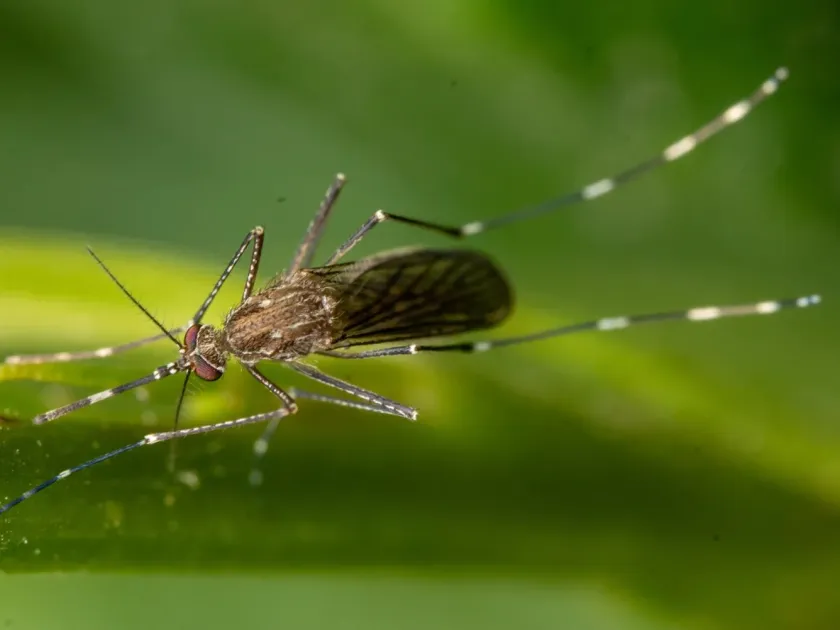
Culex tarsalis is a species of mosquito in the family Culicidae, notorious for its role as a primary disease vector. Adult females are easily identifiable by a dark, metallic brown appearance, a distinct white band on the proboscis, and white rings on their legs.
The body length typically ranges from 5 to 6 mm. A key diagnostic feature is the presence of pale scales on the abdomen that form a specific banding pattern, which distinguishes this species from other mosquitoes found in similar habitats.
Males feed primarily on plant nectar, whereas females are hematophagous, seeking blood meals from birds and mammals to support egg production. Their morphological adaptations allow them to thrive in diverse environments, ranging from irrigation ditches to natural wetlands.
Larvae possess a long respiratory siphon used for breathing atmospheric oxygen. The pupae are highly mobile, allowing them to quickly retreat into deeper water or hide beneath vegetation to avoid potential predators or physical threats.
Their ecological flexibility enables them to utilize various aquatic environments, including stagnant water pools, agricultural irrigation systems, and poorly drained fields, making them a common sight in farming regions.
What it damages
Culex tarsalis does not damage agricultural crops through direct feeding. However, its presence imposes significant operational risks for agricultural businesses due to its status as a highly efficient vector for various pathogens.
This mosquito is the primary transmitter of the Western Equine Encephalitis virus and the West Nile virus. Outbreaks of these diseases can result in severe animal health issues and potential quarantine measures that disrupt farm operations.
Massive mosquito populations significantly decrease the efficiency of agricultural workers. Intense harassment by female mosquitoes makes field operations physically demanding and reduces labor productivity during peak evening and night shifts.
In livestock farming, the mosquito poses a major threat to cattle, horses, and poultry. Vector-borne diseases among livestock lead to increased veterinary expenditures, decreased animal health, and potential losses in production yields.
The indirect economic impact is substantial, including costs associated with site sanitation, pest management programs, and the implementation of safety protocols to protect farm staff from bites during the peak activity season.
When it appears
The lifecycle of Culex tarsalis is heavily dependent on ambient temperature and moisture levels. The season begins when spring temperatures allow the water temperature in breeding sites to exceed 10°C, triggering the emergence of hibernating females.
Peak abundance occurs during the mid-to-late summer months (June through August), when warm weather facilitates rapid development. Multiple generations can be produced within a single season, leading to exponential population growth.
As autumn approaches, shorter photoperiods and cooler temperatures induce physiological changes, leading females to seek out overwintering shelters such as barns, basements, or dense vegetation to survive the winter dormant phase.
Development from egg to adult takes approximately one to two weeks under optimal summer conditions. This rapid cycle necessitates constant monitoring of water management practices to prevent localized outbreaks.
In arid climates, Culex tarsalis demonstrates impressive resilience, utilizing even minimal water accumulation after irrigation cycles or rain events, which sustains their presence throughout the entire growing season.
Control measures
The most effective control strategy is habitat modification. Reducing stagnant water in irrigation systems, leveling fields to improve drainage, and clearing vegetation from ditch banks significantly minimize potential breeding grounds.
Biological control agents, such as the bacterium Bacillus thuringiensis israelensis, are highly effective against larvae. These bio-insecticides target mosquito larvae without negatively impacting the surrounding ecosystem or crop safety.
Adulticide treatments are reserved for situations with high population density. These applications should be timed correctly, often in the evening, to maximize effectiveness while minimizing the risk to non-target beneficial insects like pollinators.
- Improving drainage of agricultural fields;
- Installing screens on livestock housing and barns;
- Utilizing biological larvicides in stagnant ponds;
- Providing personal protective equipment for field staff.
Integrated Pest Management (IPM) practices, including regular trapping and monitoring of mosquito density, allow farmers to proactively manage populations, thereby reducing the need for broad-spectrum chemical interventions.
Taxonomy
- Latin name
- Culex tarsalis
- Order
- Diptera (flies)
- Family
- Culicidae
- EPPO code
- CULXTA
Discussion
No discussions yet — be the first.