
Culex sitiens mosquito
Culex sitiens
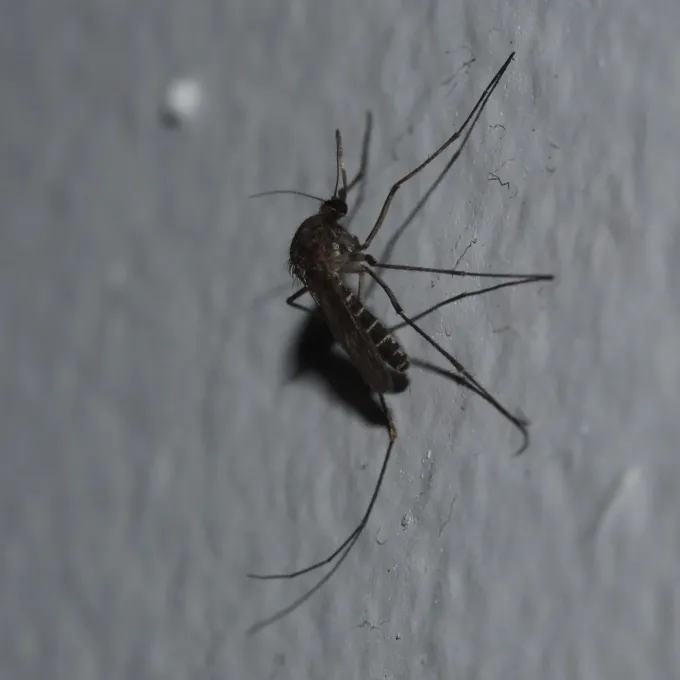
Description
How to identify
The Culex sitiens mosquito is a member of the order Diptera and the family Culicidae. These insects are characterized by a delicate body structure, long slender legs, and a proboscis adapted for blood-feeding.
Adults typically display shades of brown and grey, providing excellent camouflage against natural backgrounds. Their wings and thorax feature specific scale patterns which are key identifying characteristics for entomologists.
Females are blood-feeders, as they require protein from blood to develop their eggs. This species is highly adaptable and can breed in a variety of water bodies, including brackish water in coastal regions.
The lifecycle consists of four distinct stages: egg, larva, pupa, and adult. Every developmental stage prior to adulthood is aquatic, requiring stagnant or slow-moving water to successfully complete their transformation.
Adult mosquitoes are nocturnal, preferring to spend daylight hours resting in shaded, humid areas. They emerge during dusk and throughout the night to actively forage for food sources.
What it damages
While Culex sitiens does not directly consume plant tissues, it acts as a significant pest in agricultural settings by impacting livestock health. High populations of these mosquitoes create stressful environments for farm animals.
Constant biting leads to animal fatigue, reduced appetite, and consequently, lower weight gain or decreased milk production in livestock. Severe cases may result in skin inflammation and secondary infections.
In addition to physical discomfort, this species serves as a vector for various arboviruses. The presence of these mosquitoes poses a continuous health risk to farm animals and requires rigorous veterinary monitoring.
Agricultural productivity is indirectly hampered as workers are often forced to avoid evening field activities to escape mosquito swarms. This limits operational flexibility on farms and plantations.
Economic damage is largely manifested through decreased livestock yields and the high cost of implementing protective measures to maintain animal welfare and farm efficiency.
When it appears
The seasonal activity of Culex sitiens is heavily influenced by rainfall and temperature patterns. In tropical and subtropical regions, populations can remain active and reproductive year-round.
The highest population peaks occur following the rainy season, when an abundance of temporary pools and puddles provide ideal breeding sites. Stagnant water is the fundamental requirement for their rapid population expansion.
Temperature significantly impacts the duration of the larval stage; warmer waters facilitate faster metamorphosis. This leads to explosive population growth during hotter months when environmental conditions are optimal.
The nocturnal and crepuscular nature of the species means that activity levels surge during the night. The drop in air temperature after sunset facilitates more aggressive feeding behavior in female mosquitoes.
Even in dry conditions, adult mosquitoes can survive in protected microclimates such as dense vegetation or sheltered farm buildings, waiting for the next favorable window to lay eggs.
Control measures
The primary control strategy for Culex sitiens involves targeting its breeding sites. Eliminating stagnant water through drainage and maintaining irrigation systems is the most effective long-term solution.
For sites where drainage is not feasible, biological larvicides, such as those containing Bacillus thuringiensis israelensis, are recommended. These target mosquito larvae specifically without harming the broader ecosystem.
Chemical control, including the use of insecticides, should be used selectively and only when population levels threaten livestock health. Proper timing and adherence to safety guidelines are essential.
Installing mosquito screening in animal housing and utilizing light or chemical traps can provide relief to livestock. These physical barriers are effective at reducing the rate of biting and pathogen transmission.
- Drainage of stagnant water bodies
- Application of biological larvicides
- Regular clearing of irrigation channels
- Use of mosquito screens in livestock housing
- Implementation of pest monitoring programs
Taxonomy
- Latin name
- Culex sitiens
- Order
- Diptera (flies)
- Family
- Culicidae
- EPPO code
- CULXSI
Discussion
No discussions yet — be the first.