
Culex restuans mosquito
Culex restuans
Description
How to identify
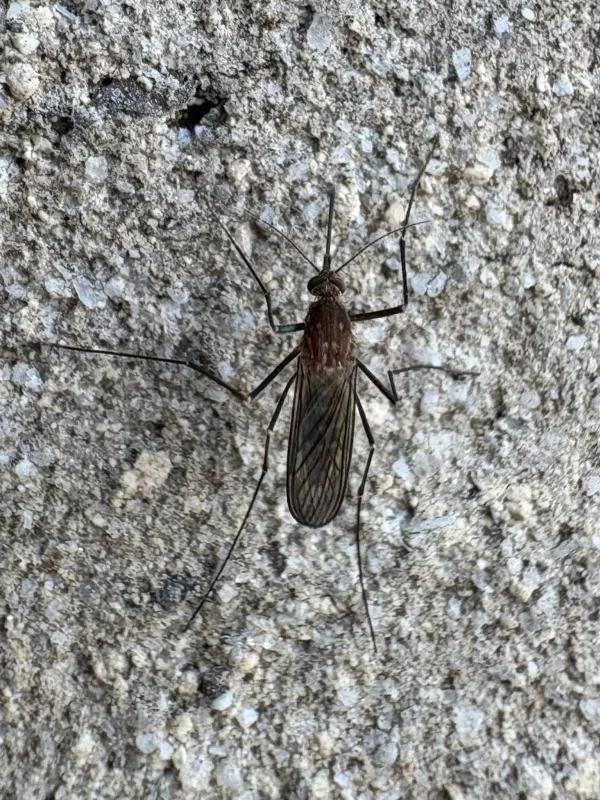
The mosquito Culex restuans is a member of the order Diptera and the family Culicidae. It is a common species characterized by slender bodies, long legs, and wings covered in fine scales, which are typical for the genus Culex.
Adults are small and brownish in color. A distinguishing morphological feature is a pair of pale spots on the scutum, often described as lyre-shaped, which helps in identifying the species under magnification.
The larval stage is aquatic and primarily inhabits stagnant water bodies, containers, and catch basins. These larvae are distinguished by their breathing siphons, which they use to obtain air while hanging at an angle to the water surface.
The lifecycle consists of four developmental stages: egg, larva, pupa, and adult. In optimal weather conditions, the transition from egg to adult is rapid, allowing for multiple generations throughout the growing season.
Overwintering occurs at the adult stage, with fertilized females seeking shelter in protected areas such as sheds, culverts, and basements to survive the cold months before resuming activity in the spring.
What it damages
Culex restuans is not a direct phytophagous pest and does not consume plant parts. However, its presence in agricultural settings acts as a significant nuisance factor that disrupts operational efficiency for farm workers.
This species is a known vector for various pathogens, including the West Nile virus, which can pose health risks to livestock and poultry. High populations of these mosquitoes increase the stress levels of animals, leading to reduced overall productivity.
The maintenance of drainage systems and irrigation ponds to prevent mosquito breeding adds to the administrative and operational costs for farmers who must ensure these areas remain sanitary.
In greenhouses and nursery environments, the need to mitigate mosquito populations necessitates careful planning to avoid damaging sensitive crops with chemical treatments while ensuring effective control.
Integrated pest management strategies are essential, as the presence of this mosquito represents a biological complexity that must be addressed to maintain a safe working environment and high quality of agricultural output.
Control measures
The most effective strategy is the elimination of breeding sites. Farmers should regularly drain unused containers, clean clogged gutters, and ensure proper water circulation in irrigation systems.
Biological control, specifically the application of Bacillus thuringiensis israelensis, is recommended as it target larvae in water without negatively impacting beneficial insects, soil health, or plant safety.
Physical exclusion methods, such as installing fine-mesh screens on greenhouse vents and storage buildings, provide a reliable barrier against adult mosquitoes entering sensitive production areas.
Vegetation management is a key cultural control practice. Maintaining short grass and removing dense brush around farm facilities reduces the availability of daytime resting sites for adult mosquitoes.
Chemical control using authorized insecticides may be necessary during peak seasons to reduce adult populations, provided that applications strictly follow safety protocols to protect workers and the local ecosystem.
Taxonomy
- Latin name
- Culex restuans
- Order
- Diptera (flies)
- Family
- Culicidae
- EPPO code
- CULXRE
Discussion
No discussions yet — be the first.