
Culex pilosus
Culex pilosus
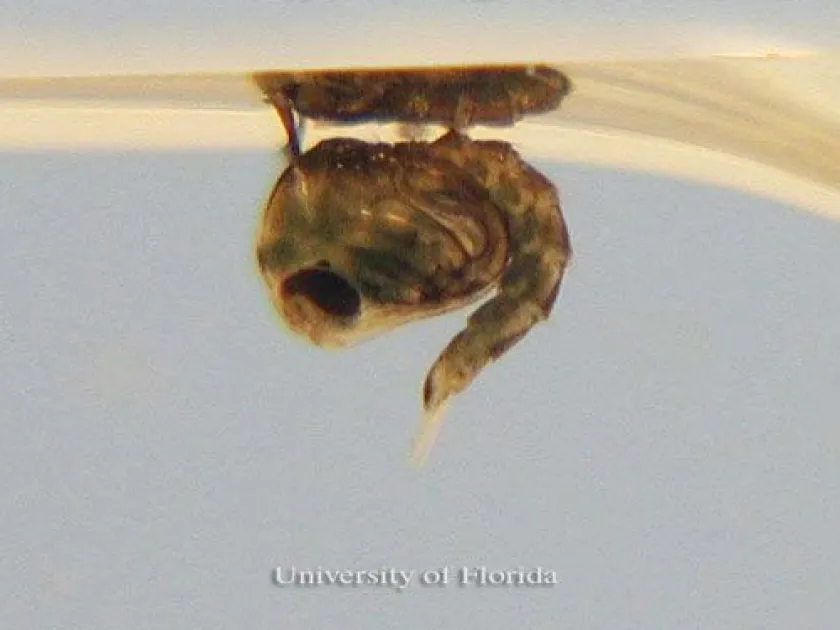
Description
How to identify
Culex pilosus is a species of mosquito belonging to the family Culicidae within the order Diptera. Like other members of the Culex genus, it exhibits a complex life cycle characterized by four distinct developmental stages: egg, larva, pupa, and adult.
Adult specimens typically possess a slender body, long thin legs, and a specialized proboscis designed for piercing. Morphologically, males are distinguished by specific genital structures, while larvae are identified by their breathing siphons adapted for aquatic life.
The larvae are exclusively aquatic, relying on atmospheric air, which they intake through their respiratory siphons while suspended at the water's surface in stagnant bodies of water.
Pupae represent the stage of transformation, during which the insect remains active but does not feed, eventually emerging as a winged adult ready for mating and dispersal.
The species displays a high degree of adaptability, often colonizing small, nutrient-rich water sources that are frequently found in agricultural or rural landscapes.
What it damages
While Culex pilosus is not a direct phytophagous pest causing mechanical damage to plant tissues, it creates significant secondary harm in agricultural systems.
The primary impact is on livestock production; constant harassment by these mosquitoes causes stress in cattle and sheep, leading to reduced milk yield and poor weight gain.
These insects act as vectors for various pathogens that can threaten both animal health and, in certain environmental conditions, the overall stability of the local ecosystem.
The presence of large mosquito populations poses a severe nuisance for field workers, significantly decreasing human productivity during peak harvesting and maintenance seasons.
Management costs are further increased for farmers who must invest in regular insecticide treatments and protective infrastructure to maintain healthy working conditions.
When it appears
The seasonal activity of Culex pilosus is heavily influenced by moisture availability and ambient temperatures, typically peaking during the warmer months of the year.
In tropical and subtropical agricultural regions, they can maintain populations throughout the year, provided there is an adequate supply of stagnant water for breeding.
Optimal temperature conditions (ranging from 20°C to 30°C) significantly shorten the developmental cycle, allowing for multiple generations within a single season.
Heavy rainfall events often trigger population booms by creating numerous temporary pools and puddles that serve as ideal, predator-free environments for larval development.
As temperatures decline, the population transitions into a phase of lower activity, with the species surviving through dormant stages until environmental conditions become favorable again.
Signs of infestation
High densities of Culex pilosus are easily identified by the increased frequency of human or animal bites during the early morning and evening hours.
Visual observation of stagnant water sources, such as irrigation canals, drainage ditches, or discarded equipment, often reveals dense clusters of larvae suspended in the water.
Observed animal restlessness is a clear indicator; livestock often congregate in tight groups or continuously twitch their skin and move to avoid mosquito irritation.
The presence of adult mosquitoes in high numbers near agricultural buildings or field edges serves as a strong biological signal of an established infestation in the vicinity.
The detection of egg rafts on the surface of standing water confirms active breeding and implies that the population will increase rapidly if left unmanaged.
Control measures
Controlling Culex pilosus requires an integrated pest management (IPM) approach that focuses primarily on source reduction and habitat modification.
- Eliminate or drain unnecessary stagnant water sources such as old tires, containers, and blocked drainage pipes.
- Apply biological larvicides (such as Bti) to essential water bodies that cannot be drained.
- Maintain irrigation channels by clearing weeds and ensuring proper water flow to discourage colonization.
- Equip barns and livestock housing with fine mesh screens to reduce mosquito-animal contact.
- Implement targeted adulticide applications only when monitoring indicates threshold levels have been exceeded.
Taxonomy
- Latin name
- Culex pilosus
- Order
- Diptera (flies)
- Family
- Culicidae
- EPPO code
- CULXPL
Discussion
No discussions yet — be the first.